I. Core Measurement Performance Characteristics
High Precision and Stability
High Measurement Accuracy: Standard model accuracy reaches ±1.5%, special model reaches ±1.0% or even ±0.5%
Strong Stability: Simple mechanical structure, no electronic components directly involved in measurement, minimally affected by electromagnetic interference and temperature fluctuations
Stable Linear Relationship: Constant friction between the float and the cone tube ensures a linear relationship between flow rate and float position, reducing measurement errors
Wide Range Ratio and Applicable Range
Wide Range Ratio: Standard model is 10:1, special model can reach 20:1 or even 50:1, a single instrument can cover a wide range of flow measurement
Multi-Media Compatibility: Can measure liquids (water, oil, acid and alkali solutions), gases (air, natural gas, steam), and corrosive, high-viscosity, or particulate media
Wide Flow Range: Water (20℃) 2.5~100000 L/h; Air (20℃, 0.1013MPa) 0.07~4000 m³/h
II. Structural and Material Advantages
All-Metal Structure Design
Robust and Durable: The metal tube body (such as stainless steel) is impact-resistant and pressure-resistant, suitable for harsh industrial environments.
Diverse Materials: The tapered tube and float can be made of stainless steel, Hastelloy, titanium alloy, etc., to meet the corrosion resistance requirements of different media.
Short-stroke design: Only 250mm in total height, requiring minimal installation space and adaptable to various pipe layouts.
Innovative measurement technology
No blind spots: One-piece molded inner and outer cone tube design; the float can rotate and is less prone to clogging.
Low pressure loss: Pressure loss is only 7kPa-70kPa, with minimal impact on the system.
Optimized magnetic components: Unaffected by the Earth’s magnetic field, ensuring measurement accuracy.
III. Display and output functions
Diverse display methods
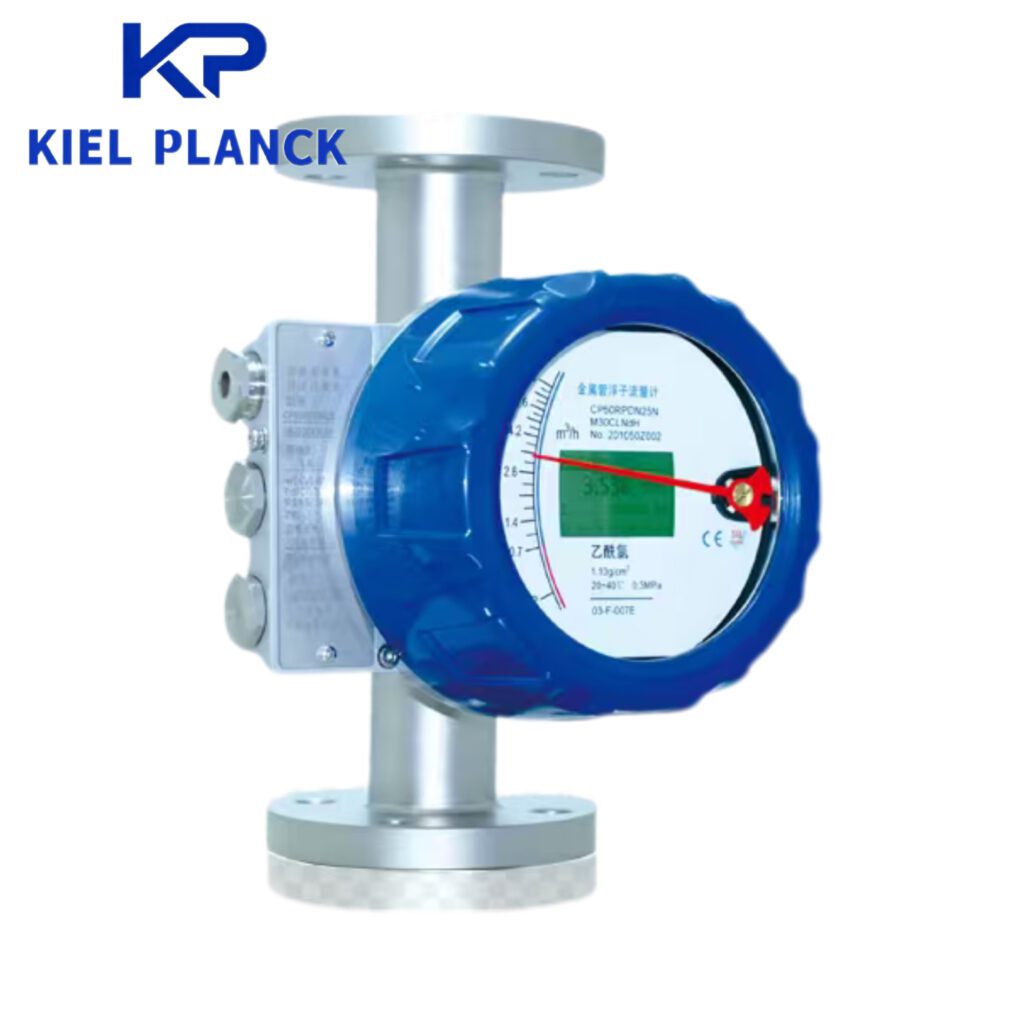
Dual-line large LCD display: Can simultaneously display instantaneous flow and cumulative flow; backlighting optional.
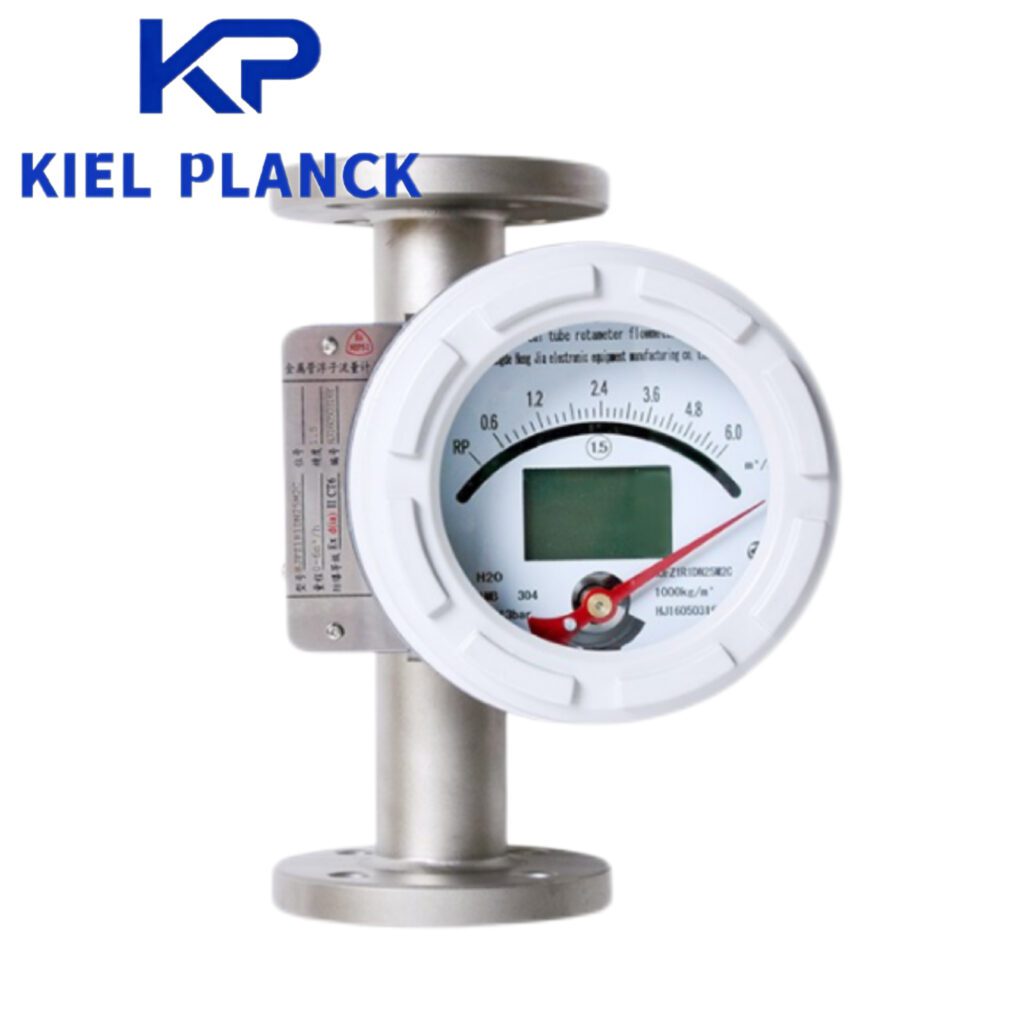
Mechanical pointer display: Intuitive readings, convenient in low-light environments. Data Reading from Below
Single-Axis Sensitive Display: Improves reading accuracy and response speed
Abundant Signal Outputs
Standard Signal Output: Outputs 4-20mA current signal, RS485 communication signal, or pulse signal
Communication Protocol Support: Some models support HART protocol for easy on-site debugging and parameter setting
Alarm Function: Detects faults such as float jamming and abnormal media, and outputs alarm signals via relays
IV. Advantages for Special Applications
Harsh Environment Adaptability
High Temperature and High Pressure Resistance: Applicable temperature range -80℃~+400℃, pressure resistance up to 25MPa and above
Highly corrosive media: PTFE lining optional, resistant to strong acids and alkalis.
Flammable and explosive environments: Intrinsically safe and explosion-proof types available, certified ExdIICT6. GB Explosion-proof Certification
Suitability for Special Working Conditions
Small Diameter, Low Flow Rate: Particularly suitable for measuring the flow rate of small-diameter and low-flow-rate media.
Non-contact Magnetic Coupling: Avoids the risk of fluid leakage, ensuring stable operation of the instrument in high-temperature and high-pressure environments.
Multiple Installation Methods: Supports various installation methods such as vertical, horizontal, top-in/bottom-out, bottom-in/side-out, and side-in/side-out.
V. Maintenance and Reliability Features
Low Maintenance Requirements
Simple Structure: No easily damaged electronic components; daily maintenance only requires periodic cleaning of the cone tube and float.
Long Service Life: Up to 10 years or more, reducing long-term operating costs.
Low Failure Rate: Stable mechanical structure, reducing unexpected downtime.
Intelligent Maintenance Functions
Self-Diagnostic Function: Some intelligent models have self-diagnostic functions, which can detect faults such as float jamming and signal abnormalities.
Data Protection: Equipped with data recovery, data backup, and power-off protection functions to ensure data security.
Modular Design: Modular, intelligent, and card-type design of the indicator facilitates maintenance and upgrades.
Metal tube float flowmeters, with their all-metal structure, variable area measurement principle, and magnetic coupling transmission technology, have demonstrated excellent performance in industries such as chemical, petroleum, pharmaceutical, food, and water treatment. Their robustness, durability, adaptability, and ease of maintenance make them the premier instrument for flow measurement in complex industrial environments, particularly suitable for monitoring flow of high-temperature, high-pressure, highly corrosive, and flammable/explosive media.
Scan the QR code to receive more detailed information.