Pressure transmitters are core basic equipment for industrial process control, and their technical evolution profoundly drives the digital transformation of modern manufacturing. Traditional pressure transmitters focus merely on basic analog pressure acquisition, featuring single functions, fixed parameters, poor anti-interference ability and insufficient data traceability, which can no longer adapt to refined, intelligent and unattended industrial production demands. With the rapid iteration of MEMS sensing technology, embedded microprocessors and industrial Internet of Things (IIoT) systems, pressure transmitters have completed a crucial upgrade from simple measuring tools to intelligent digital sensing terminals. This article systematically sorts out the three-stage technical evolution path of pressure transmitters: traditional analog measurement, digital intelligent correction, and IoT-based smart sensing terminals. It analyzes the core technical differences, functional upgrades and industrial application values in each stage, and summarizes the future development trends of high-precision digitization, predictive diagnosis and remote collaborative management. The research aims to clarify the intelligent upgrading logic of industrial pressure measurement equipment and provide theoretical support for modern industrial intelligent instrumentation deployment.
1. Introduction
In traditional industrial production scenarios such as petrochemical, metallurgy, energy and pharmaceutical industries, pressure transmitters have long served as simple auxiliary measuring devices. Their core task is to convert physical pressure signals into standard 4-20mA analog electrical signals for system identification. However, traditional basic measurement products have obvious limitations: they lack temperature and nonlinear compensation functions, suffer from large manual calibration errors, cannot feed back equipment operating status, and fail to store historical data. With the booming development of industrial intelligent manufacturing and digital workshops, production systems require sensors to provide multi-dimensional data support, real-time status diagnosis and predictive early warning functions. Therefore, the intelligent digital upgrade of pressure transmitters has become an inevitable trend of industrial instrument iteration, realizing the transformation from single data collection to comprehensive sensing and intelligent interaction.
2. Stage 1: Traditional Basic Analog Measurement Mode
The early-stage pressure transmitters are typical single-function measuring instruments centered on basic pressure signal conversion. Adopting pure analog circuit design, they rely on hardware resistance and capacitance matching to complete signal output, without digital algorithm correction and data processing capabilities. These devices can only realize real-time pressure value output, unable to compensate temperature drift, mechanical hysteresis and nonlinear errors caused by environmental changes. Field calibration completely depends on manual adjustment, resulting in low efficiency and inconsistent accuracy. In addition, traditional transmitters have no data storage and remote communication functions, lacking operating state self-detection and fault recording capabilities. They can only serve as passive measuring tools, providing limited single-dimensional data for process control, and cannot support refined production management and equipment full-life-cycle monitoring.
3. Stage 2: Digital Intelligent Correction and Functional Upgrade
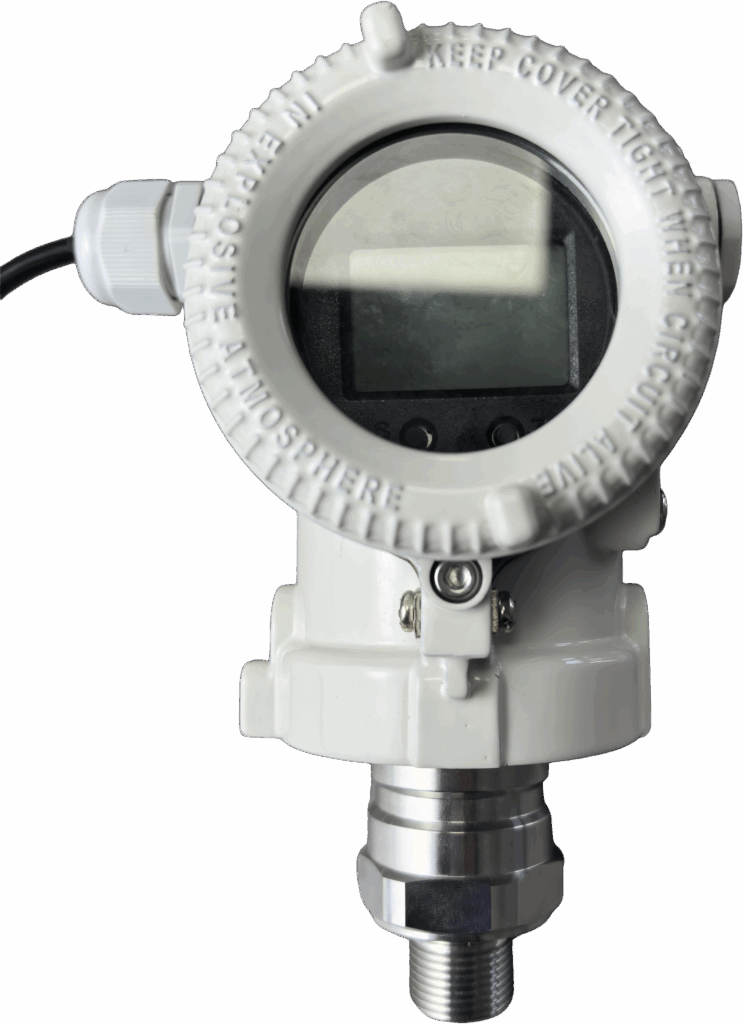
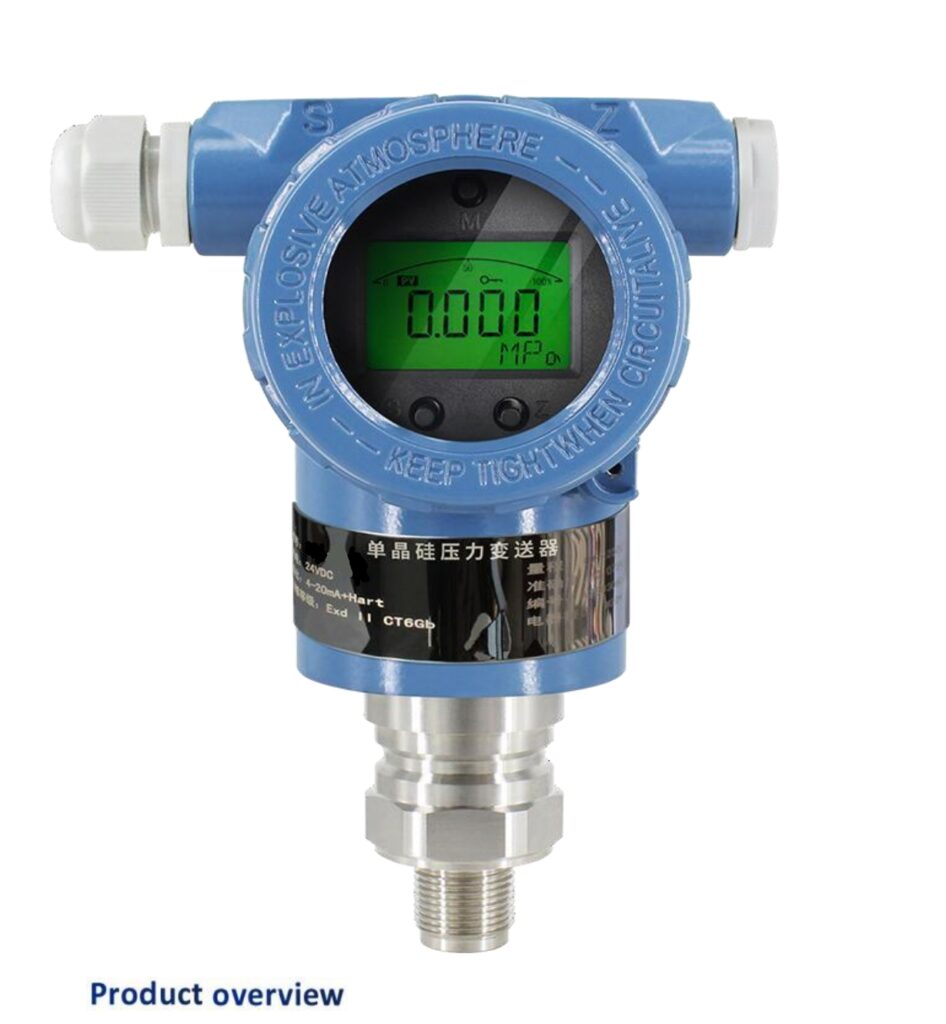
With the popularization of single-crystal silicon sensing chips and embedded micro-processing technology, pressure transmitters have entered the digital intelligent upgrading stage. Different from pure analog products, new-generation transmitters integrate high-precision AD conversion modules and built-in compensation algorithms. They realize automatic digital compensation for temperature drift, nonlinearity and long-term drift, greatly improving measurement repeatability and stability. Supported by HART, Modbus and other digital communication protocols, these transmitters support remote parameter configuration, range adjustment and online calibration, which fundamentally changes the traditional manual operation mode. Meanwhile, intelligent diagnosis functions are initially realized, including real-time monitoring of internal temperature, working voltage and signal state, which can effectively judge abnormal working conditions and reduce field maintenance costs. This stage realizes the transformation from “hardware determination” to “software optimization”, greatly improving the comprehensive performance of industrial pressure measurement.
4. Stage 3: Intelligent Digital Sensing Terminal for Industrial Internet
The latest technological evolution turns pressure transmitters into comprehensive intelligent sensing terminals integrating perception, calculation, diagnosis and interconnection. On the basis of high-precision digital measurement, modern transmitters are equipped with edge computing and data storage capabilities, supporting long-term historical data recording and trend analysis. They can actively identify working condition changes, judge equipment aging trends, and realize predictive maintenance early warning. Through seamless connection with industrial cloud platforms and DCS systems, the terminals support multi-terminal remote viewing, data interconnection and collaborative management. Beyond pressure monitoring, they synchronously collect multi-dimensional information such as temperature, vibration and operation duration, forming a complete industrial sensing data node. This upgrade enables pressure transmitters to change from single measuring tools to core data sources of industrial digital systems, supporting unmanned workshops and intelligent factory construction.
5. Future Development Trends and Industrial Value
The intelligent upgrade of pressure transmitters effectively solves the pain points of low accuracy, single function and difficult management of traditional basic measuring instruments. It significantly reduces manual calibration and maintenance costs, improves the overall automation level of industrial production, and ensures process stability and production safety. In the future, pressure transmitters will further develop in the direction of higher precision, stronger environmental adaptability, deeper intelligent diagnosis and safer data transmission. With the continuous integration of artificial intelligence and industrial big data technology, future sensing terminals will realize autonomous judgment, adaptive optimization and intelligent fault recovery, becoming indispensable core basic equipment for smart industrial systems.
6. Conclusion
The technical evolution of pressure transmitters represents a complete upgrade from basic analog measurement to digital intelligent sensing terminals. From single signal output and manual maintenance in the initial stage, to algorithm compensation and remote diagnosis in the digital stage, and finally to multi-dimensional perception, edge computing and cloud interconnection in the intelligent terminal stage, each iteration greatly improves industrial measurement efficiency and intelligent management level. This transformation not only enhances the accuracy and stability of pressure monitoring, but also empowers the digital and intelligent upgrading of the entire industrial process control system. As key industrial sensing terminals, upgraded pressure transmitters will continue to provide solid technical support for high-quality and intelligent development of modern process industries.
Scan the QR code to receive more detailed information.