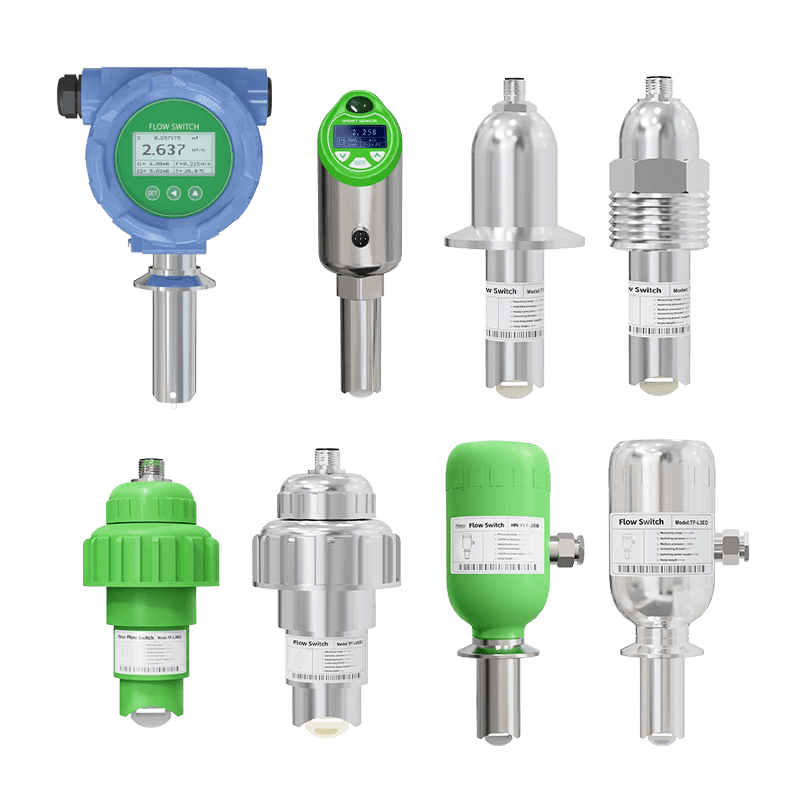
Electromagnetic flow meters are widely applied in water treatment, chemical engineering, metallurgy, pharmaceutical and sewage monitoring industries for their advantages of no pressure loss, high repeatability and unrestricted medium density. Unlike mechanical flow meters, the measurement accuracy and service life of electromagnetic flow meters depend entirely on three core matching parameters: pipe diameter, tube lining material and electrode type. Improper selection often leads to low measuring sensitivity, lining corrosion, electrode wear, signal failure and long-term operational instability. This article systematically elaborates a one-stop scientific selection scheme for electromagnetic flow meters. It analyzes the matching logic of caliber specification based on flow velocity range, summarizes the applicable scenarios of different lining materials for corrosive and abrasive media, and clarifies the electrode selection principles corresponding to fluid characteristics. The research provides practical and standardized selection guidance for industrial engineering deployment, effectively avoiding common selection mistakes and improving long-term metering reliability.
1. Introduction
As mainstream volumetric flow measuring equipment for conductive liquids, electromagnetic flow meters have become indispensable instruments for industrial fluid metering and process control. Their non-blocking structure and stable performance adapt to most liquid working conditions, but their actual field performance varies greatly due to unreasonable parameter matching. In engineering practice, most measurement failures are not caused by product quality defects, but by mismatched caliber, unsuitable lining material or improperly selected electrodes. For example, excessive caliber leads to low flow velocity and invalid measurement, while inferior lining causes medium corrosion and equipment leakage. Therefore, mastering the one-stop matching method of diameter, lining and electrode is the core premise to ensure high-precision and long-term stable operation of electromagnetic flow meters.
2. Caliber Selection: Core Basis for Effective Flow Velocity Matching
Caliber selection determines the effective measuring range and sensitivity of the flow meter. The core selection principle is to maintain the medium flow velocity between 0.5 m/s and 3 m/s, which is the optimal linear working interval for electromagnetic measurement. For conventional process pipelines, if the actual flow velocity is too low after matching the original pipe diameter, the measuring signal will be extremely weak, resulting in poor repeatability and large errors. In contrast, an excessively high flow velocity will cause severe lining abrasion and signal fluctuation.
For low-flow and micro-monitoring scenarios, reduced-diameter matching is recommended to increase flow velocity and ensure effective signal induction. For large-flow sewage and circulating water systems, conventional equal-diameter installation can meet stable measurement demands. Scientific caliber matching ensures that the flow meter always works within the high-precision interval, avoiding the common industry problem of “large caliber with small flow” that leads to measurement failure.
3. Lining Selection: Key Barrier for Anti-Corrosion and Anti-Abrasion
The lining is the isolation and protective layer of electromagnetic flow meters, directly facing the measured medium, and its material determines the equipment’s corrosion resistance, temperature resistance and wear resistance. Common lining materials include PTFE, F46, rubber and polyurethane. PTFE lining features excellent acid and alkali corrosion resistance and high-temperature stability, suitable for strong corrosive media such as chemical solvents, acid-base liquids and pharmaceutical solutions.
Soft rubber lining has good elasticity and wear resistance, ideal for domestic water, river water and conventional sewage with fine suspended particles. Polyurethane lining is specialized for abrasive media such as mud, slurry and coal water slurry, with strong anti-wear performance but poor corrosion resistance to chemical liquids. F46 lining balances corrosion resistance and processing performance, applicable to medium-temperature and medium-corrosion industrial fluids. Reasonable lining matching can effectively prevent pipeline leakage and medium damage, extending the service life of the flow meter.
4. Electrode Selection: Guarantee for Stable Signal Induction
As the core signal induction component, electrodes directly capture fluid induced electromotive force, and their material compatibility determines signal stability and anti-oxidation ability. Common electrode materials include 316L stainless steel, Hastelloy, titanium and tantalum. 316L stainless steel electrodes are suitable for conventional water supply and neutral liquid scenarios, with cost-effective and stable basic performance.
Hastelloy electrodes adapt to weak corrosive chemical media such as low-concentration acid and salt solutions. Titanium electrodes are used for strong oxidizing media including seawater and chloride solution. Tantalum electrodes are applicable for ultra-strong corrosive working conditions such as concentrated sulfuric acid and strong alkali liquid. In addition, for easy-scaling media, blunt electrodes or scraping electrode structures can be selected to avoid signal attenuation caused by surface scaling, ensuring long-term stable signal induction.
5. Conclusion
The scientific selection of electromagnetic flow meters relies on the one-stop coordinated matching of caliber, lining and electrode. Caliber matching ensures effective flow velocity and measuring accuracy, lining selection guarantees medium adaptability and equipment durability, and electrode matching stabilizes signal induction performance. The three core parameters restrict and complement each other, jointly determining the overall field performance of the flow meter. Industrial users should avoid single-parameter selection and formulate comprehensive matching schemes based on actual flow range, medium corrosion and abrasion characteristics. Standardized one-stop selection can effectively eliminate measurement errors and equipment failure risks, providing reliable fluid metering support for industrial production, environmental monitoring and process control.
Scan the QR code to receive more detailed information.