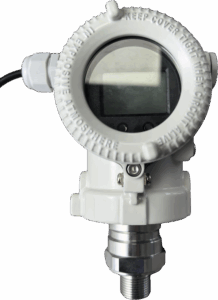
Although the numerical difference is small, the performance gap in long-term stability, anti-interference capability, and extreme condition adaptability significantly affects production control and safety monitoring. This article systematically compares the technical principles, performance differences, applicable working conditions, and application values of 0.05% and 0.075% accuracy monocrystalline silicon pressure transmitters. It analyzes the advantages and limitations of the two grades in high-precision calibration, process closed-loop control, and safety monitoring scenarios, and summarizes scientific selection strategies combined with engineering requirements. The research aims to provide clear technical guidance for instrument procurement, engineering design and on-site configuration, helping enterprises balance measurement accuracy, operational cost and scenario adaptability.
Keywords: monocrystalline silicon pressure transmitter; measurement accuracy; 0.05% FS; 0.075% FS; industrial instrument selection
1. Introduction
With the continuous upgrading of industrial intelligent manufacturing and precision process control, traditional low-accuracy pressure measuring instruments can no longer meet the stringent requirements of high-end scenarios such as nuclear power equipment, hydrogen energy production, and fine chemical reaction control. Relying on superior chip consistency and low drift characteristics, monocrystalline silicon pressure transmitters have gradually replaced diffused silicon transmitters and become the mainstream industrial measuring instruments. In the market, 0.075% FS accuracy is the standard high-precision grade for general industrial safety and process control, while 0.05% FS belongs to ultra-high precision grade for sophisticated industrial scenarios. Many engineering practitioners confuse the two accuracy grades, leading to unreasonable instrument selection, either causing redundant cost investment or insufficient measurement precision to support process control. Therefore, an in-depth comparison of the two accuracy grades is essential for standardized instrument application.
2. Technical Essence and Basic Performance Parameters
The accuracy difference between 0.05% FS and 0.075% FS monocrystalline silicon transmitters originates from chip manufacturing processes and calibration algorithms. The 0.075% accuracy transmitter adopts standard monocrystalline silicon chips and conventional temperature compensation algorithms, which can eliminate most conventional temperature and pressure errors, meeting the precision requirements of most industrial process monitoring. In contrast, the 0.05% accuracy model uses high-purity customized monocrystalline silicon sensing chips with stricter production tolerance control, and adopts multi-point dynamic temperature and pressure dual compensation algorithms. It effectively reduces nonlinear errors, hysteresis errors and temperature drift errors, achieving overall higher measurement consistency.
In terms of basic performance, both transmitters feature excellent long-term stability, but the 0.05% model has lower annual drift, better repeatability and stronger anti-electromagnetic interference ability. Under standard laboratory conditions, the measurement error of the 0.05% transmitter is 30% lower than that of the 0.075% model, showing obvious advantages in tiny pressure change capture.
3. Scenario Performance Comparison and Adaptability Analysis
In conventional industrial scenarios, including conventional thermal power auxiliary systems, general fluid pipeline monitoring and ordinary mechanical equipment pressure detection, the 0.075% FS transmitter fully meets operational requirements. Its measurement precision can satisfy daily process control and parameter recording, with higher cost performance and stable operation, making it suitable for large-scale conventional equipment deployment.
For high-precision demanding scenarios such as hydrogenation unit fine pressure control, nuclear power safety-level monitoring, laboratory precision calibration and ultra-stable process closed-loop control, the 0.05% FS transmitter shows irreplaceable advantages. It can capture subtle pressure fluctuations that the 0.075% model cannot identify, effectively avoiding process parameter deviation caused by tiny measurement errors. In safety interlock systems requiring ultra-high measurement reliability, the 0.05% accuracy grade can reduce false alarm and missed detection risks, improving the overall safety integrity of the system.
4. Engineering Selection Principles and Cost-Benefit Analysis
In engineering procurement and selection, blind pursuit of ultra-high precision or excessive pursuit of cost reduction should be avoided. For general monitoring loops without strict precision requirements, 0.075% FS transmitters are recommended to reduce procurement and maintenance costs while ensuring qualified measurement performance. For core process loops, safety-level protection loops and precision experimental detection loops that determine product quality and unit safety, 0.05% FS ultra-high precision transmitters must be prioritized to guarantee process stability and operational safety. Although the 0.05% model has higher procurement cost, its lower drift and higher stability reduce calibration frequency and failure rate, bringing better long-term comprehensive economic benefits.
5. Conclusion
Both 0.05% FS and 0.075% FS monocrystalline silicon pressure transmitters belong to high-precision industrial instruments with reliable performance and stable quality. The 0.075% accuracy grade features high cost performance and sufficient precision for most conventional industrial scenarios, serving as the optimal choice for universal industrial monitoring. The 0.05% ultra-high precision grade has prominent advantages in error control, tiny signal capture and extreme condition stability, and is more suitable for core precision control and safety-level monitoring scenarios. Engineering selection should fully combine actual process requirements, loop importance and cost budget to achieve accurate matching of instrument performance and application scenarios. Reasonable selection of accuracy grades can maximize the measurement value of monocrystalline silicon pressure transmitters, ensuring efficient, stable and safe operation of industrial production systems.
Scan the QR code to receive more detailed information.