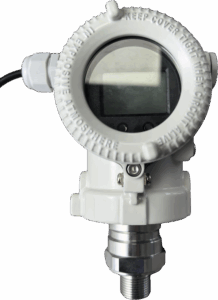
For procurement buyers and engineering designers, distinguishing their core advantages and applicable scenarios is critical to avoiding over-selection or insufficient performance matching. This article systematically compares monocrystalline silicon and diffused silicon pressure transmitters in terms of working principles, accuracy stability, temperature drift, service life, and cost performance. Combined with a practical selection comparison framework, it clarifies the optimal application scenarios of each product and summarizes targeted procurement strategies. The purpose is to provide buyers with intuitive, standardized selection guidance, improve instrument matching accuracy, and balance industrial operational reliability and procurement economy.
Keywords: monocrystalline silicon; diffused silicon; pressure transmitter; instrument selection; procurement comparison
1. Introduction
With the upgrading of industrial intelligent control and safety supervision standards, the performance requirements for pressure monitoring instruments continue to rise. Diffused silicon pressure transmitters have long occupied the mid-to-low-end industrial market due to their mature technology and low manufacturing cost, meeting basic general industrial measurement needs. In recent years, monocrystalline silicon pressure transmitters have been rapidly popularized in high-end industrial scenarios by virtue of ultra-high accuracy, extremely low drift, and strong environmental adaptability. Many procurement personnel lack systematic discrimination between the two technologies, resulting in frequent problems such as inaccurate measurement of key equipment, frequent instrument calibration, and waste of procurement costs. Therefore, a comprehensive performance and scenario comparison is essential for scientific and economical instrument procurement.
2. Fundamental Technical Differences
The essential gap between the two transmitters lies in chip manufacturing and stress conduction mechanisms. Diffused silicon transmitters form resistors by diffusing impurities on silicon wafers, with stress changes generated by surface deformation during pressure measurement. This technology has simple processing and low cost, but the resistor distribution is prone to inconsistency, leading to inherent nonlinear errors and large temperature drift. In contrast, monocrystalline silicon transmitters adopt an integrated monocrystalline silicon substrate with a uniform molecular structure. The stress conduction is more stable and consistent, with no structural residual stress. The overall chip uniformity greatly reduces basic measurement errors, laying a foundation for high-precision and long-term stable operation.
3. Core Performance Comparison
In terms of measurement accuracy, mainstream diffused silicon transmitters have a basic accuracy of 0.2% FS to 0.1% FS, suitable for general parameter monitoring. Monocrystalline silicon products stably reach 0.075% FS or even 0.05% FS ultra-high accuracy, capable of capturing subtle pressure fluctuations. For stability, diffused silicon transmitters have obvious annual drift and are susceptible to temperature and vibration interference, requiring quarterly or semi-annual calibration. Monocrystalline silicon transmitters feature ultra-low long-term drift, maintaining stable performance for more than two years without frequent calibration. In terms of environmental adaptability, monocrystalline silicon products show stronger resistance to high temperature, low temperature, and electromagnetic interference, while diffused silicon is more prone to measurement deviation under extreme working conditions.
4. Applicable Scenarios and Procurement Selection Rules
Diffused silicon pressure transmitters are the best choice for low-demand conventional scenarios, including ordinary water pipeline monitoring, general mechanical equipment pressure detection, and non-cyclic auxiliary process systems. They deliver outstanding cost performance with lower procurement and maintenance costs, fully meeting the basic monitoring needs of non-core loops. Monocrystalline silicon transmitters are targeted at high-standard industrial scenarios, such as nuclear power safety monitoring, hydrogenation unit precision control, hydrogen storage and refueling station pressure monitoring, and thermal power core process loops. Their high stability and high precision effectively avoid safety risks and production losses caused by measurement errors, which is irreplaceable for safety-related and precision control loops.
5. Comprehensive Selection Strategy for Buyers
In actual procurement, buyers should adhere to the principle of scenario matching and cost optimization. For non-critical monitoring loops with low precision requirements and stable working conditions, diffused silicon transmitters are prioritized to control project costs. For core production loops, safety interlock systems, and equipment operating under high temperature, high vibration and high precision requirements, monocrystalline silicon transmitters must be selected to ensure operational safety and process stability. It is unwise to blindly pursue high-end performance or excessively pursue low prices; reasonable selection should comprehensively consider loop importance, working condition complexity, and long-term operation and maintenance costs.
6. Conclusion
Monocrystalline silicon and diffused silicon pressure transmitters have their own technical characteristics and application advantages. Diffused silicon transmitters are cost-effective and suitable for general industrial conventional monitoring scenarios, meeting basic pressure measurement needs with low comprehensive investment. Monocrystalline silicon transmitters excel in measurement accuracy, long-term stability and extreme condition adaptability, which are indispensable for high-precision and safety-level industrial scenarios. Procurement buyers need to distinguish technical differences, match instruments according to actual working conditions and loop standards, and formulate scientific selection schemes. Reasonable selection can not only ensure the safe and stable operation of industrial systems, but also effectively control project costs, realizing the optimal balance between instrument performance and economic benefits.
Scan the QR code to receive more detailed information.