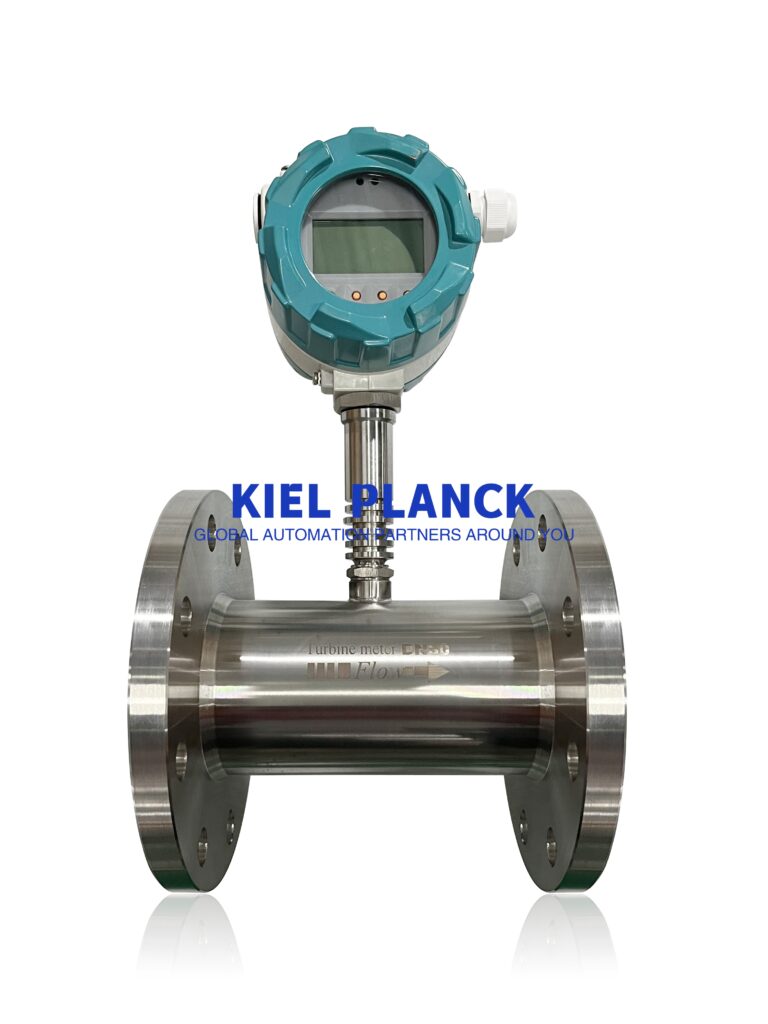
Global hydrogen energy infrastructure keeps expanding, and accurate hydrogen metering emerges as one critical bottleneck for commercial‑scale refueling stations. The refueling process features rapid flow surges: flow rate rises sharply at the start of refueling, maintains stable output, and drops quickly when filling completes. Hydrogen is low‑density compressible gas under working pressure, bringing challenges to measuring instruments. Many alternative meter types suffer from slow response, poor performance under varying flow conditions or excessive investment costs. Turbine flow meters measure flow velocity by detecting rotating speed of impeller blades driven by gas flow, and convert pulse signals into flow data cooperating with temperature‑pressure compensation modules to realize accurate volume and mass calculation for high‑pressure hydrogen.
Core Advantages for Hydrogen Refueling Metering
First of all, turbine flow meters deliver outstanding accuracy and repeatability for custody‑transfer applications. High‑quality gas turbine units achieve measurement accuracy of ±0.5 % of reading, while repeatability can reach ±0.1 %~±0.2 %. Superior repeatability guarantees consistent measuring results in repeated refueling cycles, effectively reducing commercial disputes between station operators and vehicle users.
Secondly, fast dynamic response fits intermittent refueling working conditions. Hydrogen refueling is a typical transient process with quick flow change. Low‑inertia turbine impeller responds within milliseconds to flow variation, capturing real‑time flow data during start‑up and shut‑down phases, which many static‑principle meters cannot accomplish well. Meanwhile, properly‑designed turbine sensors maintain low pressure loss under high‑pressure hydrogen, avoiding extra energy consumption for hydrogen compression systems.
Thirdly, high‑pressure‑resistant compact mechanical structure adapts to refueling station layout. Special‑modified turbine flow meters can endure hydrogen working pressure up to 70 MPa, matching mainstream vehicle refueling specifications. Their compact body saves limited installation space inside refueling dispensers. The pulse output signal shows strong anti‑interference performance, easy to connect with station control system for data recording and traceability. Compared with high‑pressure Coriolis mass flow meters, turbine solutions bring obvious advantages on equipment procurement cost while satisfying metering standards, which promotes large‑scale popularization of refueling stations.
However, turbine flow meters have inherent restrictions. Rotating impeller and precision bearings are vulnerable to particle contamination inside hydrogen pipelines. Tiny solid impurities will accelerate bearing abrasion, gradually shifting meter coefficient and degrading measuring precision. Therefore, installation of high‑efficiency upstream filters becomes mandatory. Periodic inspection and calibration are required to offset long‑term bearing wear influence on measurement performance. Temperature‑pressure compensation modules must be equipped, as turbine meters output volume flow originally; mass hydrogen data for billing can only be obtained after real‑time compensation for pressure and gas temperature variation.
Practical Application Suggestions
To maximize turbine meter performance at hydrogen refueling stations, several configuration rules should be followed. Install qualified filters to block particles; reserve sufficient straight pipe sections on upstream and downstream sides to stabilize flow field; adopt explosion‑proof electronic components compliant with hydrogen hazardous‑area requirements. Operators shall establish regular calibration schedules, monitoring meter coefficient changes over running time. When hydrogen purity declines or impurity content increases, maintenance cycles need to be shortened correspondingly. Under above standardized deployment, turbine flow meters can deliver stable and trustworthy metering performance for years of refueling service.
<h2>Conclusion</h2> <p>Turbine flow meters win priority in hydrogen refueling‑station metering mainly because of high repeatability, rapid dynamic response, compact high‑pressure‑resistant structure and balanced comprehensive cost. Though limited by movable‑part wear and medium‑cleanliness demands, these drawbacks can be mitigated via supporting filtering equipment, standardized installation and periodic calibration. For most commercial refueling stations pursuing both metering credibility and controllable investment, high‑pressure turbine flow meters represent a mature and practical option. As bearing material and anti‑pollution structural design keep improving, turbine‑meter comprehensive performance will be further enhanced to support fast‑growing hydrogen refueling infrastructure worldwide.
Scan the QR code to receive more detailed information.