This article elaborates on the application value of high-pressure electromagnetic flow meters in nuclear power cooling circulation systems and hydrogen station cooling water pipelines, focuses on the structural differences, pressure resistance performance and scenario adaptability of flange connection and integrated clamp-type structures, and summarizes scientific configuration selection strategies. It provides reliable technical guidance for high-safety, long-term stable flow monitoring in nuclear power and high-pressure hydrogen energy scenarios.
1. Introduction
As key low-carbon energy infrastructures, nuclear power plants and commercial hydrogen refueling stations have extremely high technical thresholds for industrial measuring instruments. Their internal circulating fluid systems operate under persistent high pressure, temperature fluctuation and mechanical vibration, which easily cause fatigue damage and accuracy attenuation of traditional turbine, vortex and ordinary electromagnetic flow meters. Unlike conventional industrial pipelines, nuclear and hydrogen energy scenarios prioritize operational safety and equipment stability over basic measurement precision, requiring instruments to feature high pressure resistance, excellent sealing performance and low maintenance characteristics. High-pressure electromagnetic flow meters are professionally optimized for extreme high-load environments. According to different installation and structural forms, they are divided into flange connection type and integrated clamp type, each with differentiated advantages to adapt to diverse pipeline layouts and working condition demands of nuclear power and hydrogen refueling stations.
2. Working Condition Characteristics and Monitoring Difficulties of Nuclear Power and Hydrogen Refueling Scenarios
Both nuclear power and high-pressure hydrogen refueling scenarios pose harsh challenges to flow monitoring equipment. In nuclear power plants, cooling water and process fluid pipelines work under stable medium and high pressure with long-term continuous operation, requiring instruments to resist radiation interference, pipeline vibration and thermal cycling aging. Any seal leakage or measurement failure may affect the heat balance of nuclear units and bring potential safety hazards. In high-pressure hydrogen refueling stations, the cooling water system matches high-pressure hydrogen compression and refueling processes, with frequent load fluctuations and strong instantaneous pipeline vibration. Conventional instruments are prone to loose connection, signal jitter and short service life. In addition, hydrogen energy facilities belong to flammable and explosive environments, which put forward strict explosion-proof and structural safety requirements for flow meters, eliminating hidden dangers of medium leakage caused by unqualified connection structures.
3. Structural Advantages and Scenario Adaptation of Flange-Type High-Pressure Electromagnetic Flow Meters
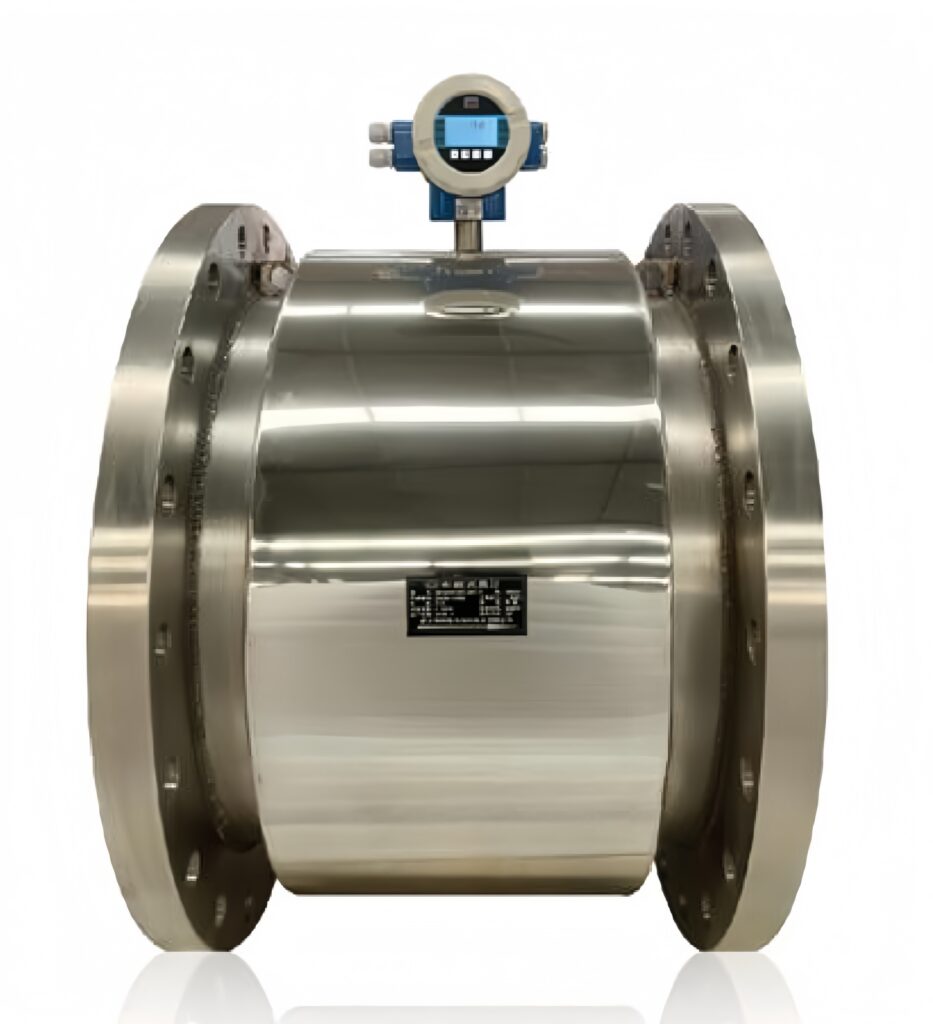
Flange-type high-pressure electromagnetic flow meters adopt integral forged thickened flange structure and multi-layer composite sealing design, with excellent ultra-high pressure resistance and structural stability. This structural form can stably withstand long-term working pressure up to 16MPa or higher, effectively resisting pipeline thermal deformation and mechanical stretching. The standardized bolt fastening method ensures uniform stress and reliable sealing, avoiding medium leakage under high-pressure impact. Equipped with high-temperature and high-pressure resistant PFA lining and integrated anti-vibration sensing components, flange-type meters are most suitable for main process pipelines of nuclear power plants and high-pressure main circulation pipelines of hydrogen refueling stations. For heavy-load, long-distance and fixed nuclear-grade pipeline systems, flange connection provides permanent and stable installation performance, meeting the long-term maintenance-free operation requirements of core energy equipment.
4. Performance Characteristics and Application of Integrated Clamp-Type High-Pressure Electromagnetic Flow Meters
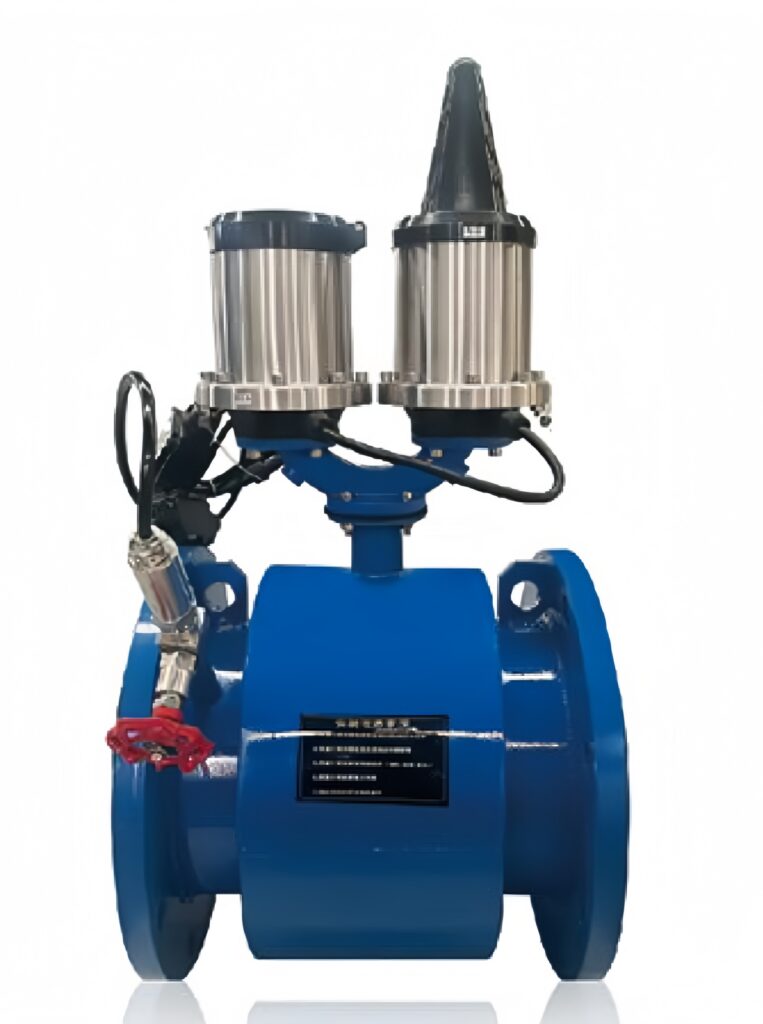
Different from traditional flange structures, the integrated clamp-type high-pressure electromagnetic flow meter adopts an integrated body design with quick clamp fastening, featuring compact structure, convenient disassembly and no dead-angle sealing. Although its ultimate pressure resistance is slightly lower than that of flange type, it still fully meets the working pressure requirements of auxiliary pipelines and branch cooling pipelines in hydrogen stations and nuclear power plants. The integrated structure avoids loose local stress caused by multi-bolt fastening, effectively weakening vibration interference and improving signal stability. It is especially suitable for short-cycle maintenance scenarios, temporary monitoring pipelines and narrow installation spaces in hydrogen refueling stations. Its quick installation and replacement characteristics greatly improve maintenance efficiency and reduce equipment downtime loss, making it highly cost-effective for auxiliary system flow monitoring.
5. Configuration Selection Strategy for Nuclear Power and Hydrogen Station Working Conditions
For core main pipelines with high pressure, long-term continuous operation and high safety level requirements in nuclear power plants and hydrogen refueling stations, flange-type high-pressure electromagnetic flow meters should be prioritized to ensure ultra-high structural stability and sealing reliability. For auxiliary branch pipelines, cooling water branches and frequently maintained monitoring points, integrated clamp-type products are more suitable to balance monitoring accuracy and operational convenience. Combined with the anti-explosion grade and radiation resistance requirements of energy scenarios, matched high-pressure lining and anti-interference sensing modules can further optimize field adaptability, realizing full-scene high-precision and high-safety flow monitoring.
6. Conclusion
High-pressure electromagnetic flow meters solve the bottleneck problems of poor pressure resistance and unstable operation of traditional instruments in nuclear power and hydrogen refueling station scenarios. Flange-type structures excel in ultra-high pressure resistance and long-term safety stability, adapting to core main pipeline monitoring, while integrated clamp-type structures feature flexible installation and convenient maintenance, perfectly matching auxiliary pipeline working conditions. Reasonable selection of two structural configurations can realize full-coverage reliable flow monitoring for high-standard energy facilities. With the accelerated construction of nuclear power and hydrogen energy industries, high-pressure electromagnetic flow meters with differentiated structural designs will become standard supporting equipment, continuously guaranteeing safe, stable and efficient operation of new energy and nuclear power systems.
Scan the QR code to receive more detailed information.