Most field failures are mistakenly attributed to product quality defects, while the core causes lie in unreasonable parameter selection in the early procurement stage. This article systematically analyzes three critical selection parameters that determine turbine bearing service life, including flow velocity matching, bearing material adaptation and medium cleanliness grade matching. It explains the failure mechanism of short-life bearings under mismatched parameters, summarizes targeted selection and optimization schemes, and provides practical guidance for long-term stable operation and full-life-cycle management of industrial turbine flow meters.
1. Introduction
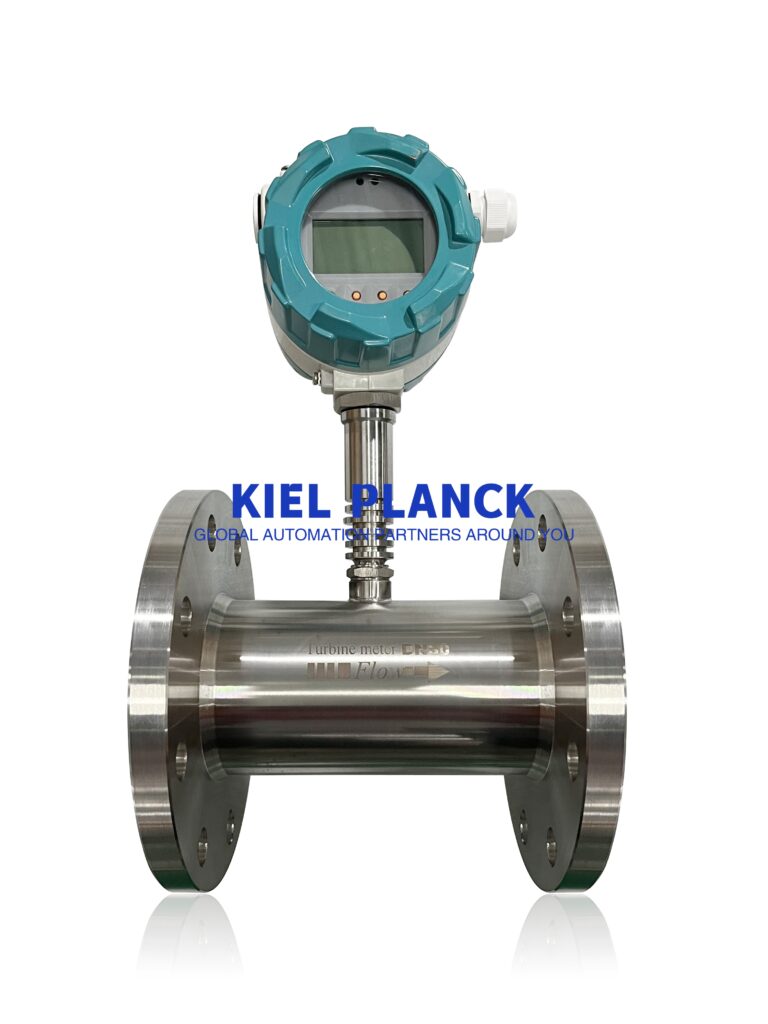
As core precision metering equipment for fluid custody transfer and process monitoring, turbine flow meters rely on rotating impellers and precision bearings to capture flow signals. The bearing is the most vulnerable and core load-bearing component, directly deciding the service life and measurement stability of the entire instrument. In actual industrial operation, a large number of turbine meters experience abnormal bearing wear, jittered signals and even stalling within half a year of use. After inspection, most faulty devices have no manufacturing defects, and premature failure stems entirely from inappropriate type selection rather than on-site installation errors. Unmatched operating parameters will cause long-term overload operation, micro-abrasion and corrosion fatigue of bearings. Therefore, clarifying the three key selection parameters affecting bearing life is essential to solve the problem of short bearing service life and extend the cycle of equipment maintenance and replacement.
2. Three Key Selection Parameters Causing Premature Bearing Failure
The first core parameter is unreasonable flow velocity range matching. Each turbine bearing has a rated optimal flow velocity interval designed for long-term operation. Many users oversize or undersize the meter caliber during selection blindly pursuing high precision. Excessively high flow velocity brings continuous strong fluid impact and axial pressure load on the bearing, resulting in rapid fatigue wear of the bearing surface. In contrast, long-term low-flow and low-speed operation causes insufficient fluid lubrication for bearings, aggravating dry friction and micro-abrasion. Both extreme working conditions will drastically shorten bearing life, leading to failure within six months in severe cases.
The second decisive parameter is mismatched bearing material for medium characteristics. Industrial measured media include high-pressure hydrogen, alkaline liquid, corrosive chemical fluid and impurity-containing industrial water, which put forward different requirements for bearing corrosion resistance and wear resistance. Common stainless steel bearings are only suitable for clean and neutral media. When applied in corrosive or humid environments, they are prone to electrochemical corrosion and surface pitting, damaging the smooth lubrication structure. Hard alloy and ceramic bearings, though high-performance, will suffer brittle wear if selected for high-impact slurry media. Blind material matching without considering medium properties is a major cause of rapid bearing failure.
The third critical parameter is ignored medium cleanliness grade adaptation. Most standard turbine bearings are designed for clean media with few impurities. In petrochemical and industrial fluid scenarios, tiny solid particles, dust and crystalline impurities are often mixed in the medium. If users select conventional ordinary bearings without matching anti-wear and anti-fouling bearing configurations according to medium cleanliness, fine impurities will enter the bearing clearance. These particles form abrasive particles during high-speed rotation, continuously scratching the bearing inner wall, resulting in rapid wear, clamping stagnation and premature scrapping within a short service cycle.
3. Parameter Optimization and Scientific Selection Strategies
To fundamentally solve the problem of insufficient bearing life, standardized parameter matching must be implemented in the selection stage. Firstly, optimize the flow velocity range and caliber selection according to actual working conditions, controlling the operating flow velocity within the optimal rated interval of 0.5 to 3 m/s to avoid overload impact and insufficient lubrication. Secondly, select bearing materials in a targeted manner based on medium attributes, choosing ceramic bearings for corrosive media and high-hardness alloy bearings for impurity-containing abrasive media. Thirdly, configure professional anti-fouling bearings and supporting front-end filtering devices for unclean media to block particle impurities and protect bearing operating clearance.
In addition, combined with working condition fluctuation and operating cycle, reserve a certain parameter margin during selection to avoid long-term full-load operation of bearings. Reasonable parameter matching can maximize the inherent service life of bearings, realizing long-term maintenance-free operation of turbine flow meters.
4. Conclusion
The premature failure of turbine flow meter bearings with a service life of less than six months is mainly caused by three unreasonable selection parameters: mismatched flow velocity range, inappropriate bearing material and neglected medium cleanliness adaptation, rather than product quality problems. Unscientific parameter matching leads to fatigue wear, corrosion damage and abrasive wear of bearings under long-term industrial operation. Only by combining actual working conditions, optimizing flow range calibration, matching exclusive bearing materials and adapting to medium cleanliness can users effectively avoid short-life faults. Standardized parameter selection not only extends the full-life-cycle service performance of turbine flow meters, but also reduces equipment replacement costs and downtime losses, ensuring stable and efficient operation of industrial fluid metering systems.
Scan the QR code to receive more detailed information.