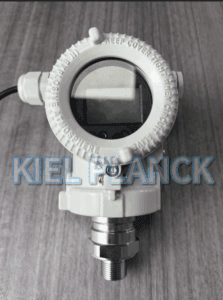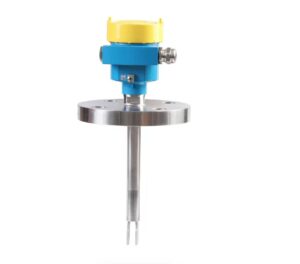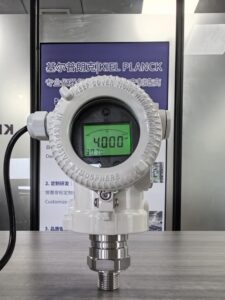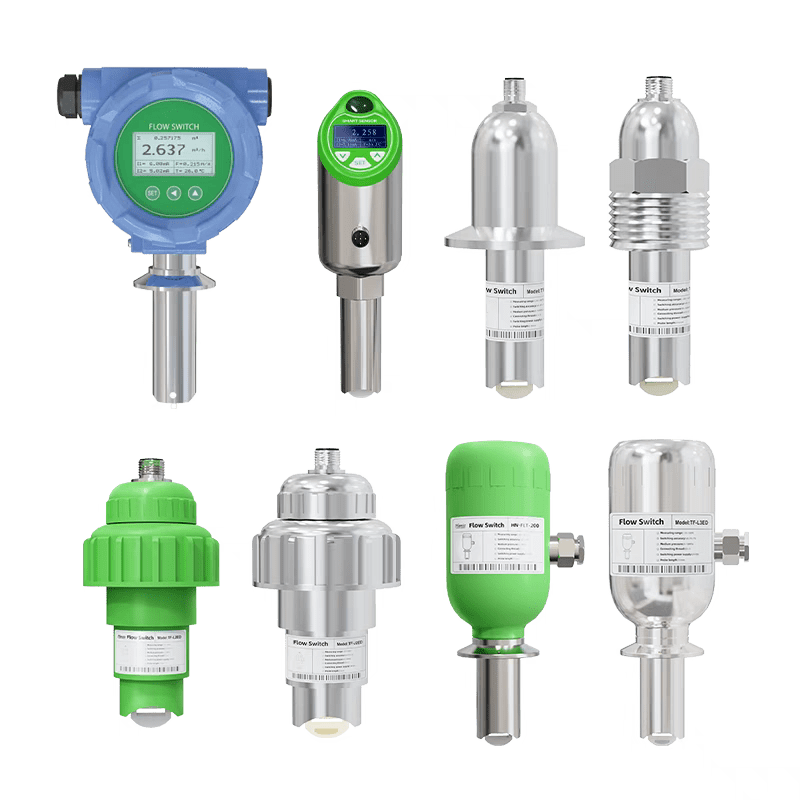
Industrial pressure transmitters are expected to provide reliable measurement across different operating conditions.
For applications involving chemical processing, energy equipment, water treatment, and industrial automation, accuracy and measurement flexibility are important selection factors.
Some single-crystal silicon pressure transmitters offer specifications such as 0.075% accuracy and a 100:1 turndown ratio.
However, these figures should always be evaluated according to the manufacturer’s datasheet and actual test results.
1. What Does 0.075% Accuracy Mean?
Accuracy describes how close a measured value is to the reference value under specified conditions.
If a transmitter has a reference accuracy specification of ±0.075% of calibrated span, the corresponding reference error can be calculated as:
Reference error = Calibrated span × 0.075%
For example, for a calibrated span of 100 kPa:
100 kPa × 0.075% = 0.075 kPa
This is an illustrative calculation based on the stated accuracy definition.
It does not automatically include temperature effects, long-term drift, installation effects, or other sources of measurement uncertainty.
Buyers should check whether the specification represents reference accuracy or a broader total performance value.
2. What Is a 100:1 Turndown Ratio?
Turndown ratio describes how much a transmitter’s measurement range can be adjusted relative to its upper range value.
For example, a nominal upper range value of 100 kPa with a 100:1 turndown capability may allow a configured span as low as 1 kPa, subject to the manufacturer’s specified limits.
However, this does not mean that every configured span maintains the same accuracy.
The usable range must be verified using the manufacturer’s performance specifications.
3. Why Accuracy and Turndown Must Be Evaluated Together
A wide turndown ratio provides configuration flexibility.
However, when a transmitter is configured for a much smaller span, the actual measurement performance may be affected.
Important factors include:
Sensor characteristics.
Calibrated span.
Temperature effects.
Zero-point stability.
Long-term drift.
Environmental conditions.
A good selection process should evaluate the accuracy at the intended configured range rather than simply choosing the largest advertised turndown ratio.
4. Applications Across Different Industries
Depending on the model and configuration, single-crystal silicon pressure transmitters may be considered for:
Chemical processing: Reactor pressure and pipeline monitoring.
Water treatment: Pumping systems, filtration equipment, and pipeline pressure monitoring.
Energy equipment: Pressure monitoring in industrial energy systems.
Hydraulic machinery: Equipment pressure and process monitoring.
General industrial automation: Pressure measurement and control.
The selected model must satisfy the pressure, temperature, material, and certification requirements of the application.
5. How to Verify Product Performance
Before approving a transmitter for production use, buyers should request:
Complete product datasheet.
Accuracy definition.
Measurement range and turndown limits.
Temperature performance data.
Calibration records.
Repeatability information.
Overload specifications.
For critical applications, conduct a comparison test using calibrated reference equipment.
6. Product Selection Checklist
| Parameter | Verification |
|---|---|
| Accuracy | Confirm the ±0.075% specification and its definition |
| Turndown | Confirm the 100:1 configuration limits |
| Range | Check the actual calibrated span |
| Stability | Review drift specifications |
| Temperature | Confirm operating limits |
| Overload | Check allowable pressure |
| Output | Verify required electrical signal |
| Certification | Confirm project requirements |
Conclusion
A single-crystal silicon pressure transmitter with 0.075% accuracy and a 100:1 turndown ratio can offer attractive technical capabilities when these specifications are supported by the product datasheet and verification results.
However, accuracy and turndown should never be evaluated independently of operating conditions.
Before purchasing, confirm the complete performance specifications, calibration conditions, and application requirements.
Contact Kielplank Instrumentation to discuss pressure transmitter configurations and technical specifications for your industrial application.
Scan the QR code to receive more detailed information.