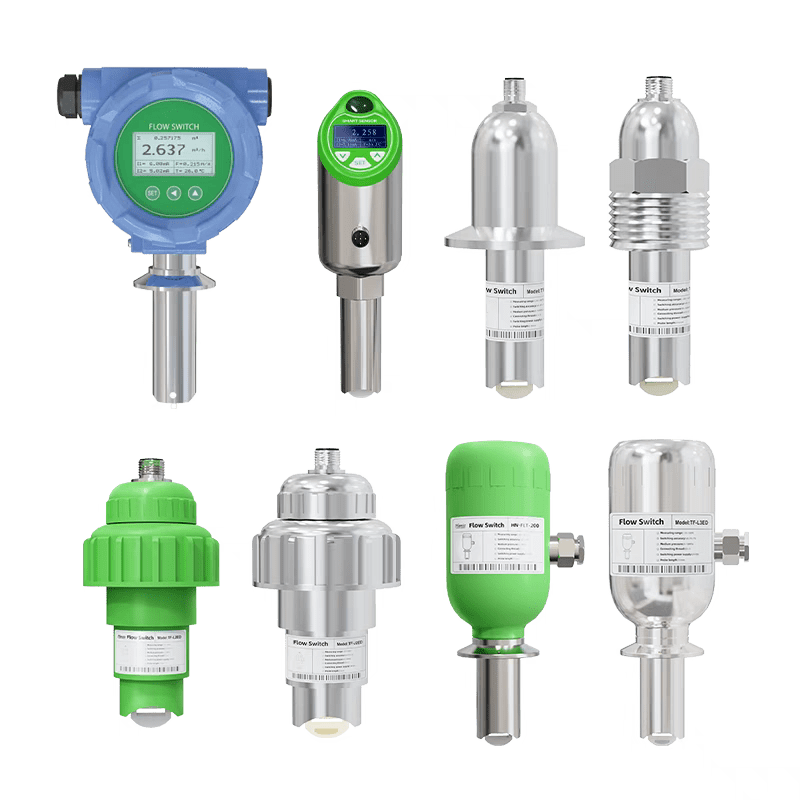
Liquid-level monitoring is essential in many industrial and municipal systems.
Storage tanks, wastewater treatment facilities, drainage stations, and water reservoirs all require reliable level measurement.
Submersible level transmitters provide a practical solution for measuring liquid levels directly from inside a tank or reservoir.
They are particularly useful in applications where continuous level monitoring is required.
1. What Is a Submersible Level Transmitter?
A submersible level transmitter is a hydrostatic level measurement instrument designed to operate while immersed in a liquid.
It measures the pressure generated by the liquid column above its sensing element.
For a liquid with approximately constant density, hydrostatic pressure can be expressed as:
P = ρ × g × h
Where:
P = Hydrostatic pressure.
ρ = Liquid density.
g = Gravitational acceleration.
h = Liquid height.
The transmitter converts the measured pressure into an electrical output corresponding to liquid level.
Common output options include 4–20 mA and other model-dependent signals.
2. Applications in Drainage Systems
Municipal and industrial drainage systems need continuous monitoring of water levels.
Submersible level transmitters may be installed in:
Drainage wells.
Pumping stations.
Stormwater collection tanks.
Underground water reservoirs.
Flood control facilities.
Level information can be transmitted to a control system to support pump operation and alarm management.
For these applications, buyers should pay attention to moisture protection, cable design, and installation conditions.
3. Applications in Wastewater Treatment
Wastewater treatment plants contain multiple tanks and process stages.
Submersible level transmitters may be used in:
Equalization tanks: Monitor liquid levels to support process control.
Sedimentation tanks: Provide level information for system monitoring.
Wastewater collection wells: Help control pump start and stop conditions.
Sludge-related systems: Require careful consideration of solids, buildup, and cleaning requirements.
For wastewater applications, material compatibility and resistance to contamination are important.
4. Applications in Environmental Monitoring
Submersible level transmitters can also support environmental monitoring projects.
Examples include:
River level monitoring.
Reservoir level measurement.
Groundwater monitoring.
Rainwater collection systems.
Flood warning infrastructure.
These systems may require long-term operation in outdoor environments.
Cable protection, lightning protection, signal transmission, and maintenance access should therefore be considered.
5. How to Select a Suitable Submersible Level Transmitter
| Selection Factor | What to Check |
|---|---|
| Measurement range | Maximum liquid depth |
| Accuracy | Required level measurement accuracy |
| Liquid density | Influence on hydrostatic pressure |
| Wetted material | Compatibility with the liquid |
| Protection rating | Suitability for continuous immersion |
| Cable | Length and environmental protection |
| Output | Compatibility with the control system |
| Temperature | Operating temperature limits |
| Installation | Mounting and suspension arrangements |
6. Important Installation Considerations
Correct installation helps improve measurement reliability.
Cable length: Select a suitable cable length for the installation depth and connection arrangement.
Vent tube: Vented gauge-type submersible transmitters require an appropriate venting arrangement to compensate for atmospheric pressure changes. The vent should be protected from moisture and blockage.
Position: Install the sensing element at a suitable measurement location, away from excessive turbulence where possible.
Sediment: Avoid placing the sensor directly in heavy sediment unless the design is suitable for that condition.
Electrical protection: Consider grounding, surge protection, and suitable cable routing.
7. Why Submersible Level Measurement Is Useful
Compared with some other level measurement methods, hydrostatic submersible transmitters offer a relatively straightforward installation approach.
They are useful when continuous level information is required in wells, tanks, reservoirs, and wastewater systems.
However, the measured liquid density and installation conditions must be considered to obtain accurate level readings.
Conclusion
Submersible level transmitters are not limited to petrochemical applications.
They are also valuable in drainage systems, wastewater treatment plants, municipal pumping stations, reservoirs, and environmental monitoring projects.
By selecting the correct measurement range, wetted materials, protection rating, cable arrangement, and output signal, users can build a reliable liquid-level monitoring system.
Contact our team to discuss submersible level transmitter specifications for your water treatment, drainage, and environmental protection applications.
Scan the QR code to receive more detailed information.