1. Definition
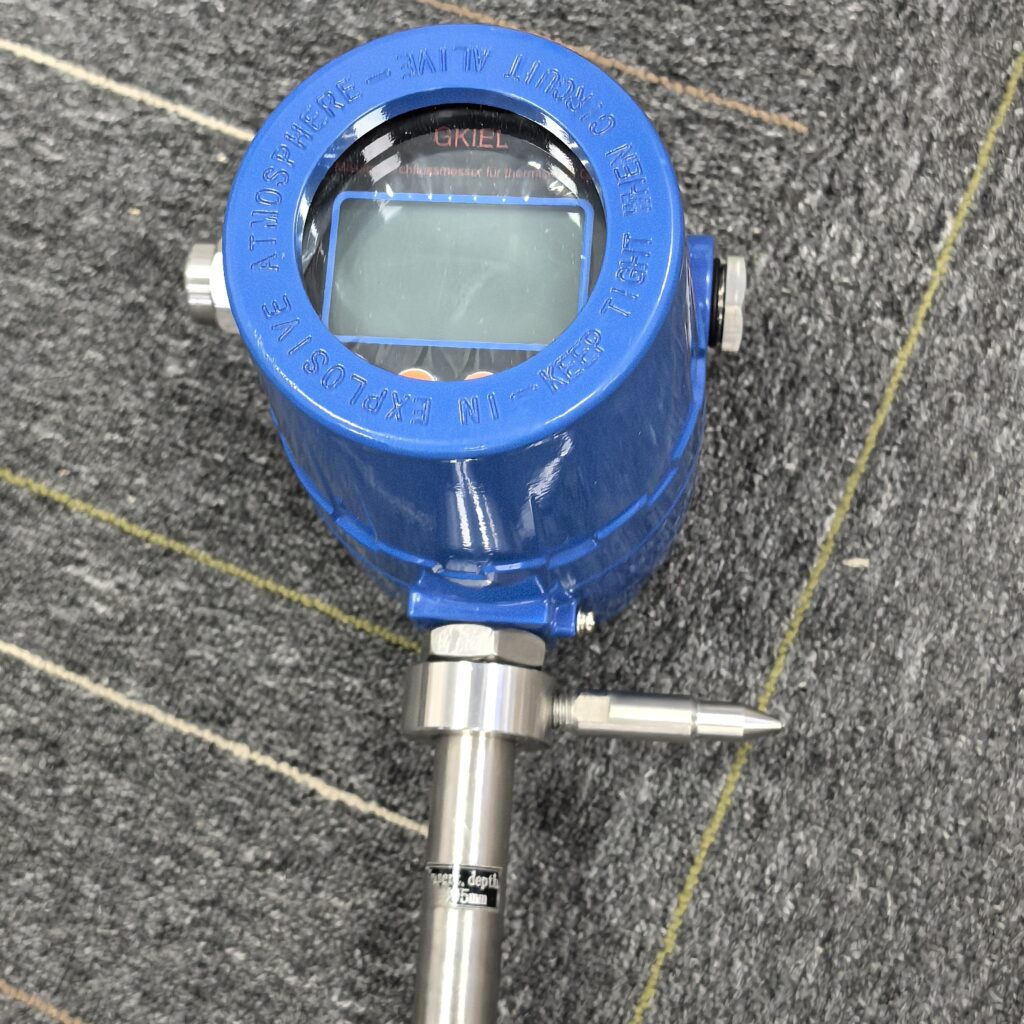
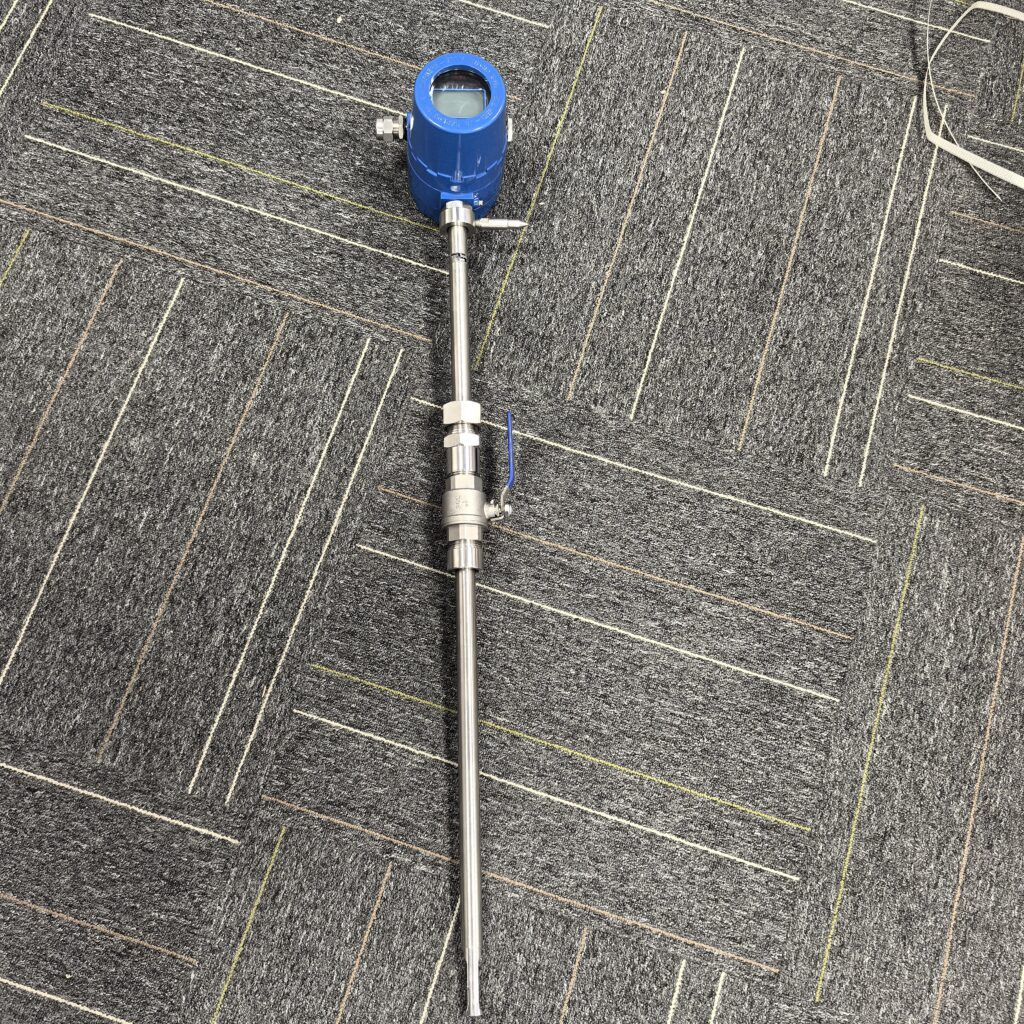
A thermal gas mass flow meter (also the core sensing unit of MFC, Mass Flow Controller) is an instrument that directly measures the mass flow rate of gas by detecting heat transfer between a heating element and flowing gas. It outputs mass flow signals without complex temperature and pressure compensation, dominating small-to-medium gas flow measurement in precision industries.
2. Working Principle
There are two mainstream structural types with identical thermal sensing logic:
(1) Capillary Bypass Thermal Type (Traditional Standard MFM/MFC)
- The gas stream is split into a large main pipeline and a tiny thin capillary bypass.
- Two platinum resistance wires are wound evenly on the capillary: the upstream wire serves as a constant heat source, and the downstream wire acts as a temperature sensor.
- Static gas creates a fixed temperature difference between the two resistors. When gas flows, it carries heat from upstream to downstream, narrowing the temperature gap.
- The circuit adjusts heating power to restore the preset temperature difference; the compensation power consumed is linearly proportional to the gas mass flow rate.
- Measuring principle basis: The heat capacity carried by gas is directly related to its mass, independent of volume, pressure or gas temperature fluctuations.
(2) MEMS Chip Thermal Type (Miniature Low-Cost Version)
- Micro heating and temperature-sensing resistors are integrated on a silicon MEMS chip with microchannels for gas shunting.
- The same heat-loss detection logic applies; the chip miniaturizes the sensor for compact devices.
3. Core Characteristics
Advantages
- Direct mass flow measurement: No real-time 温 /pressure compensation required for standard process gas.
- Fast response speed, high repeatability and stable measurement accuracy.
- Wide adjustable range (turndown ratio), suitable for tiny to medium flow rates.
- Low pressure loss, does not interfere with stable gas pipeline pressure.
- Digital signal output optional (RS485, 4–20mA, 0–5V), easy to connect to automation systems.
Limitations
- Susceptible to contamination: Dust, oil mist, polymer residues will block capillaries/microchannels and cause drift.
- Not ideal for ultra-large gas flow (high manufacturing cost compared with differential pressure types).
- Measurement calibration is gas-specific; readings deviate if switching to gas with different specific heat capacity without recalibration.
- Not suitable for high-viscosity, easily condensed or particulate-laden dirty gas.
4. Typical Applications
- Semiconductor & photovoltaic industry: Precise delivery of process gases (SiH₄, NH₃, Ar, N₂, O₂) on deposition, etching and diffusion equipment, mostly matched as thermal MFC.
- Laboratory & analytical instruments: Gas supply for gas chromatography, environmental monitoring analyzers, calibration benches.
- Vacuum coating & thin-film industry: Controlled inert/reactive gas flow for magnetron sputtering, PVD/CVD.
- Medical equipment: Stable flow control of oxygen, nitrogen, mixed medical gas.
- General industrial automation: Purge gas, protective shielding gas flow monitoring in welding, heat treatment.
- Environmental monitoring: Trace gas sampling flow measurement for flue gas analyzers, air quality detectors.
Scan the QR code to receive more detailed information.