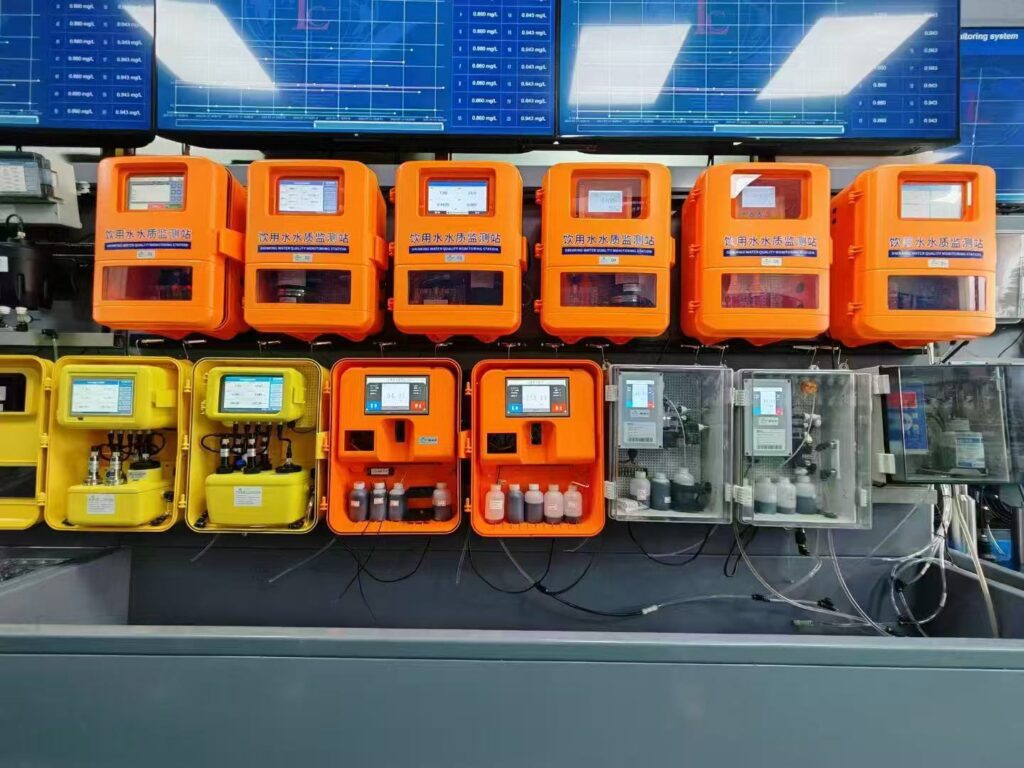
Water quality analyzers are core precision detection instruments widely used in environmental monitoring, industrial water treatment, municipal water supply, aquaculture and sewage discharge fields. They can quantitatively and qualitatively detect key indicators such as pH value, dissolved oxygen, turbidity, ammonia nitrogen, chemical oxygen demand (COD) and total phosphorus in water bodies, providing accurate data support for water quality evaluation, pollution control and safe water use. To help users fully understand and scientifically apply water quality analyzers, this article systematically sorts out their common classification methods, practical selection strategies and standardized daily maintenance key points.
1. Common Classification Methods of Water Quality Analyzers
Water quality analyzers have diverse types, which can be classified scientifically according to detection principle, application scenario, installation mode and detection indicator, covering all application demands from laboratory precision detection to on-site real-time monitoring.
Optical water quality analyzers: Based on spectrophotometry, turbidimetry and fluorescence spectroscopy principles, they detect water quality indicators by analyzing the absorption, scattering and fluorescence characteristics of water samples to light. They are mainly used for detecting COD, total nitrogen, total phosphorus, turbidity and chromaticity. Featuring high detection accuracy, stable data and strong anti-interference ability, they are suitable for standard detection of conventional water quality indicators in environmental monitoring stations and sewage treatment plants.
1.2 Classification by Application and Installation Mode
Laboratory benchtop analyzers: Placed in professional laboratories, with complete functions and ultra-high detection accuracy. They are mainly used for precise analysis, data calibration and experimental research of water samples, and are the core equipment for water quality testing institutions.
2. Scientific Selection Strategies for Water Quality Analyzers
First, confirm the key indicators that need to be detected. For conventional water quality monitoring such as tap water and aquaculture water, select electrochemical analyzers for pH, dissolved oxygen and conductivity with fast detection speed; for industrial sewage and polluted surface water that need to detect COD, ammonia nitrogen and total nitrogen, select optical or chemical analytical online analyzers that meet national environmental protection standards. For scenarios requiring only single-indicator monitoring, avoid purchasing redundant multi-indicator equipment to control costs.
2.3 Adapt to Water Body Environment Characteristics
For environmental monitoring and discharge compliance detection, the selected analyzer must have national environmental protection certification and meet the requirements of national detection standards to ensure that the detected data is authoritative and valid. At the same time, prioritize products with perfect after-sales service system, convenient accessory replacement and professional technical support, to ensure timely maintenance and troubleshooting in the later stage.
3.1 Regular Cleaning of Sensors and Sampling System
Affected by long-term use and environmental changes, the instrument will have zero drift and range deviation. It is necessary to establish a regular calibration mechanism: conduct zero calibration and standard solution calibration for pH, dissolved oxygen and other electrochemical sensors every 3-7 days; conduct full-scale calibration for optical and chemical analytical analyzers every month; conduct professional third-party calibration and verification every quarter to ensure that the detection data is within the error range specified by national standards.
3.4 Standard Replacement of Consumables and Aging Parts
Portable and benchtop analyzers should be placed in a dry, dust-free and constant-temperature environment when not in use for a long time, avoiding high temperature, low temperature and strong electromagnetic interference. The sensor probe should be kept moist and stored with protective liquid to prevent dry cracking and performance attenuation. For outdoor online instruments, regularly check the protective shell and sealing device to prevent rainwater infiltration and dust accumulation from damaging the internal circuit.
Scan the QR code to receive more detailed information.