Turbine flow meters feature high precision and fast response for clean low-viscosity fluids, while vortex flow meters stand out with non-contact measurement, strong stability and low failure rates. This paper systematically compares the two types of flow meters from multiple dimensions, analyzes their respective advantages, limitations and applicable working conditions, and provides a clear selection basis for industrial flow measurement. The comparison results help engineers choose appropriate measuring instruments to improve process control accuracy and reduce operational costs.
1. Introduction
Accurate flow measurement is indispensable for industrial production, energy metering and process optimization. Turbine and vortex flow meters have replaced traditional mechanical flow meters and become mainstream equipment in petrochemical, power, water treatment and pharmaceutical industries. In practical engineering applications, improper instrument selection often leads to measurement deviation, frequent failures and increased maintenance costs. The essential differences between the two meters lie in their fluid sensing methods: turbine meters rely on mechanical rotation, whereas vortex meters utilize fluid hydrodynamic phenomena. A comprehensive comparative analysis of their performance characteristics can effectively guide reasonable instrument selection and ensure long-term stable operation of the measurement system.
2. Working Principle Comparison
Turbine flow meters adopt mechanical induction principles. A built-in impeller rotates under the impact of fluid flow, and the rotation speed is linearly proportional to fluid velocity. The sensor captures pulse signals generated by impeller rotation, and the internal converter calculates instantaneous and cumulative flow based on signal frequency. As a mechanical measuring device, its operation depends on the continuous movement of internal rotating parts.
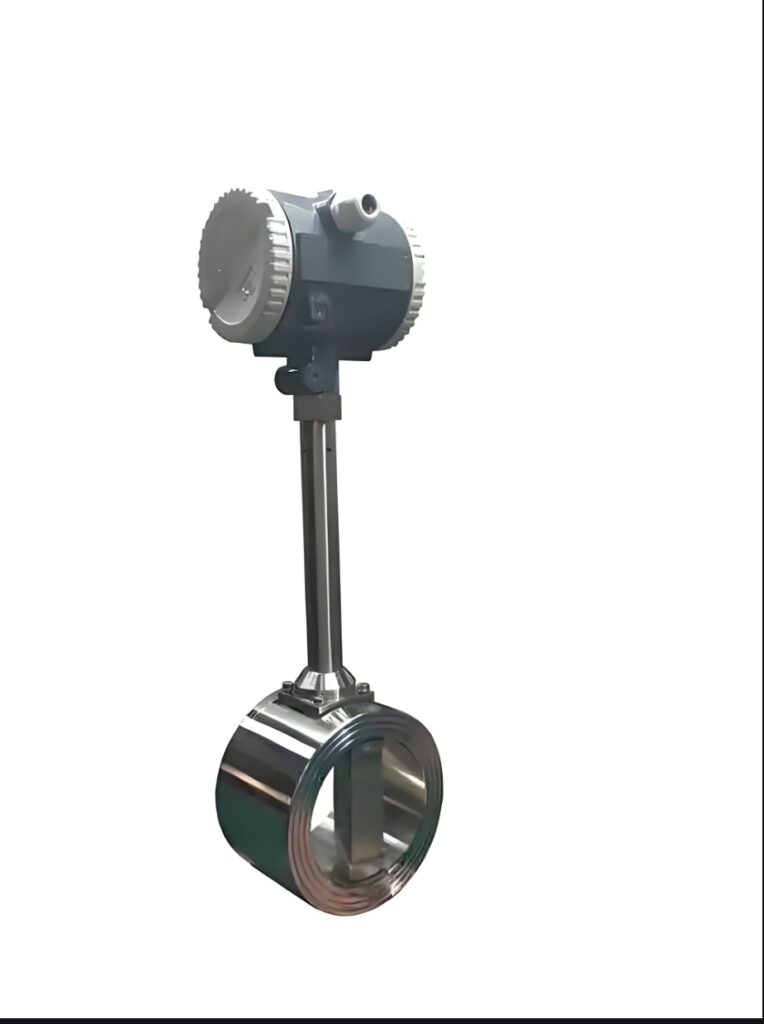
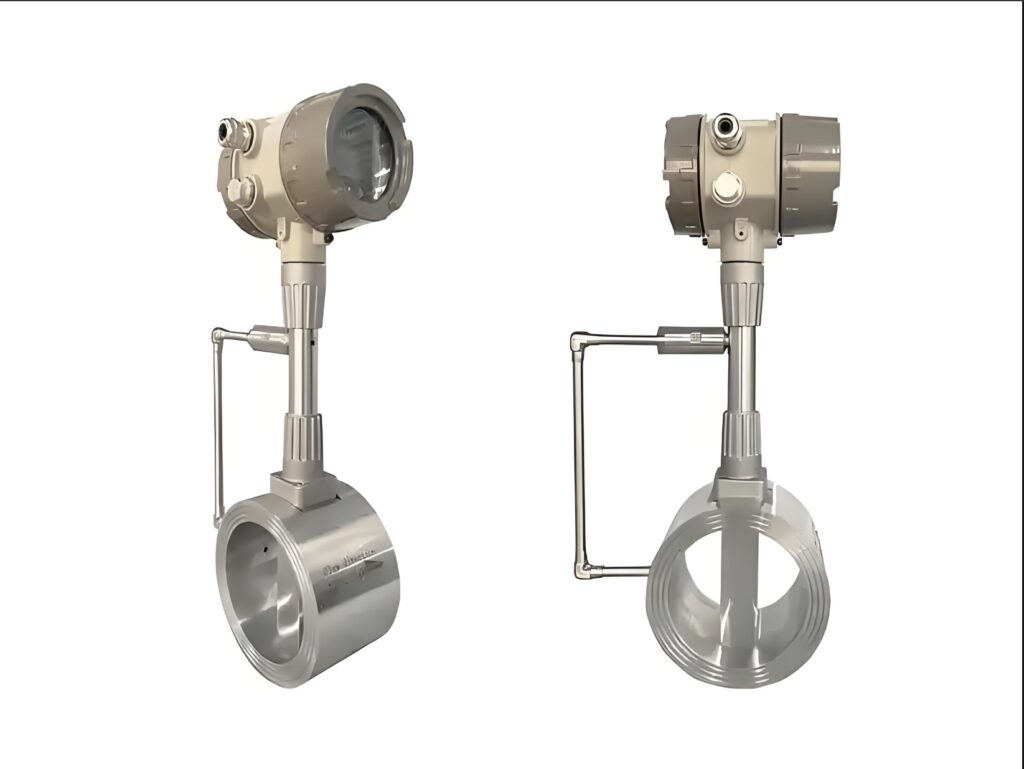
In contrast, vortex flow meters operate on the Karman vortex street principle. A fixed bluff body inside the pipeline generates regular alternating vortices with fluid flowing through. The vortex shedding frequency is linearly correlated with flow velocity. The non-contact sensor detects pressure fluctuations caused by vortices and converts hydrodynamic signals into electrical signals. Without any movable components, vortex meters realize fully static flow measurement.
3. Measurement Performance Analysis
Turbine flow meters possess higher measurement accuracy and better linearity, with a measuring error within ±0.5%. They deliver fast response speed and are suitable for precise flow metering and trade settlement. However, their performance is greatly affected by fluid viscosity and impurity content. High-viscosity media will reduce impeller rotation sensitivity, while solid impurities may cause rotation jitter and measurement errors.
Vortex flow meters have a general accuracy of ±1.0% to ±1.5%, slightly lower than turbine meters, but show outstanding anti-interference ability. Their measurement results are barely affected by medium temperature, pressure, density and viscosity changes. They can stably measure gas, liquid and steam, achieving multi-medium adaptability. Nevertheless, vortex meters require stable fluid conditions; severe turbulence or pipeline vibration will cause signal fluctuation and affect accuracy.
4. Structural Design and Maintenance Cost Comparison
Turbine flow meters contain wearable moving parts such as impellers and bearings. Long-term fluid impact and friction will cause component wear, leading to accuracy attenuation and even jamming failure. Regular calibration, bearing replacement and cleaning are required, resulting in high daily maintenance costs and a limited service life of 3 to 5 years.
Vortex flow meters adopt an integrated static structure with no wearable mechanical parts. The bluff body and sensor have strong corrosion and impact resistance, with almost no daily maintenance required. Their service life can reach 8 to 10 years, featuring low failure rate and long-term stable performance. The only limitation is that they need higher straight pipe installation requirements to ensure stable vortex generation.
5. Application Scenario Differentiation
Turbine flow meters are ideal for high-precision metering scenarios with clean, low-viscosity single-phase fluids, such as refined oil, pure water and natural gas trade settlement. They are also applicable for occasions requiring fast dynamic response.
Vortex flow meters are more suitable for conventional process monitoring scenarios, especially for steam, general gas and industrial circulating water. They are the preferred choice for working conditions with complex medium parameters, frequent temperature and pressure changes, and low maintenance conditions.
6. Conclusion
In conclusion, turbine and vortex flow meters have their unique strengths and applicable scenarios. Turbine meters excel in high precision and rapid response but suffer from easy wear and high maintenance costs. Vortex meters gain advantages in structural stability, wide medium adaptability and low operation costs, despite slightly lower precision. In practical industrial application, instruments should be selected according to actual measurement accuracy requirements, medium characteristics and operating conditions. Reasonable matching of flow meters can maximize measurement efficiency, ensure stable process operation and reduce overall industrial operating costs.
Scan the QR code to receive more detailed information.