Temperature and pressure compensation commissioning is the core technical means to correct such measurement deviations. This article elaborates on the necessity of temperature and pressure compensation for steam vortex flow meters, explains the compensation principle, standard commissioning procedures and key parameter setting points, and analyzes common commissioning problems and optimization solutions. Standardized compensation commissioning can realize real-time dynamic correction of steam flow data, effectively improve measurement accuracy, and provide reliable metering basis for industrial energy consumption statistics and process control.
1. Introduction
Steam is a common heat and power transmission medium in industrial production, and its accurate flow metering is crucial for energy settlement, production cost accounting and process parameter adjustment. The vortex flow meter measures volume flow based on the Karman vortex street principle, and its original measurement data is only applicable to media under rated working conditions. In actual operation, industrial steam is prone to unstable temperature and pressure due to load changes, pipeline resistance and equipment switching. Since steam density is positively correlated with pressure and negatively correlated with temperature, working condition fluctuations will lead to serious distortion of volume flow data. Without temperature and pressure compensation, the measurement error can exceed 5% or even higher. Therefore, scientific and standardized temperature and pressure compensation commissioning is essential to ensure accurate steam flow measurement.
2. Working Principle of Temperature and Pressure Compensation
The core goal of temperature and pressure compensation for steam vortex flow meters is to convert the volume flow under variable working conditions into standard mass flow. The basic principle is based on the ideal gas state equation and steam density correction formula. The system collects real-time steam temperature and pressure signals through matched temperature transmitters and pressure transmitters, calculates the actual medium density under current working conditions, and compares it with the rated density under design working conditions.
The flow meter processor automatically generates a compensation coefficient, and corrects the real-time volume flow measured by the vortex meter through algorithm operation, so as to obtain the accurate mass flow or standard volume flow. For saturated steam and superheated steam, different compensation algorithms are adopted due to different density characteristics. Saturated steam only requires single-parameter compensation of pressure or temperature, while superheated steam must adopt dual compensation of temperature and pressure to eliminate measurement errors caused by superheat degree changes.
3. Standard Compensation Commissioning Procedures
The commissioning work follows standardized process steps to ensure accurate compensation effect. Firstly, complete equipment inspection before commissioning, check the installation position of vortex flow meter, temperature and pressure transmitters, ensure straight pipe section requirements are met, and eliminate pipeline vibration and air leakage interference. Secondly, set basic parameters, including pipeline diameter, rated working temperature and pressure, and steam medium type (saturated or superheated steam) in the flow meter control system.
Thirdly, calibrate the temperature and pressure acquisition channels to ensure the real-time collected temperature and pressure data are consistent with the actual on-site working conditions, and eliminate zero drift and signal deviation of transmitters. Finally, activate the temperature and pressure compensation function, perform on-line simulation debugging and on-load testing, observe the change of compensation coefficient and flow data, and verify the stability and accuracy of corrected flow values to complete commissioning.
4. Common Commissioning Problems and Optimization Measures
In on-site commissioning, common problems include inconsistent response time of temperature and pressure signals, inaccurate medium parameter setting, and delayed data acquisition, which lead to unstable compensated flow data. For superheated steam, incomplete dual compensation setting will cause systematic errors. In addition, unreasonable installation of transmitters will result in distorted collection of working condition parameters and failure of effective compensation.
Corresponding optimization measures include unifying the signal sampling frequency of flow, temperature and pressure instruments, accurately distinguishing steam types to match the correct compensation algorithm, and regularly calibrating auxiliary transmitters. Meanwhile, ensure the temperature and pressure measuring points are close to the vortex flow meter to reduce working condition deviation of pipeline sections and improve compensation accuracy.
5. Conclusion
Temperature and pressure compensation commissioning is an indispensable key link in steam flow measurement with vortex flow meters. Aimed at the density variation characteristic of compressible steam media, the compensation technology realizes dynamic correction of flow data through real-time acquisition and algorithm calculation of working condition parameters, effectively solving the problem of large measurement errors caused by fluctuating steam working conditions. Strict compliance with standardized commissioning procedures and targeted optimization of common problems can significantly improve the metering accuracy and operational stability of steam vortex flow meters. It provides accurate data support for industrial energy saving management, fair energy settlement and stable process operation, with important practical engineering application value.
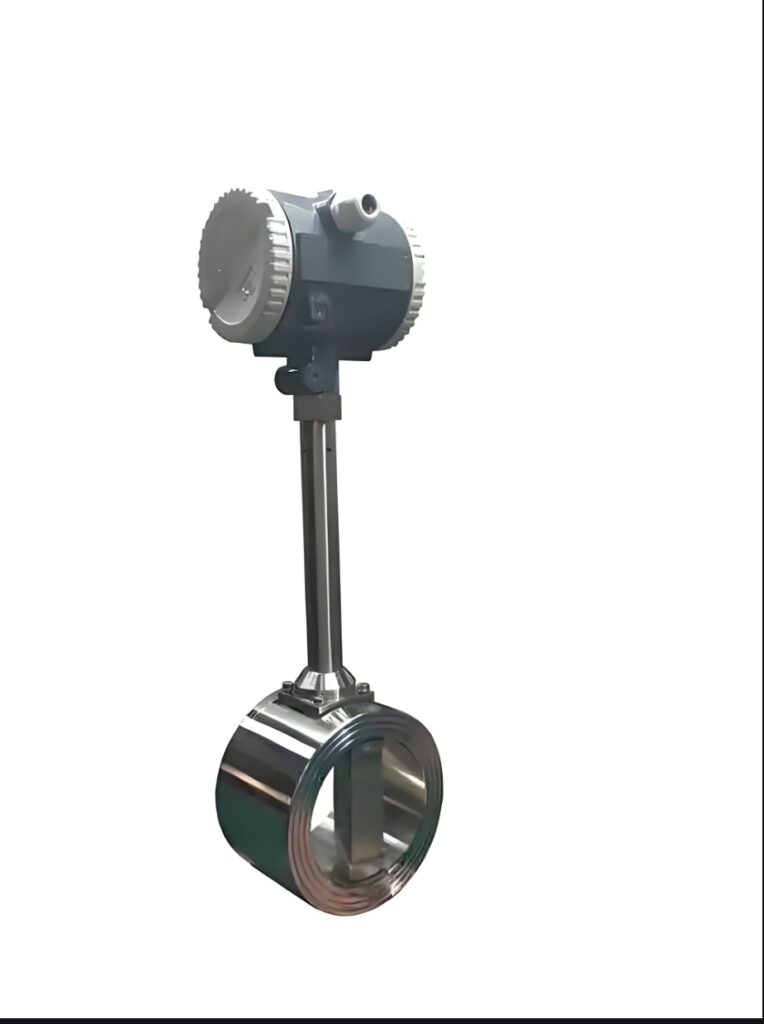
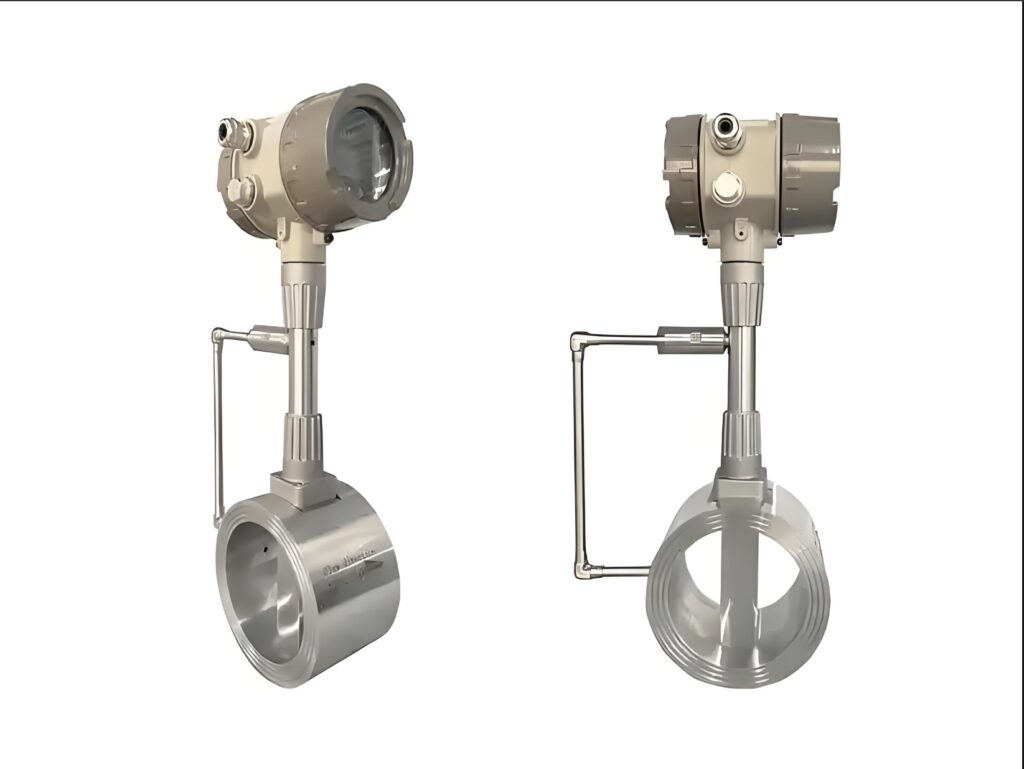
Scan the QR code to receive more detailed information.