This article systematically classifies the common causes of vortex flow rate fluctuations, proposes targeted troubleshooting procedures and elimination methods, and summarizes effective preventive and optimization measures. Standard fault diagnosis and maintenance can effectively restrain flow signal fluctuation, restore instrument measurement stability, and ensure the reliable operation of industrial flow metering systems.
1. Introduction
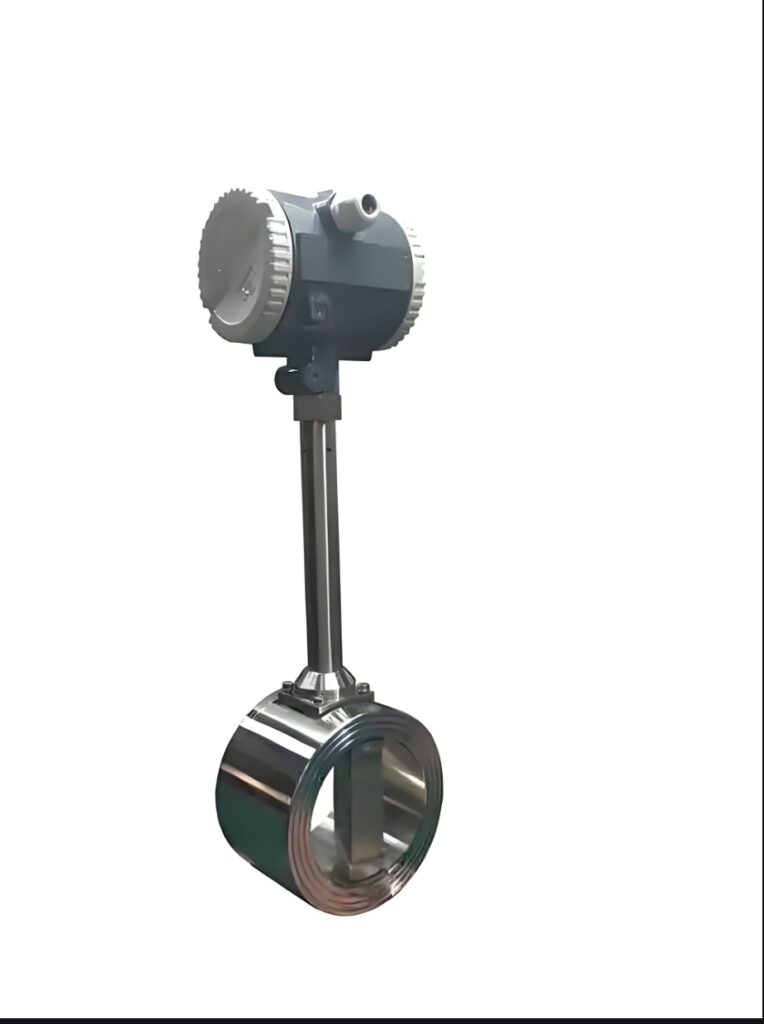
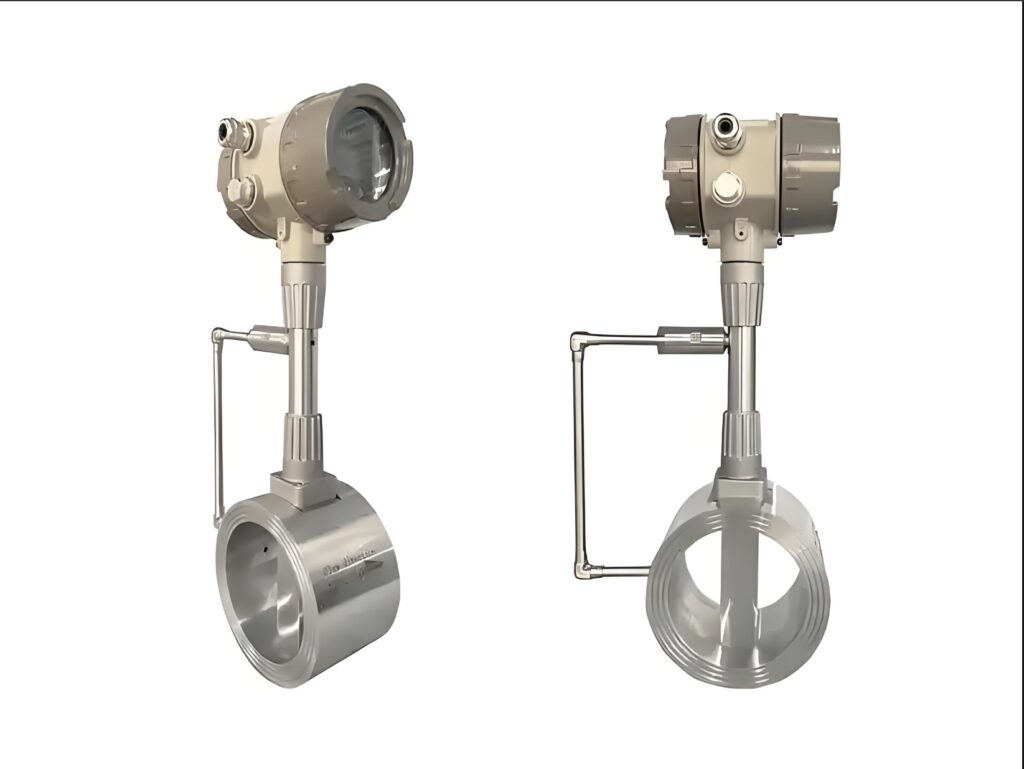
As a mainstream velocity-type flow measuring device, the vortex flow meter relies on the stable Karman vortex street principle to convert fluid flow velocity into electrical pulse signals. Its measurement accuracy and stability are highly dependent on uniform fluid flow fields, intact sensor performance and standardized installation conditions. In complex industrial operating environments, various abnormal conditions will break the regular vortex shedding rule, resulting in continuous jitter and irregular fluctuation of flow data. Long-term unprocessed flow fluctuations will not only cause errors in energy metering and production data statistics, but also affect the precise adjustment of process parameters, bringing hidden dangers to stable industrial production. Therefore, mastering scientific troubleshooting methods for vortex flow rate fluctuations is essential for daily instrument maintenance and process operation management.
2. Main Causes of Vortex Flow Rate Fluctuations
Flow fluctuation faults of vortex flow meters can be divided into four core categories. The first is fluid flow field abnormality, which is the most frequent cause. Insufficient upstream and downstream straight pipe sections, sudden pipeline diameter changes, or nearby valve throttling will produce swirling flow and turbulent disturbance, leading to disordered vortex shedding and unstable pulse signals. The second is non-standard installation problems, including eccentric instrument installation, protruding connecting gaskets and pipeline vibration, which will interfere with sensor signal acquisition and induce data fluctuation.
The third factor is medium condition anomalies. For steam and gas media, drastic temperature and pressure changes, medium entrained water, impurities or air bubbles will destroy the stability of vortex generation. For liquid media, mixed gas and solid sediments will cause irregular flow field changes. The fourth is instrument and circuit faults, including sensor aging, probe contamination, signal line loose contact, and amplifier circuit drift, which directly lead to abnormal signal output and flow jitter.
3. Standard Troubleshooting Procedures
Field troubleshooting follows the principle of “external inspection first, internal verification later, and simple elimination first”. Firstly, check the on-site installation condition. Verify whether the straight pipe section meets industrial standards, confirm no gasket protrusion or instrument eccentricity, and fix loose pipeline supports to eliminate mechanical vibration interference. Secondly, observe the medium operating conditions, check for gas-liquid mixing, impurity deposition and drastic parameter fluctuations, and adjust process valves to stabilize fluid flow state.
Thirdly, carry out instrument inspection and signal detection. Clean the vortex generator and sensor probe to remove dirt and scale that may affect signal induction. Detect the connection state of signal lines and shield grounding to avoid signal interference and line disconnection. Finally, calibrate the instrument amplifier and zero point to eliminate circuit drift and zero offset faults caused by long-term operation. After troubleshooting, conduct on-load operation test to confirm that the flow data returns to stable state.
4. Fault Elimination and Optimization Measures
Aiming at different fluctuation causes, targeted rectification measures should be adopted. For flow field disturbance caused by insufficient straight pipes, install a flow straightener to optimize fluid state and compensate for pipeline layout defects. For medium abnormality, add filters and exhaust devices to remove impurities and bubbles, and stabilize process temperature and pressure parameters through parameter linkage control. For instrument faults, replace aging sensors and damaged circuit components regularly, and strengthen daily cleaning and calibration maintenance.
In addition, standardize field wiring construction, adopt shielded cables and reliable grounding measures to prevent electromagnetic interference from surrounding electrical equipment. Establish a regular inspection mechanism to monitor instrument operating status and process medium changes in real time, which can effectively avoid recurring flow fluctuation faults.
5. Conclusion
In summary, vortex flow rate fluctuations are mainly derived from flow field disturbance, non-standard installation, abnormal medium conditions and instrument circuit faults. Most fluctuation problems can be effectively eliminated through standardized inspection, targeted rectification and scientific optimization. Adhering to reasonable troubleshooting procedures, correcting on-site installation defects, stabilizing process medium parameters, and strengthening daily maintenance can significantly improve the measurement stability and accuracy of vortex flow meters. Timely troubleshooting of flow fluctuations not only ensures the authenticity and reliability of industrial flow metering data, but also provides solid guarantee for safe, stable and efficient operation of industrial production processes.
Scan the QR code to receive more detailed information.