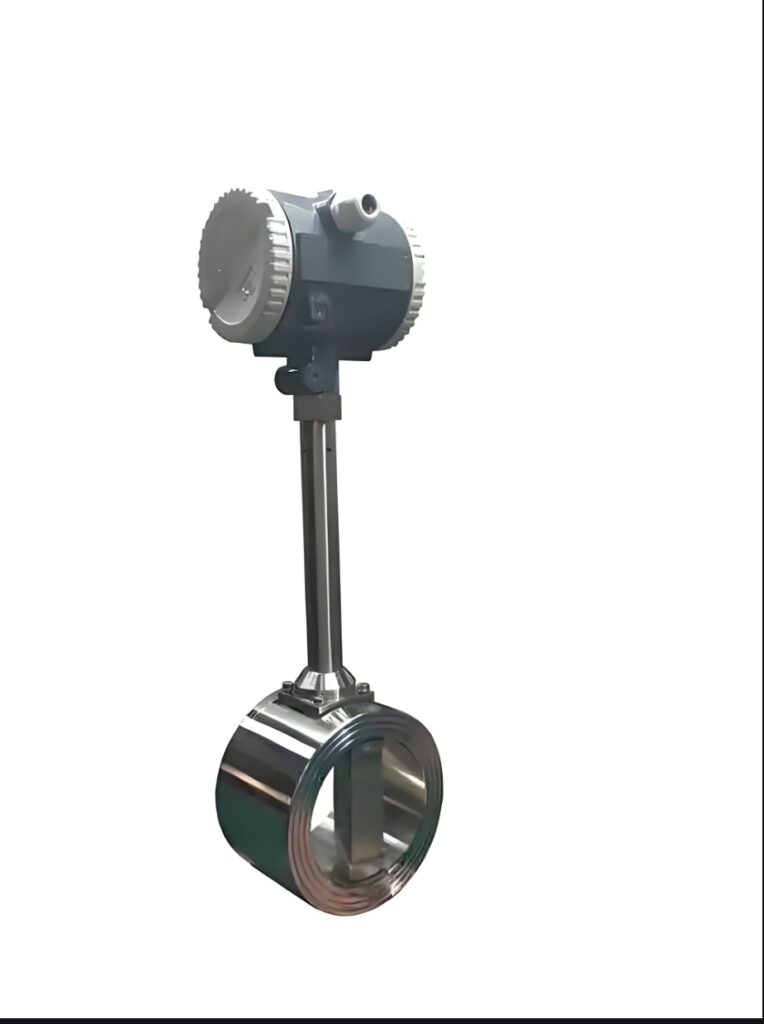
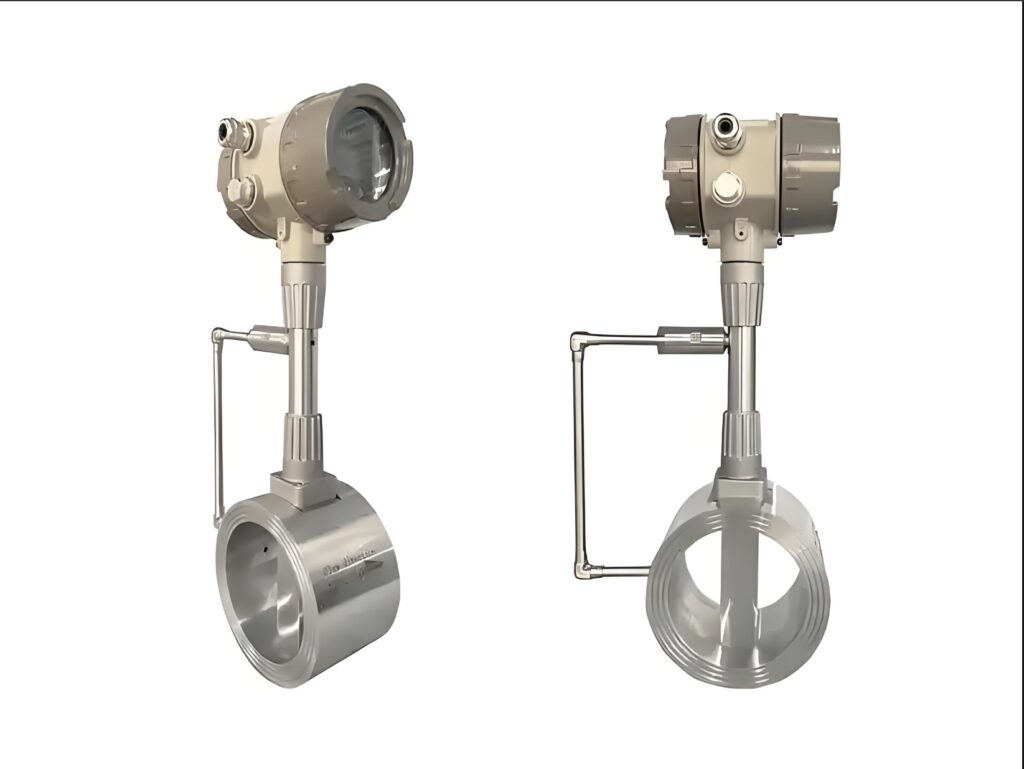
The anti-vibration vortex street flow meter adopts optimized structural design, improved sensing technology and intelligent signal filtering algorithms, which effectively isolate and suppress vibration noise. This article analyzes the interference mechanism of pipeline vibration on traditional vortex meters, elaborates the core technical advantages of anti-vibration vortex street meters under strong vibration conditions, and verifies their stable performance and engineering application value. Compared with conventional models, anti-vibration vortex flow meters maintain high-precision and stable measurement in vibration-intensive environments, solving the long-standing technical pain point of vibration-induced measurement errors in industrial flow monitoring.
1. Introduction
Vortex flow meters are widely used for gas, liquid, and steam flow measurement due to their simple structure, no moving parts, and good linearity. However, most standard vortex meters are designed for relatively stable pipeline environments. In actual industrial scenarios, working conditions such as large pump operation, compressor vibration, and high-pressure fluid scouring will generate continuous strong pipeline vibration. The vibration frequency overlaps with the natural vortex shedding frequency, causing the sensor to mistakenly identify vibration noise as valid flow signals. This leads to severe flow fluctuation, zero drift, and even failure of normal measurement. To adapt to harsh industrial environments, anti-vibration vortex street flow meters have been developed and promoted, becoming the preferred measuring equipment for strong vibration working conditions.
2. Vibration Interference Mechanism of Conventional Vortex Meters
The measurement of vortex flow meters depends on the regular pressure fluctuation generated by fluid vortex shedding. Traditional sensors lack vibration isolation structures and intelligent noise reduction functions. When the pipeline vibrates strongly, the overall vibration of the meter body drives the sensor probe to produce mechanical oscillation. The vibration-induced pressure signal is mixed with the effective vortex signal, forming signal aliasing. Since the vibration frequency is unstable and irregular, the mixed output pulse signal presents disordered jitter. In addition, long-term strong vibration will loosen internal components and wiring of the instrument, further aggravating signal instability, reducing measurement repeatability, and failing to meet industrial metering and process control requirements.
3. Core Technical Advantages of Anti-vibration Vortex Street Meters
Anti-vibration vortex flow meters achieve excellent anti-interference performance through three core optimization designs. First, they adopt an optimized separate vibration-isolating structure. The vortex generator and sensor probe are designed with independent shock-absorbing components, which can isolate more than 90% of external mechanical vibration and prevent pipeline vibration from being transmitted to the signal sensing unit. Second, upgraded high-stability sensing chips are applied, which are only sensitive to fluid-induced hydrodynamic pressure changes and insensitive to rigid body vibration displacement, fundamentally distinguishing valid vortex signals from vibration noise.
Third, intelligent digital filtering algorithms serve as the core software guarantee. The built-in microprocessor identifies, screens and filters mixed signals through frequency domain analysis, automatically eliminates irregular vibration noise signals, and retains stable and effective vortex frequency signals. This multi-dimensional optimization of structure, hardware and software enables the anti-vibration vortex meter to avoid signal distortion under strong vibration conditions that cause conventional meters to fail.
4. Practical Application Advantages in Industrial Scenarios
In engineering practice, anti-vibration vortex street meters show prominent application advantages. Firstly, they maintain stable measurement accuracy. Under continuous strong vibration, the measurement error is always controlled within ±1.0%, with no obvious zero drift or data fluctuation, ensuring reliable flow data for energy metering and process adjustment. Secondly, they have strong environmental adaptability, suitable for complex vibration scenarios such as power plant steam pipelines, chemical reaction pipelines and water pump outlet pipelines where traditional meters cannot work stably.
Moreover, the optimized anti-vibration structure enhances the overall mechanical strength of the meter body, reducing component wear and wiring looseness caused by long-term vibration. It effectively extends the service life of the instrument, reduces frequent calibration and replacement costs, and lowers the later operation and maintenance pressure of industrial measurement systems.
5. Conclusion
In conclusion, strong pipeline vibration is the main factor restricting the stable operation of conventional vortex flow meters in harsh industrial environments. Relying on vibration isolation structural optimization, high-precision hardware sensing and intelligent signal filtering technology, anti-vibration vortex street flow meters perfectly solve the problem of vibration signal interference. They maintain accurate and stable flow measurement under strong vibration working conditions, with higher environmental adaptability and longer service life than traditional products. The application of anti-vibration vortex meters greatly improves the reliability of industrial flow monitoring, reduces equipment maintenance costs, and provides stable and accurate data support for the safe and efficient operation of industrial production systems.
Scan the QR code to receive more detailed information.