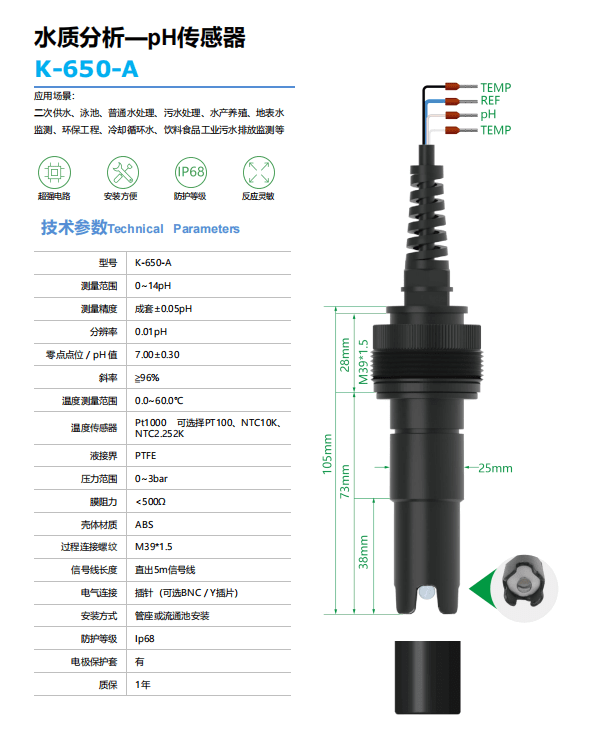
This paper systematically elaborates the core selection principles of pH water quality sensors, focusing on key factors including application scenario matching, core performance parameters, probe material durability, temperature compensation technology, and later operation and maintenance costs. It analyzes the applicability of different types of sensors in various water environments, summarizes common selection mistakes, and provides targeted selection suggestions for different monitoring scenarios. The research aims to provide a practical reference for engineering personnel to select high-precision, stable and cost-effective pH sensors, ensuring reliable and continuous water quality monitoring data.
2. Core Selection Key Points of pH Water Quality Sensors
2.2 Focus on Core Performance Parameters
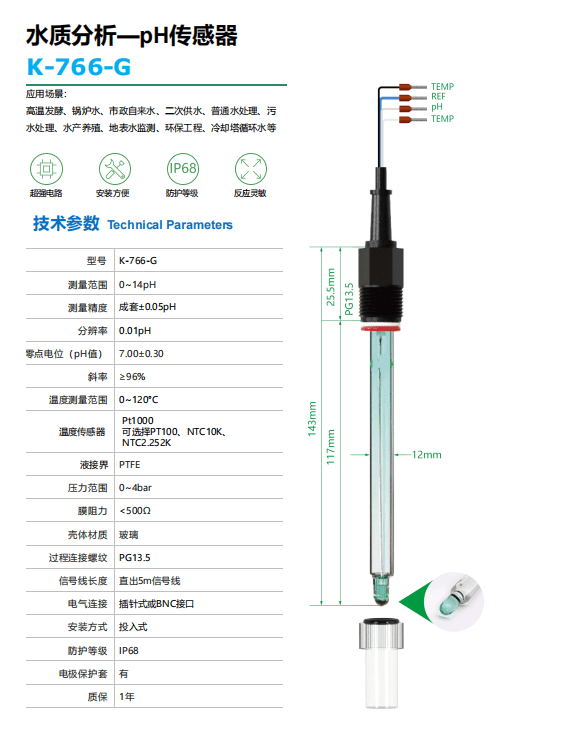
Water temperature is a key interference factor affecting pH measurement accuracy, as the pH value of water bodies changes with temperature fluctuations. Sensors without temperature compensation can only measure accurate data at the standard temperature of 25°C, and obvious detection deviations will occur in high or low-temperature water environments. Therefore, qualified water quality pH sensors must be equipped with automatic temperature compensation technology, which can synchronously detect water temperature and dynamically correct pH measurement data in real time. Compared with manual temperature compensation, the automatic compensation function improves monitoring efficiency, eliminates human operation errors, and ensures the authenticity and effectiveness of monitoring data in complex temperature environments throughout the year.
2.5 Balance Operation and Maintenance Costs
The selection of pH water quality sensors is a systematic work that needs to balance scenario adaptability, performance accuracy, environmental durability and economic applicability. The core of scientific selection is to take actual monitoring requirements and water environment characteristics as the basis, prioritize scenario matching and automatic temperature compensation function, focus on key performance indicators such as measurement accuracy and response speed, and fully consider the protection level and long-term maintenance cost of the equipment. Reasonable selection of pH sensors can effectively avoid monitoring data errors and equipment frequent failures, ensure the stability and reliability of long-term water quality monitoring work, and provide accurate data support for water ecological protection, industrial water treatment and water safety supervision.
Scan the QR code to receive more detailed information.