This article focuses on the working characteristics of water electrolysis inlet gas systems, systematically analyzes the adaptive advantages and inherent limitations of turbine flow meters in such scenarios, and compares them with mainstream alternative instruments. Meanwhile, it summarizes standardized installation and optimization configuration schemes for turbine meters in hydrogen production inlet measurement. The research clarifies the applicable boundaries of turbine flow meters, providing scientific selection and operation guidance for flow monitoring of industrial electrolytic hydrogen production units.
1. Introduction
Water electrolysis hydrogen production is the mainstream technical route for green hydrogen industrialization. The inlet gas flow directly determines the electrolysis reaction rate, gas-liquid balance and unit hydrogen production efficiency. Excessive inlet flow will cause incomplete electrolysis and increased energy consumption, while insufficient flow will lead to unstable hydrogen output and low equipment load rate. Different from petrochemical corrosive and slurry media, the inlet gas of electrolysis equipment is purified clean low-viscosity gas with stable conventional pressure and temperature. This working condition avoids the core failure risks of turbine meters such as abrasive wear and medium corrosion. However, the intermittent load adjustment and slight flow pulsation of hydrogen production units also bring new challenges to turbine meter operation. Clarifying the full-scenario adaptability of turbine flow meters is crucial for optimizing hydrogen production process control.
2. Adaptive Advantages of Turbine Flow Meters for Hydrogen Production Inlet Gas
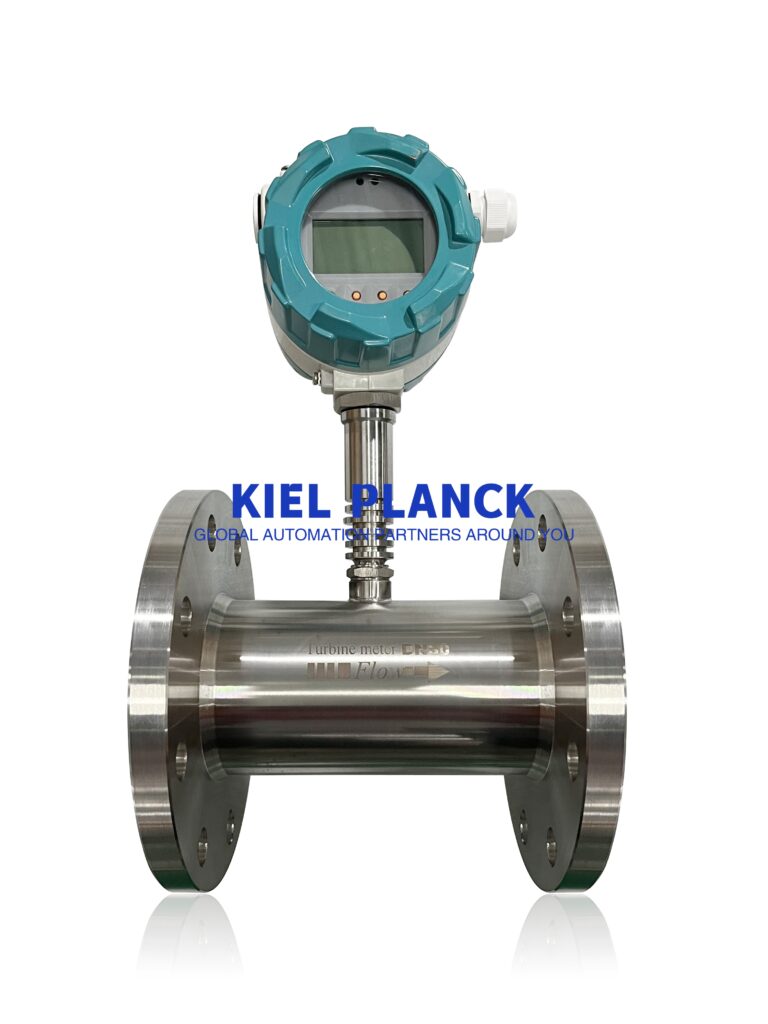
Turbine flow meters have prominent matching advantages for water electrolysis inlet gas measurement. First, they deliver high measurement precision and excellent repeatability, with accuracy up to ±0.5% and repeatability within ±0.2%, which fully meets the refined process monitoring and energy consumption statistics requirements of hydrogen production units. Second, the meters feature ultra-fast dynamic response, which can capture real-time flow changes during unit startup, load increase and decrease, realizing synchronous linkage with electrolysis control systems. Third, targeting the clean and low-viscosity characteristics of electrolysis inlet gas, turbine meters avoid abrasive particle wear and medium corrosion, effectively extending bearing and impeller service life and reducing long-term maintenance costs.
In addition, gas turbine flow meters have a wide effective turndown ratio, adapting to the variable-flow operation characteristics of hydrogen production equipment under different load rates. Compared with differential pressure flow meters, they have lower pressure loss and will not increase inlet pipeline resistance, ensuring stable gas supply pressure of electrolyzers. Their compact structure and simple installation also adapt to the compact pipeline layout of modular hydrogen production units.
3. Inherent Limitations and Inapplicable Working Conditions
Despite outstanding adaptability in conventional scenarios, turbine flow meters still have obvious limitations in partial hydrogen production working conditions. Firstly, they are sensitive to tiny impurities and water mist. If the inlet gas purification system fails and carries trace moisture or fine particles, it will cause bearing lubrication failure and impeller abrasion, leading to accuracy drift. Secondly, turbine meters are not suitable for long-term strong pulsating flow. The periodic flow fluctuation of reciprocating air compressors will cause impeller vibration and mechanical fatigue, accelerating component aging. Thirdly, they have poor low-flow performance and cannot stably measure ultra-small flow during unit standby and low-load operation, failing to meet full-cycle monitoring requirements.
Compared with vortex flow meters that are more resistant to pulsation and dirt and Coriolis mass flow meters with stronger low-flow stability, turbine meters have stricter requirements for medium cleanliness and flow stability in hydrogen production scenarios.
4. Optimization Configuration and Field Application Standards
To maximize the application value of turbine flow meters in hydrogen production inlet measurement, standardized optimization configuration is required. First, install high-efficiency filters and water mist separators at the upstream of the meter to ensure pure and dry inlet gas and eliminate impurity interference. Second, reserve sufficient straight pipe sections to stabilize flow field and reduce pulsation impact. Third, configure temperature and pressure compensation modules to correct flow deviation caused by gas density changes under variable working conditions. For units with frequent load fluctuation, appropriately reduce calibration cycle and regularly check bearing operation status. For low-load and ultra-small flow scenarios, replace vortex or mass flow meters to make up for performance defects.
5. Conclusion
Turbine flow meters are highly adaptable to conventional working conditions of water electrolysis hydrogen production inlet gas, with high precision, fast response and low maintenance advantages, suitable for stable load and clean dry gas monitoring. However, they are restricted by impurity sensitivity, poor anti-pulsation ability and insufficient low-flow performance, and are not applicable to failed purification systems and long-term low-load operation scenarios. Industrial users should select instruments according to actual working conditions: adopt optimized turbine meters for conventional stable hydrogen production units, and choose alternative anti-interference meters for fluctuating and low-flow scenarios. Scientific matching can ensure long-term accurate and stable inlet flow monitoring, supporting efficient and low-consumption operation of green hydrogen production equipment.
Scan the QR code to receive more detailed information.