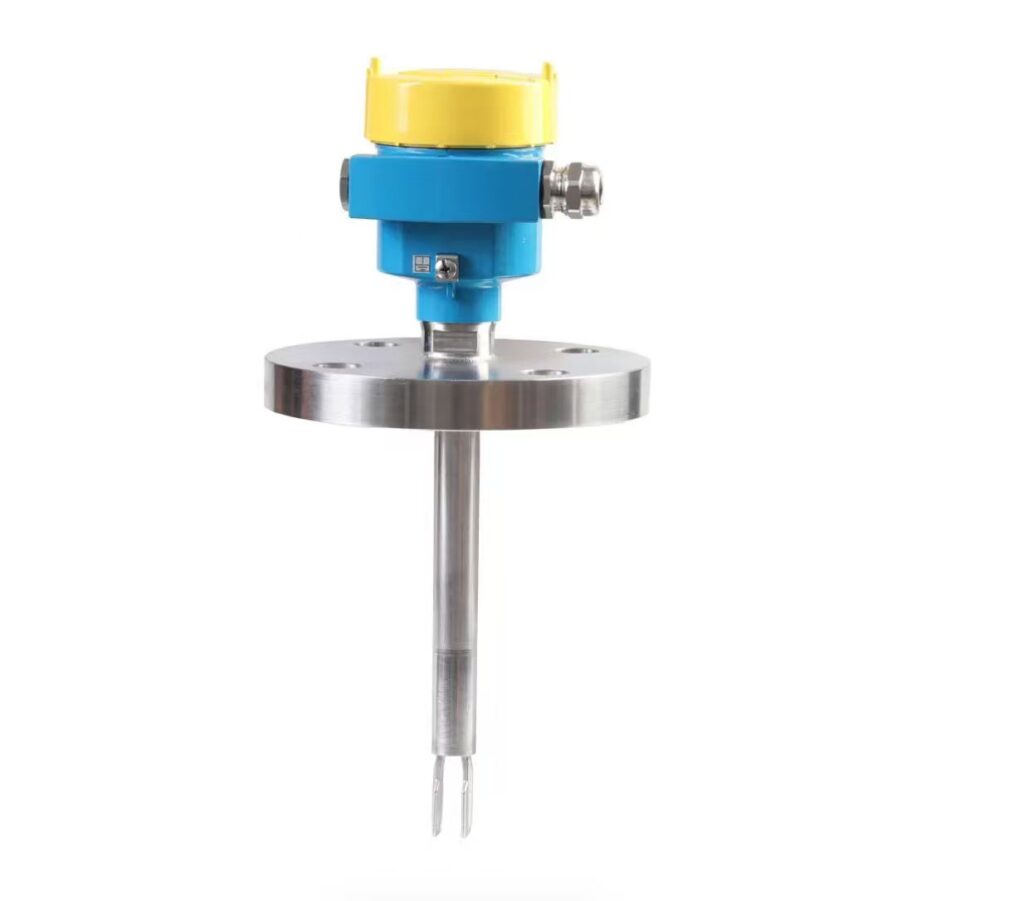
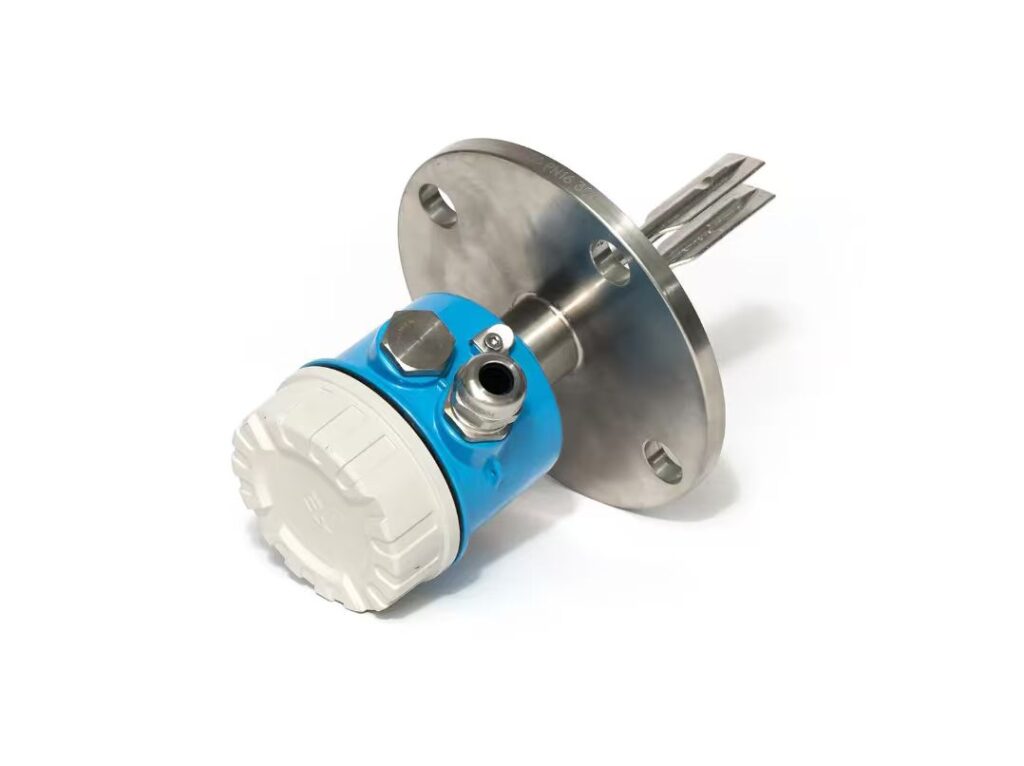
PTFE flange tuning fork level switches are widely used in corrosive industrial environments due to their excellent anti-corrosion performance. However, communication failures between the switch and the control system frequently occur in field operation, leading to abnormal signal transmission, unresponsive data feedback and failure of automatic level control. Such communication malfunctions are mainly caused by wiring problems, environmental interference, parameter mismatch, hardware failure and installation-specific issues of PTFE flange devices.
Improper wiring and line damage are the most common causes of communication faults. Loose, virtual or wrong wiring terminals will directly result in unstable signal transmission and intermittent communication disconnection. Long-term field operation may also cause aging, wear or breakage of signal cables. In addition, non-standard wiring with overly long cables or mixed wiring of power lines and signal lines will increase signal attenuation and crosstalk, disrupting normal communication between the switch and the control system.
Harsh corrosive environments adapted by PTFE flange switches easily induce circuit and connection failures. These switches are mostly installed in chemical, pharmaceutical and sewage treatment scenarios with corrosive gas, humidity and volatile liquids. Although the PTFE flange is corrosion-resistant, long-term exposure to humid and corrosive air will erode the switch junction box, internal circuit contacts and cable connectors, causing poor insulation, short circuits or contact oxidation, which interfere with normal signal communication.
Electromagnetic interference in industrial sites is a key interfering factor. On-site high-power equipment such as motors, frequency converters and heating devices will generate strong electromagnetic fields. Without shielded signal cables or reliable grounding measures, the communication signals of the tuning fork switch will be disturbed and distorted. Unstable grounding and multi-point grounding faults will also cause signal noise and communication anomalies, making the switch unable to transmit accurate data to the control system.
Mismatched communication parameters and system configuration errors will trigger communication failures. The tuning fork switch has fixed communication baud rate, address and protocol parameters. If the parameter settings of the upper computer control system are inconsistent with the device parameters, communication handshake failure will occur. Meanwhile, incorrect system program configuration, disabled signal acquisition channels or overload of the control system will also lead to abnormal data reception.
Internal hardware failure of the switch is another essential cause. Long-term high-temperature and corrosive working conditions may damage the switch’s internal communication chip, circuit board and signal processing components. In addition, excessive vibration of on-site equipment will cause desoldering of internal precision electronic parts, resulting in permanent or intermittent communication faults that cannot be automatically recovered.
In summary, communication malfunctions of PTFE flange tuning fork level switches are mainly attributed to non-standard wiring, environmental corrosion, electromagnetic interference, parameter mismatch and internal hardware damage. Targeted inspection of lines, grounding, parameters and equipment hardware can effectively locate and resolve faults, ensuring stable communication connection between the switch and the control system.
Scan the QR code to receive more detailed information.