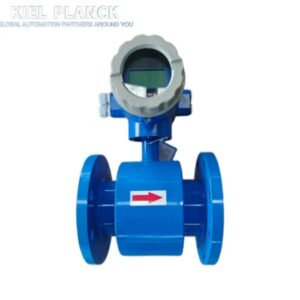
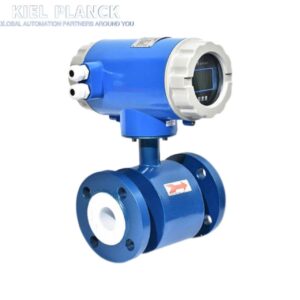
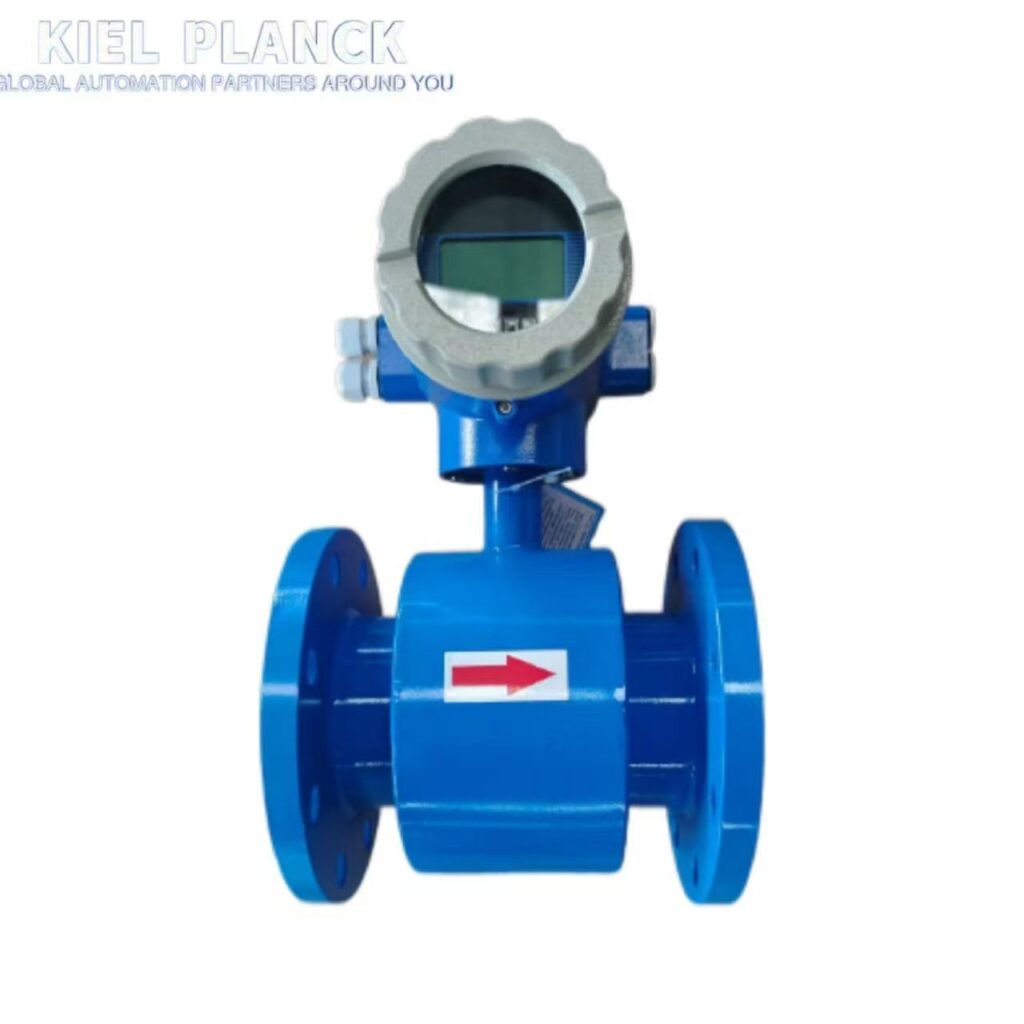
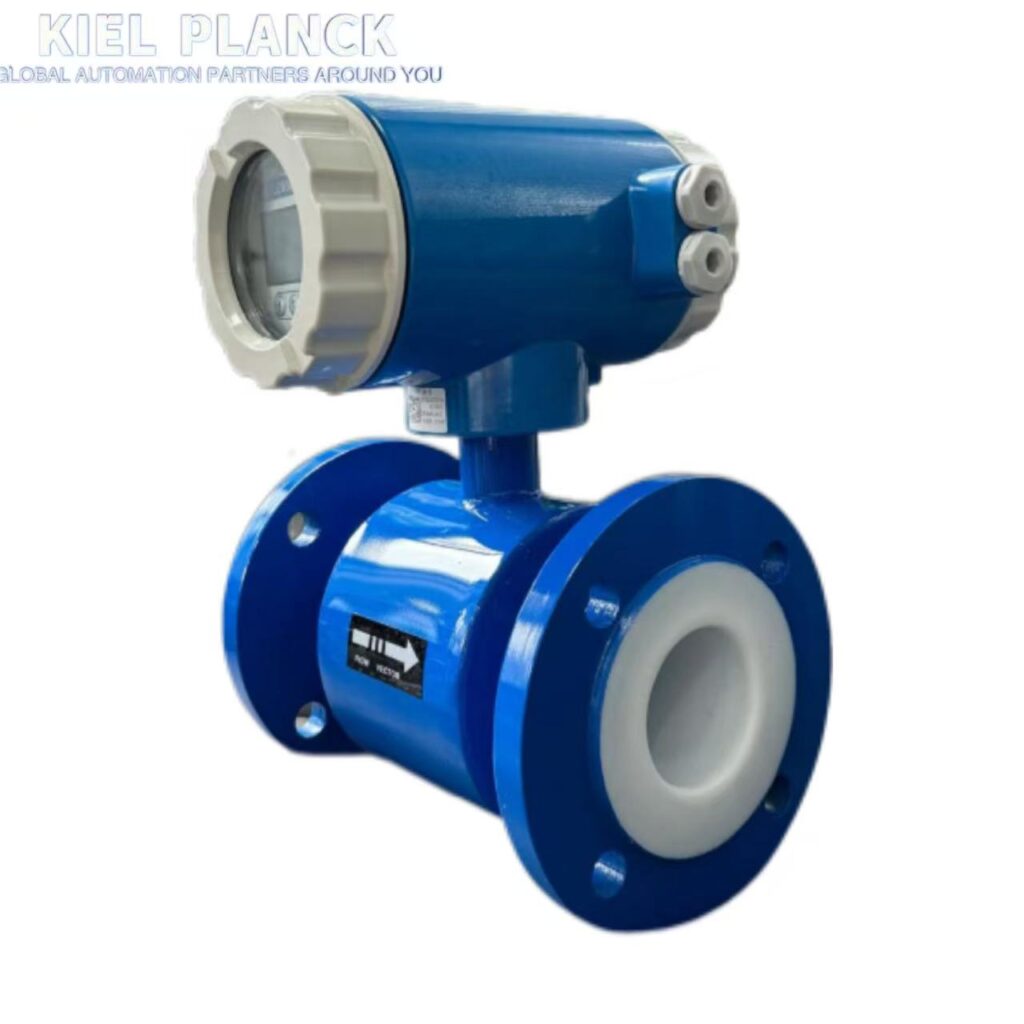
The induced signal is very weak, and the liquid itself acts as part of the signal circuit. If the medium cannot conduct electricity, no usable voltage can be generated, and the magmeter fails to measure flow.
Tap water and general industrial water contain dissolved ions, so their conductivity is high enough for standard electromagnetic flowmeters. Pure water is different, and it is not a single uniform medium. Different purification methods produce water with vastly different conductivity. General demineralized water has moderate conductivity, while ultra-pure water (UPW) for semiconductor or lithium battery production has conductivity approaching zero. This difference decides whether an electromagnetic flowmeter is applicable.
Standard electromagnetic flowmeters usually require medium conductivity above 20 μS/cm. Some high-sensitivity magmeter models lower the threshold to 5 μS/cm, but this is the practical lower limit. General purified water with conductivity between 5 μS/cm and 20 μS/cm may work with high-sensitivity electromagnetic flowmeters, yet measurement stability will decline. Distilled water or ultra-pure water often reaches below 1 μS/cm, sometimes as low as 0.055 μS/cm at 25°C for theoretical ultra-pure water. Under this condition, even high-sensitivity magmeters cannot capture valid flow signals. The instrument will show no reading, jumping values or constant zero output regardless of actual flow rate.
Many engineers make a simple classification mistake: treating all pure water as the same. If a magmeter suitable for demineralized water is directly used for ultra-pure water loops, the instrument cannot function properly. Even if readings occasionally appear, tiny changes in water quality, temperature or electrode contamination will cause severe signal drift. This error often occurs in water treatment skids, new energy material production and pharmaceutical water systems.
When electromagnetic flowmeters are not suitable for ultra-pure water, users need to switch to alternative measurement principles. Turbine flowmeters, vortex flowmeters and ultrasonic flowmeters are common options. Clamp-on ultrasonic flowmeters are popular because they have no wetted electrodes, do not rely on conductivity and cause no contamination risk for ultra-pure water pipelines. For small-bore ultra-pure water pipelines, Coriolis mass flowmeters provide highly accurate measurement, though with higher investment cost.
For pure water that just meets the conductivity requirement, users still need to pay attention to several practical factors. First, select electrode and liner materials compatible with pure water. Stainless steel 316L electrodes and PTFE liners are widely recommended to avoid ion leaching, which would contaminate the water and alter conductivity. Second, maintain proper flow velocity. Magmeters have optimal velocity range, usually from 0.5 m/s to 10 m/s. Too low flow speed weakens the induced signal and worsens noise interference. Third, eliminate air bubbles inside the pipeline. Bubbles break the continuous conductive liquid path and cause signal fluctuation, which is a frequent issue in purified water systems.
Another hidden point: conductivity of pure water changes with temperature. Rising temperature increases the mobility of residual ions and raises conductivity. A magmeter that works at higher temperature may fail when the water is cold, because conductivity drops below the instrument threshold. Therefore, selection must be based on conductivity at the minimum operating temperature, not just room-temperature test data.
Conclusion
Electromagnetic flowmeters are not universally applicable for all pure water. They can measure purified water only when the liquid conductivity meets the instrument’s minimum requirement, generally above 5–20 μS/cm depending on the magmeter grade. Ultra-pure water with conductivity below this threshold cannot be reliably measured by electromagnetic flowmeters, as insufficient conductivity prevents generation of stable induced voltage signals. Before selecting a magmeter for pure water pipelines, engineers must test the actual conductivity under working temperature. For ultra-low conductivity ultra-pure water, non-conductivity-dependent instruments such as ultrasonic or Coriolis flowmeters should be considered. Correct evaluation of water conductivity avoids instrument misapplication, unstable readings and unnecessary procurement costs, supporting stable flow measurement in water treatment, new energy and pharmaceutical pure water processes.
Scan the QR code to receive more detailed information.