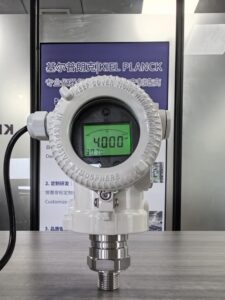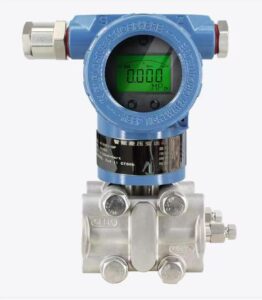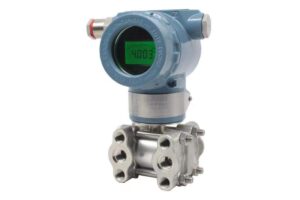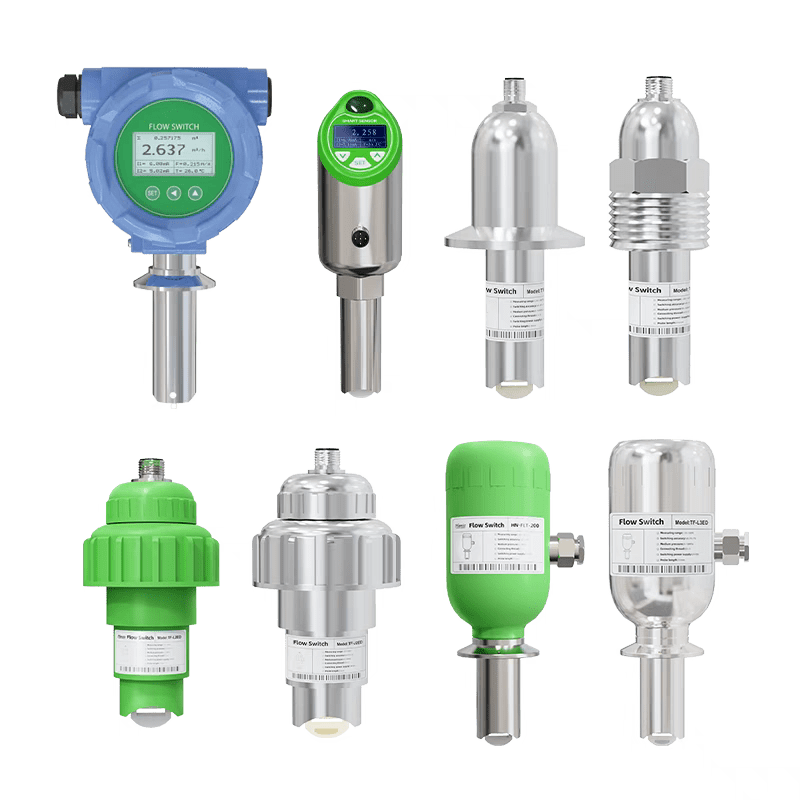
Differential pressure transmitters are widely used in chemical processing, power generation, water treatment, oil and gas, and industrial automation.
Although different transmitters may look similar, their internal sensing technologies can significantly affect measurement performance.
Three commonly discussed technologies are single-crystal silicon, diffused silicon, and capacitive sensing. Understanding their differences helps engineers make better purchasing and selection decisions.
1. Single-Crystal Silicon Technology
Single-crystal silicon sensing technology uses a high-quality silicon sensing element to detect pressure changes.
Its typical advantages include:
High measurement sensitivity.
Good repeatability.
Excellent long-term stability in properly designed products.
Fast response to pressure changes.
Potential for strong overload performance with appropriate mechanical protection.
It is particularly suitable for applications requiring reliable differential pressure measurement, such as process control, equipment monitoring, and industrial automation.
However, actual performance depends on sensor structure, isolation diaphragms, filling fluid, manufacturing processes, and electronic compensation.
2. Diffused Silicon Technology
Diffused silicon sensors use semiconductor diffusion processes to form pressure-sensitive elements.
Their main advantages include:
Mature manufacturing technology.
Competitive production costs.
Compact sensor structures.
Wide application experience.
Suitable performance for many general industrial measurements.
They are commonly used in water systems, machinery, hydraulic equipment, and general process applications.
However, different products can vary significantly in temperature compensation, overload resistance, packaging, and long-term stability.
3. Capacitive Sensing Technology
Capacitive differential pressure transmitters measure pressure changes through variations in capacitance.
A typical structure uses a movable diaphragm between sensing chambers. Pressure differences cause diaphragm displacement, changing the electrical capacitance.
Advantages include:
High sensitivity to small differential pressures.
Suitability for low-pressure measurements.
Good performance in appropriately designed differential pressure applications.
Flexible measurement configurations.
They are often considered for flow measurement, filter monitoring, and low-pressure process applications.
4. Technology Comparison
| Comparison | Single-Crystal Silicon | Diffused Silicon | Capacitive |
|---|---|---|---|
| Sensing principle | Silicon sensing element | Semiconductor diffusion | Capacitance variation |
| Sensitivity | High, design-dependent | Good | High for suitable ranges |
| Long-term stability | Product-dependent | Product-dependent | Product-dependent |
| Low differential pressure | Suitable | Depends on model | Often suitable |
| Overload resistance | Depends on structure | Depends on structure | Depends on diaphragm design |
| Typical applications | Process control | General industrial systems | Low differential pressure and flow |
5. How to Select the Right Technology
Before purchasing a differential pressure transmitter, consider five important factors:
Measurement range: Select a suitable measuring range based on normal operating pressure and expected fluctuations.
Static pressure: Differential pressure transmitters may operate under high line pressure even when the measured differential pressure is relatively small.
Overload conditions: Evaluate possible pressure spikes, valve operations, and abnormal process conditions.
Temperature: Consider both process temperature and ambient temperature.
Required accuracy and stability: Evaluate the actual operating requirements rather than choosing a transmitter based only on its advertised accuracy.
Conclusion
There is no universally best sensing technology for every industrial application.
Single-crystal silicon, diffused silicon, and capacitive technologies each have their own advantages. The right choice depends on pressure range, static pressure, operating temperature, overload conditions, and long-term measurement requirements.
A reliable differential pressure transmitter should be selected according to real operating conditions, not simply its technology name or catalogue specifications.
Contact our engineering team to discuss your differential pressure measurement requirements and find a suitable solution.
Scan the QR code to receive more detailed information.