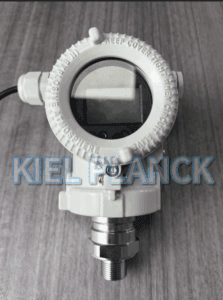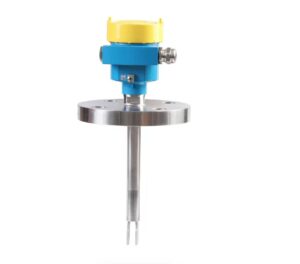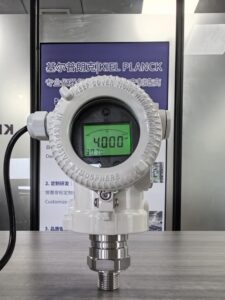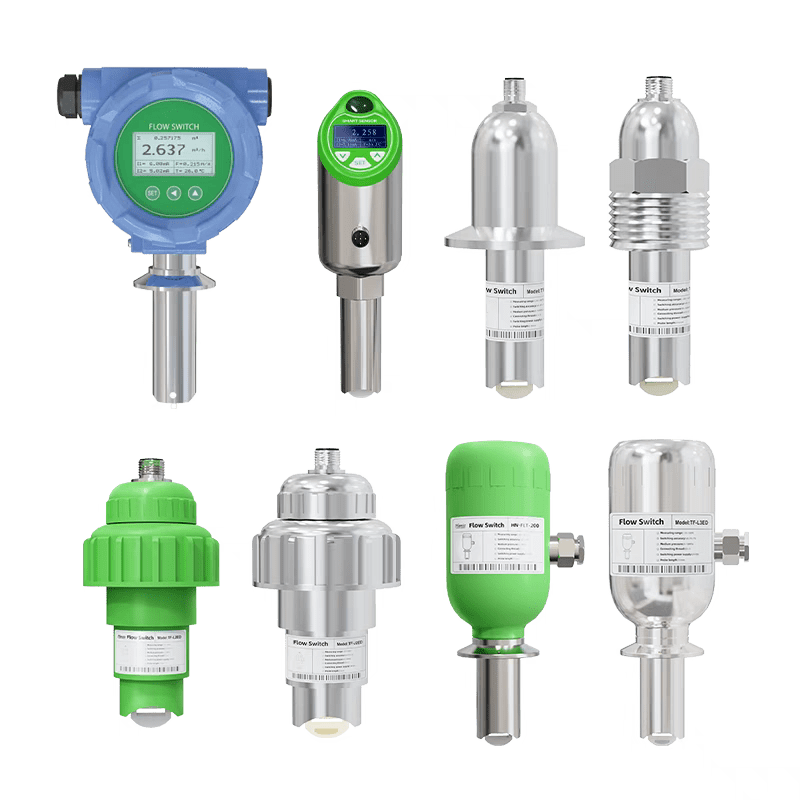
China has become an important source of industrial instrumentation, supplying pressure transmitters, differential pressure transmitters, flowmeters, and level measurement instruments to global markets.
For international equipment manufacturers and industrial buyers, Chinese single-crystal silicon pressure transmitters can offer competitive procurement options.
However, different manufacturers may have significant differences in sensor technology, product design, calibration procedures, and quality management.
How can buyers identify a reliable supplier?
The following factors provide a practical evaluation framework.
1. Compare Measurement Accuracy
Accuracy is one of the first specifications buyers examine.
A pressure transmitter may offer different accuracy grades depending on its model and configuration.
When comparing products, check:
Reference accuracy.
Linearity.
Hysteresis.
Repeatability.
Temperature effects.
Measurement range.
Do not compare two accuracy figures without checking whether they use the same definition and reference conditions.
For example, an accuracy specification of ±0.1% of span is not necessarily equivalent to ±0.1% of reading.
2. Evaluate Long-Term Stability
A pressure transmitter must maintain reliable measurement performance during continuous operation.
Long-term stability is especially important in chemical plants, water treatment facilities, and industrial equipment.
Ask manufacturers for documented information about:
Zero-point drift.
Span drift.
Temperature compensation.
Repeatability.
Long-term stability testing.
A reliable supplier should be able to explain its testing methods and provide relevant technical documentation.
3. Understand the Sensor Technology
Single-crystal silicon sensing technology is commonly used in high-performance industrial pressure measurement.
However, sensor technology is only one part of the complete transmitter.
Mechanical design, isolation diaphragms, filling fluids, electronic circuits, and calibration procedures also influence the final performance.
Buyers should evaluate the complete product rather than relying on the technology name alone.
4. Check Manufacturing and Quality Control
A professional manufacturer should have standardized production and inspection procedures.
Important questions include:
Are critical components inspected?
Is each transmitter calibrated?
Are production batches traceable?
Are finished products tested before shipment?
Can inspection records be provided?
For equipment manufacturers purchasing in batches, consistency between different units is particularly important.
5. Compare After-Sales Service
International buyers should evaluate service capability before placing an order.
Consider:
Technical response time.
Product configuration support.
Installation guidance.
Warranty conditions.
Spare-part availability.
Replacement procedures.
A supplier that understands industrial applications can often provide more useful support than a company that only offers standard product quotations.
6. Supplier Evaluation Checklist
| Evaluation Factor | What Buyers Should Verify |
|---|---|
| Accuracy | Complete accuracy specification |
| Stability | Long-term drift data |
| Sensor | Sensing technology and structure |
| Manufacturing | Production quality procedures |
| Calibration | Inspection and calibration records |
| Certification | Applicable certificates |
| Delivery | Production lead time |
| Service | Technical and warranty support |
Conclusion
Buying a Chinese single-crystal silicon pressure transmitter in 2026 requires a comprehensive supplier evaluation.
Accuracy, stability, manufacturing consistency, and after-sales service should all be considered before making a purchasing decision.
The best supplier is not necessarily the one offering the lowest quotation. It is the manufacturer that can provide suitable products, reliable documentation, and long-term technical support.
If you are sourcing pressure transmitters for industrial equipment or process control projects, contact our team to discuss your measurement requirements and product configuration.
Scan the QR code to receive more detailed information.