Corrosion-Resistant Pressure Transmitters for Chemical Applications: Introducing Kielplank Instrumentation - Kiel Planck
  • Home
        • New Product

          Corrosion-Resistant Pressure Transmitters for Chemical Applications: Introducing Kielplank Instrumentation - Kiel Planck

          There is a solution for every application. Let’s work together to find the right solution for you.

          Your benefits

          We use our experience to move your project forward.

          PHONE: 400-8868-261

          E-mail: info@kielplanckprc.com / kielplanck@outlook.com

  • Application
  • Service
  • Brand
  • Blog
  • Contact Us

Corrosion-Resistant Pressure Transmitters for Chemical Applications: Introducing Kielplank Instrumentation

Corrosion-Resistant Pressure Transmitters for Chemical Applications: Introducing Kielplank Instrumentation

Pressure measurement is essential in chemical production.

Reactors, storage tanks, chemical pipelines, dosing systems, and process equipment all require reliable pressure monitoring.

However, chemical applications can be challenging for standard pressure transmitters.

Acids, alkalis, solvents, and other aggressive media may damage wetted components if the materials are not properly selected.

For this reason, choosing a corrosion-resistant pressure transmitter requires more than comparing accuracy specifications.

1. Why Do Chemical Applications Need Special Pressure Transmitters?

Different chemical media have different physical and chemical properties.

A standard stainless steel pressure connection may be suitable for one application but unsuitable for another.

Common challenges include:

  • Acid and alkali corrosion.

  • Chemical reactions with sealing materials.

  • High process temperatures.

  • Pressure fluctuations.

  • Crystallization or material buildup.

  • Leakage risks.

The correct transmitter configuration should be determined according to the actual medium and operating conditions.

2. How to Select Suitable Wetted Materials

Material selection is one of the most important steps.

Common materials used in industrial pressure measurement include:

MaterialTypical Considerations
316L stainless steelSuitable for many general industrial media
Hastelloy alloysConsidered for certain aggressive chemical environments
TantalumUsed in selected highly corrosive applications
PTFEUsed for suitable chemical sealing and lining applications
Other special alloysSelected according to chemical compatibility

These materials are not universally interchangeable.

Concentration, temperature, impurities, pressure, and exposure time can significantly affect corrosion behavior.

Always confirm compatibility before ordering.

3. The Importance of Diaphragm Seals

In applications involving corrosive, viscous, or crystallizing media, a diaphragm seal may help isolate the transmitter’s internal sensing system from the process medium.

The diaphragm material must be compatible with the application.

Engineers should also consider:

  • Diaphragm diameter.

  • Filling fluid.

  • Process temperature.

  • Capillary length.

  • Static pressure.

  • Response time.

  • Temperature-related measurement effects.

A diaphragm seal can improve process compatibility, but its design also affects measurement performance.

4. Kielplank Pressure Measurement Solutions

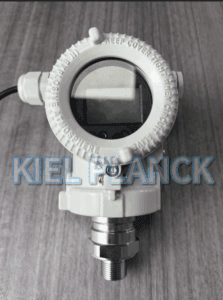
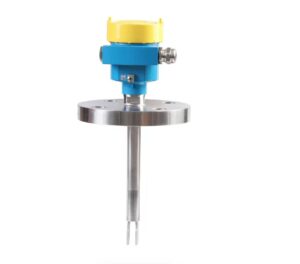
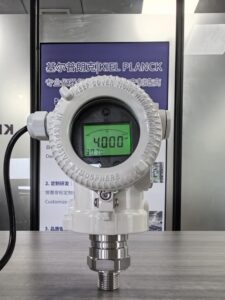
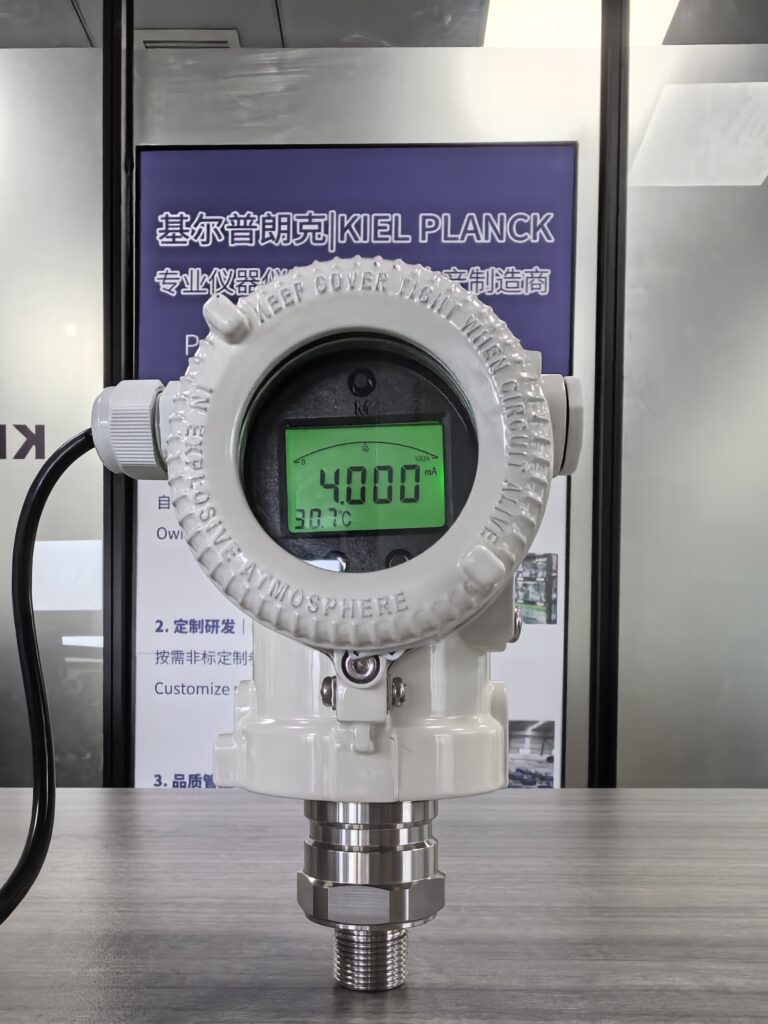
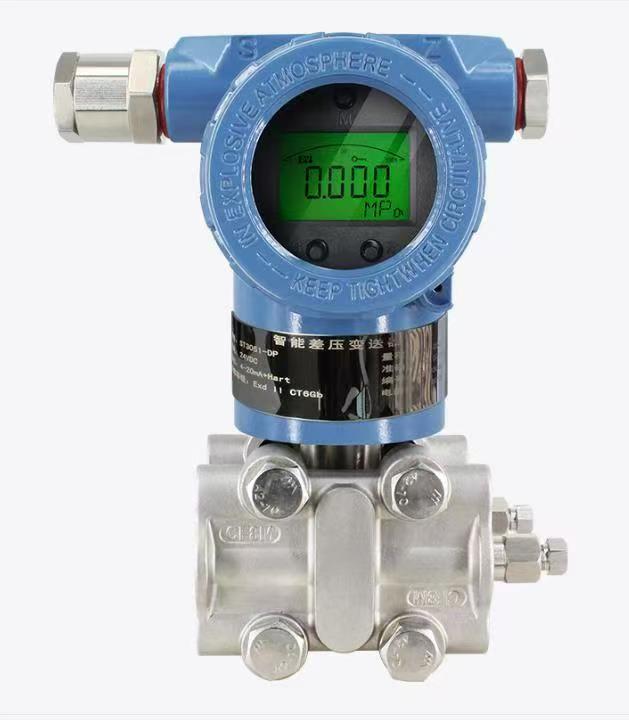
Kielplank Instrumentation focuses on industrial measurement products, including pressure transmitters, differential pressure transmitters, flowmeters, and level instruments.

For chemical applications, pressure transmitter configurations should be evaluated according to:

  • Process medium.

  • Pressure range.

  • Operating temperature.

  • Wetted material requirements.

  • Process connection.

  • Output signal.

  • Hazardous-area classification, where applicable.

Our engineering team can assist customers in reviewing these parameters before selecting a suitable model.

5. What Information Should Customers Provide?

To obtain a suitable quotation, customers should provide:

  1. Chemical name and concentration.

  2. Normal and maximum pressure.

  3. Process temperature.

  4. Required measurement range.

  5. Process connection.

  6. Output signal.

  7. Installation environment.

  8. Required certifications.

Complete information helps avoid unsuitable material selection and unnecessary configuration changes.

Conclusion

A corrosion-resistant pressure transmitter must be designed around the actual chemical operating conditions.

Diaphragm material, sealing structure, process connection, and temperature compatibility are all important considerations.

Kielplank Instrumentation aims to provide industrial pressure measurement products and technical selection support for different process applications.

Contact us with your chemical medium and operating parameters to discuss a suitable pressure transmitter configuration.
Corrosion-Resistant Pressure Transmitters for Chemical Applications: Introducing Kielplank Instrumentation - Kiel Planck

Scan the QR code to receive more detailed information.
Corrosion-Resistant Pressure Transmitters for Chemical Applications: Introducing Kielplank Instrumentation - Kiel Planck

Share:

More Posts

Hydrogen Growth in 2026: Where Are the Instrumentation Opportunities for Electrolyzer Manufacturers? - Kiel Planck

Hydrogen Growth in 2026: Where Are the Instrumentation Opportunities for Electrolyzer Manufacturers?

Hydrogen production and related equipment continue to attract attention from industrial manufacturers, engineering companies, and energy investors. As electrolyzer projects develop, equipment manufacturers must consider not only the stack itself but also the supporting systems required for stable operation.

Pressure transmitters, flowmeters, level switches, differential pressure instruments, and temperature sensors are important parts of these auxiliary systems. They support monitoring across water treatment, electrolysis, gas-liquid separation, hydrogen purification, compression, storage, and cooling.

This article examines the main instrumentation areas that electrolyzer manufacturers and hydrogen equipment integrators should review when developing equipment packages. Rather than assuming that every project has the same requirements, it focuses on practical measurement needs and procurement opportunities.

Three Levels of Protection Against Electrolyzer Dry Running and Liquid Overflow - Kiel Planck

Three Levels of Protection Against Electrolyzer Dry Running and Liquid Overflow

Liquid-level monitoring is an important part of many water electrolysis auxiliary systems. Water tanks, circulation vessels, gas-liquid separators, and collection tanks may all require level detection. Low liquid level can affect pump suction and water supply, while excessive liquid accumulation may interfere with separation or cause overflow.

A suitable level monitoring strategy can use low-level alarms, high-level alarms, and additional protective functions where required. Vibrating fork level switches are one possible option for point-level detection, while continuous level transmitters may be appropriate where ongoing measurement is needed.

Three Essential Instruments for Hydrogen Electrolyzer Circulation Pump Packages - Kiel Planck

Three Essential Instruments for Hydrogen Electrolyzer Circulation Pump Packages

Circulation pump packages are important auxiliary systems in many hydrogen production installations. They may circulate cooling water, process water, or other liquids required by the electrolyzer and associated equipment. Reliable pressure, flow, and level monitoring helps operators understand pump operating conditions and identify abnormal changes in the circulation system.

A typical instrument arrangement may include a pressure transmitter at the pump discharge, a flow switch or flowmeter in the circulation line, and a level switch or level transmitter on the supply tank. The exact configuration depends on the pump package design and process requirements.

This article explains the functions of these three key instruments and the main factors to consider when selecting them.

Send Us A Message

captcha
Reload

Bitte geben Sie die im CAPTCHA angezeigten Zeichen ein, um sicherzustellen, dass Sie ein Mensch sind.

Email
Email: info@kielplanckprc.com
WhatsApp
WhatsApp Me