This paper systematically elaborates on the working principle, core structural characteristics, mainstream explosion-proof grades and key technical advantages of explosion-proof pressure transmitters, analyzes their wide application scenarios in petroleum, chemical, natural gas and metallurgical industries, and discusses their development trends in intelligentization and high-reliability optimization. The results show that explosion-proof pressure transmitters play an irreplaceable role in ensuring the stable operation of industrial equipment and eliminating production safety hazards, and will develop towards higher precision, stronger anti-interference performance and intelligent remote monitoring in the future.
1. Introduction
In modern industrial production, a large number of flammable and explosive media such as crude oil, natural gas, chemical solvents and coal gas are widely used. In such special working scenarios, ordinary electrical instruments are prone to generate electric sparks or local high temperatures during operation, which may trigger gas explosion accidents and cause huge losses to personnel and property. As a special safety-level pressure detection device, the explosion-proof pressure transmitter solves the safety pain point of pressure monitoring in hazardous environments. It not only realizes real-time, accurate and stable collection of liquid, gas and steam pressure signals, but also meets strict industrial explosion-proof safety standards. At present, explosion-proof pressure transmitters have become indispensable basic equipment in the field of process industrial safety control, supporting the safe and efficient operation of high-risk industrial production links.
2. Working Principle and Structural Composition
The basic pressure sensing principle of explosion-proof pressure transmitters is consistent with that of conventional transmitters, but they are optimized and upgraded in explosion-proof structure and circuit safety design. The core sensing unit adopts high-precision silicon piezoresistive sensing chip. When the process medium pressure acts on the stainless steel isolation diaphragm, the pressure is transmitted to the sensing chip through internal silicone oil, converting the physical pressure signal into a proportional weak electrical signal. After being amplified, temperature-compensated and digitally processed by the built-in microprocessor, the signal is finally converted into a standard 4-20mA analog signal or superimposed HART digital signal for remote transmission and system communication.
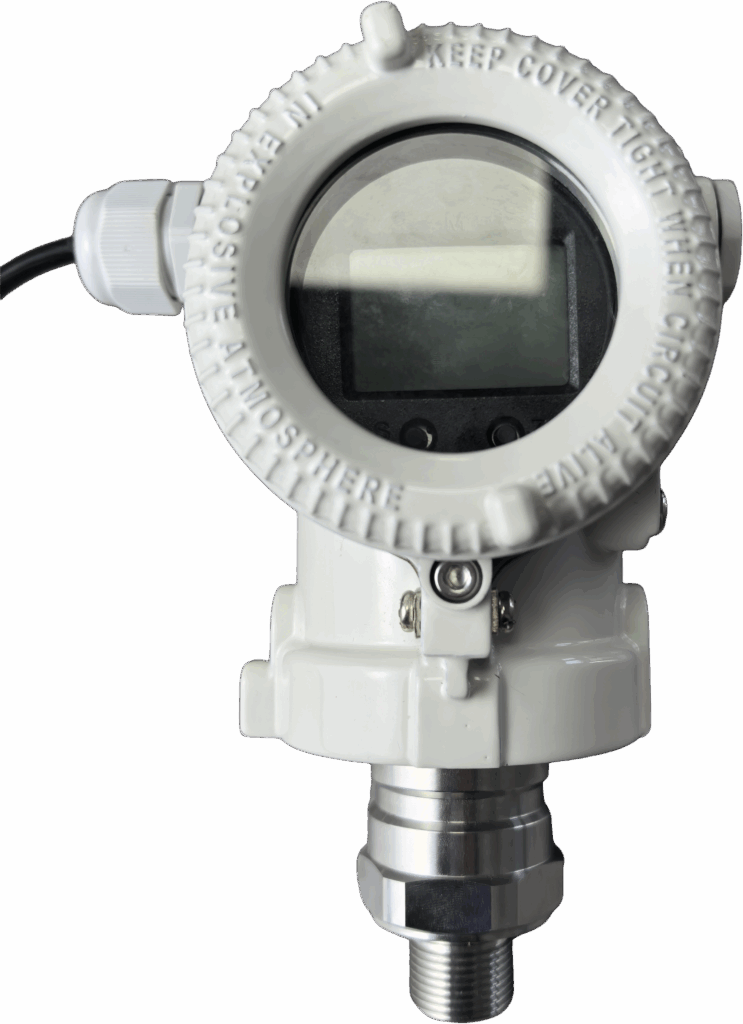
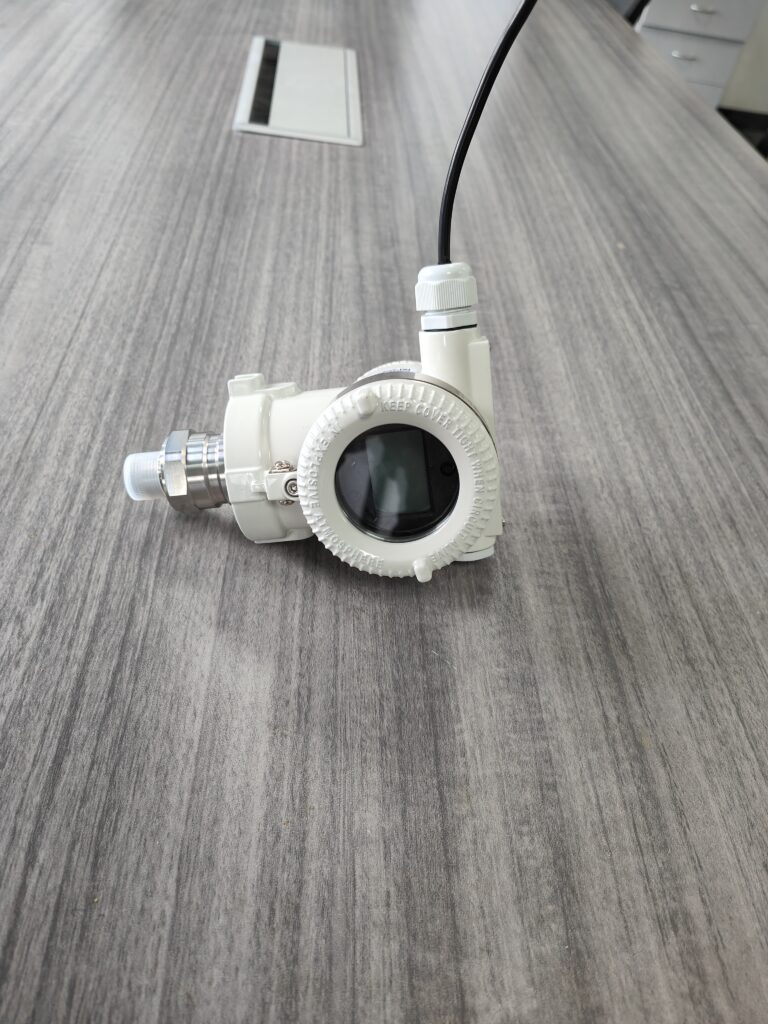
In terms of structure, the explosion-proof pressure transmitter is composed of a pressure sensing module, a signal processing circuit, an explosion-proof sealed shell, a display module and a wiring terminal. The whole machine adopts an all-stainless steel welded structure, with excellent sealing and pressure resistance. The internal circuit is isolated from the external hazardous atmosphere through a fully sealed explosion-proof cavity, which fundamentally prevents the contact between internal electrical ignition sources and external explosive gases. Equipped with independent temperature sensing and data storage units, the device can automatically compensate ambient temperature changes and mechanical vibration interference, ensuring long-term detection accuracy and operational stability.
3. Core Explosion-proof Technology and Safety Grades
The core competitiveness of explosion-proof pressure transmitters lies in their professional explosion-proof design, which mainly includes two mainstream technical types: flameproof type and intrinsically safe type. The flameproof transmitter adopts a thickened high-strength metal shell. Even if an internal explosion occurs accidentally, the shell can withstand the explosion pressure and block the spread of flame and high-temperature gas to the outside, avoiding secondary explosion of external hazardous media. The intrinsically safe type limits the voltage, current and power of the internal circuit through safety barriers, ensuring that the energy generated by any circuit fault is lower than the ignition threshold of explosive gases, which is suitable for continuous explosive dangerous zones.
These transmitters strictly comply with international and domestic standards such as IECEx, ATEX and GB3836 series, and have obtained authoritative certification. Common explosion-proof grades include Ex ia IIC T6 Ga and Ex d IIC T6 Gb, covering different hazardous zone levels from Zone 0 to Zone 2. The T6 temperature grade ensures that the maximum surface temperature of the equipment is lower than 85℃, which can adapt to most flammable gas environments and achieve high-level safety protection.
4. Technical Advantages and Industrial Applications
Compared with ordinary pressure transmitters, explosion-proof products have prominent comprehensive performance advantages. Firstly, they have ultra-high safety and can operate stably in long-term flammable, explosive and corrosive harsh environments. Secondly, they feature high detection accuracy, strong anti-vibration and anti-electromagnetic interference capabilities, with stable measurement data and small zero drift. In addition, the integrated design is convenient for installation, debugging and maintenance, and supports long-distance signal transmission and remote parameter setting through the HART protocol, which greatly improves the automation level of industrial monitoring.
In terms of industrial application, explosion-proof pressure transmitters cover almost all high-risk process industries. In the petroleum and natural gas industry, they are used for pressure monitoring of oil pipelines, gas storage tanks and drilling equipment to prevent pipeline leakage and overpressure accidents. In the chemical industry, they monitor the operating pressure of reaction kettles, conveying pipelines and storage equipment of flammable chemical media. In addition, they are also widely applied in metallurgy, electric power, boiler manufacturing and coal chemical industries, providing accurate data support for industrial closed-loop control and safety early warning.
5. Development Trends and Conclusion
With the rapid development of industrial intelligentization and safety production upgrading, explosion-proof pressure transmitters are evolving towards high precision, intelligentization and multi-function integration. Modern products gradually integrate digital communication, fault self-diagnosis, data recording and remote alarm functions, realizing real-time monitoring and predictive maintenance of equipment status. At the same time, the miniaturization of structure and the generalization of explosion-proof grades further expand their application scope.
In conclusion, explosion-proof pressure transmitters are key safety sensing devices for high-risk industrial production. Relying on reliable explosion-proof technology and stable detection performance, they effectively guarantee the operational safety of hazardous industrial environments. With the continuous improvement of industrial safety standards and intelligent manufacturing technology, explosion-proof pressure transmitters will play a more important role in industrial process control and safety supervision, and become an important technical support for the safe, stable and intelligent development of modern process industries.
Scan the QR code to receive more detailed information.