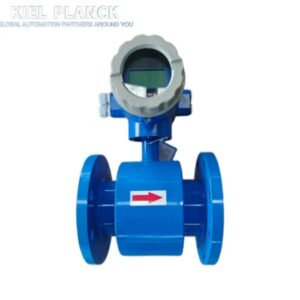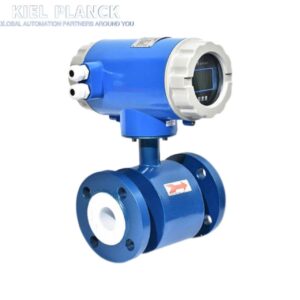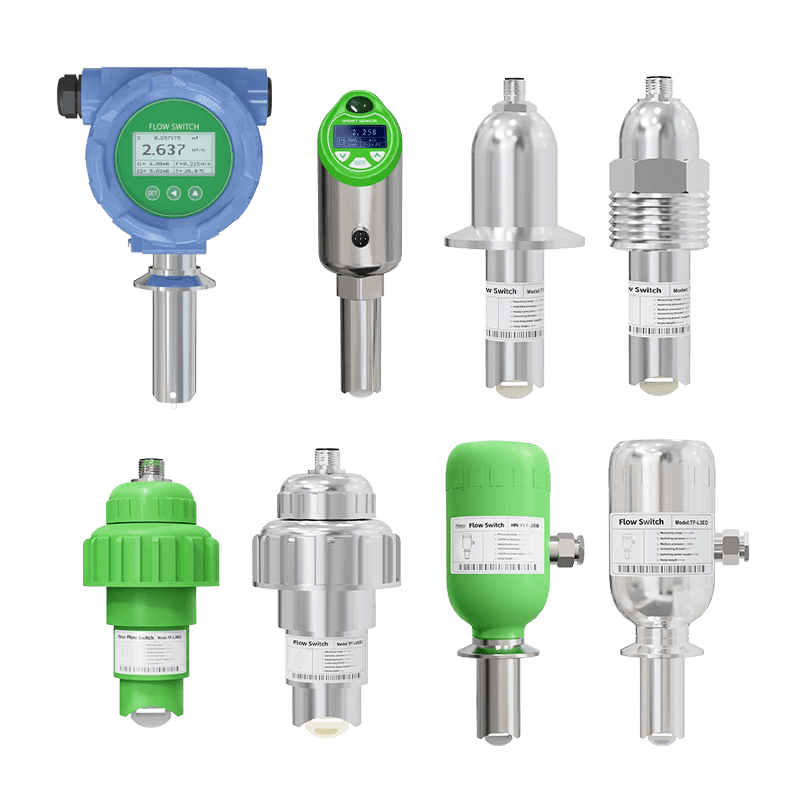
Impeller flowmeters are widely adopted in industrial fluid measurement due to their high linearity, low cost and stable dynamic response. Their measurement principle relies on the linear proportional relationship between fluid flow velocity and impeller rotational speed under rated working conditions. However, in complex industrial scenarios, fluid physical properties are not constant. Fluid viscosity and temperature are two critical variable parameters that directly change fluid flow characteristics, interfere with impeller rotation status, and cause measurement deviation, repeatability decline and linearity deterioration. Exploring the influence mechanism of viscosity and temperature on measurement performance is of great significance for improving metering accuracy and optimizing field application conditions of impeller flowmeters.
Fluid viscosity is the most direct physical factor affecting the measurement accuracy of impeller flowmeters. Viscosity refers to the internal friction resistance of fluid during flow, which determines the flow state and fluid-wall interaction degree. Impeller flowmeters are calibrated based on low-viscosity clean fluid such as water, forming a standard linear flow-speed rotation model. When the fluid viscosity increases significantly, a thick viscous boundary layer will adhere to the impeller blade surfaces and the inner pipe wall. This boundary layer increases the rotational friction resistance of the impeller and weakens the fluid impact force on the blades, resulting in lower impeller speed than the theoretical standard value and negative measurement errors.
Excessively low viscosity also brings hidden troubles to measurement stability. Ultra-low-viscosity fluids have strong fluidity and weak flow adhesion, which easily form turbulent flow and local eddies around the impeller. The disordered fluid impact causes irregular jitter of the impeller, leading to fluctuating instantaneous flow data and reduced measurement repeatability. In addition, high-viscosity fluids are prone to residual adhesion on blades after long-term operation, which changes the blade geometric parameters and destroys the original instrumental constant, resulting in continuous drift of long-term measurement data.
Fluid temperature affects measurement performance mainly by changing fluid viscosity and causing structural thermal deformation. There is a negative correlation between temperature and viscosity of most Newtonian fluids. For liquid media such as industrial oil and chemical solvents, the fluid viscosity decreases gradually with the rise of temperature, which reduces blade adhesion resistance and optimizes flow field stability. Proper temperature rise can weaken viscosity errors and improve measurement linearity within a certain range. On the contrary, low temperature will sharply increase fluid viscosity, aggravate boundary layer adhesion, and produce obvious under-measurement errors.
Apart from changing fluid viscosity, extreme temperature conditions will trigger structural deformation of flowmeter components. In high-temperature environments, the impeller blades, rotating shaft and bearing materials undergo slight thermal expansion, changing the assembly clearance and rotational friction coefficient. Excessive thermal expansion may cause bearing jitter and unbalanced impeller rotation. In low-temperature environments, material embrittlement and shrinkage will increase structural rigidity and friction resistance, further deteriorating measurement accuracy. Moreover, extreme temperature will interfere with the internal signal induction circuit, causing signal drift and indirectly affecting data stability.
The combined effect of viscosity and temperature brings complex interference to actual industrial measurement. In practical working conditions, temperature fluctuation will inevitably lead to viscosity changes, forming coupled errors rather than independent single-factor interference. For example, the temperature drop of industrial circulating oil will increase viscosity sharply, resulting in superposition of flow field turbulence and mechanical resistance errors, which greatly expands the measurement error range. Such coupled interference is the main cause of inaccurate metering of impeller flowmeters in variable working condition environments.
To suppress the adverse effects of viscosity and temperature interference, targeted optimization and compensation measures are widely used in engineering. First, medium matching selection is adopted, selecting high-precision impeller flowmeters suitable for corresponding viscosity ranges according to fluid characteristics. Second, temperature and viscosity real-time compensation algorithms are embedded in intelligent flowmeters. The system dynamically corrects the instrumental constant according to real-time monitored fluid temperature and viscosity parameters to eliminate coupled errors. In addition, preheating or heat preservation measures are equipped for low-temperature fluid measurement to stabilize fluid viscosity, and regular blade cleaning is carried out to eliminate viscous adhesion residues.
In conclusion, fluid viscosity and temperature affect the measurement performance of impeller flowmeters by changing fluid flow state and equipment structural characteristics. Viscosity change directly causes linearity errors, while temperature fluctuation indirectly interferes with measurement accuracy through viscosity variation and thermal deformation. Through reasonable model selection, intelligent parameter compensation and standardized working condition adjustment, the interference of physical fluid parameters can be effectively reduced. This research provides an important theoretical basis for the high-precision and stable operation of impeller flowmeters in variable-temperature and variable-viscosity industrial measurement scenarios.
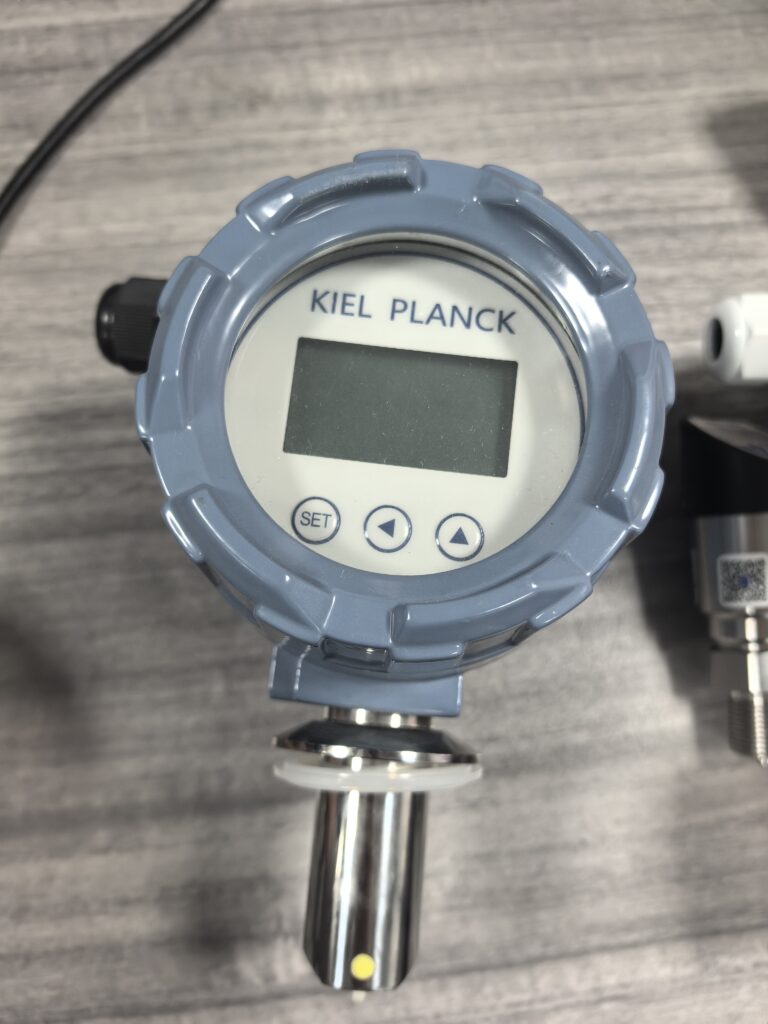
Scan the QR code to receive more detailed information.