Cooling water monitoring is a fundamental safety link for the stable operation of vacuum furnaces in powder metallurgy and advanced material manufacturing. Precise and reliable flow monitoring effectively prevents equipment overheating, vacuum seal damage and production failures caused by abnormal cooling water circulation. Water flow switches and flow meters are two mainstream monitoring solutions widely applied in vacuum furnace cooling systems, with distinct differences in working principles, monitoring functions, application scenarios and comprehensive costs. This paper conducts a systematic technical comparison between water flow switches and flow meters, analyzing their respective advantages, limitations and applicability to vacuum furnace high-temperature industrial environments. By comparing monitoring accuracy, response performance, installation requirements and operational costs, this study clarifies the optimal selection criteria for different production demands. The results provide practical technical references for enterprises to configure cooling water monitoring systems, helping balance equipment safety, monitoring precision and economic benefits for vacuum furnace production.
1. Introduction
Vacuum furnaces operate continuously under high-temperature and high-vacuum conditions, and their core components such as furnace seals, heating systems and vacuum units rely entirely on circulating cooling water for heat dissipation. Abnormal water flow, including flow interruption, insufficient flow and fluctuating flow rate, will lead to rapid temperature rise of key components, resulting in seal aging, heating element burnout and even sudden shutdown of production lines. To solve this problem, water flow switches and flow meters have become two core monitoring devices for vacuum furnace cooling water systems.
In actual industrial configuration, many enterprises face confusion in device selection. The two types of equipment differ greatly in functional positioning: flow switches focus on threshold-based safety alarm and interlock protection, while flow meters realize real-time continuous data measurement and flow recording. Reasonable selection of monitoring equipment directly affects the safety level and operational intelligence of vacuum furnaces. This article compares the technical characteristics and application effects of the two devices to guide targeted selection in engineering practice.
2. Working Principle and Core Functional Differences
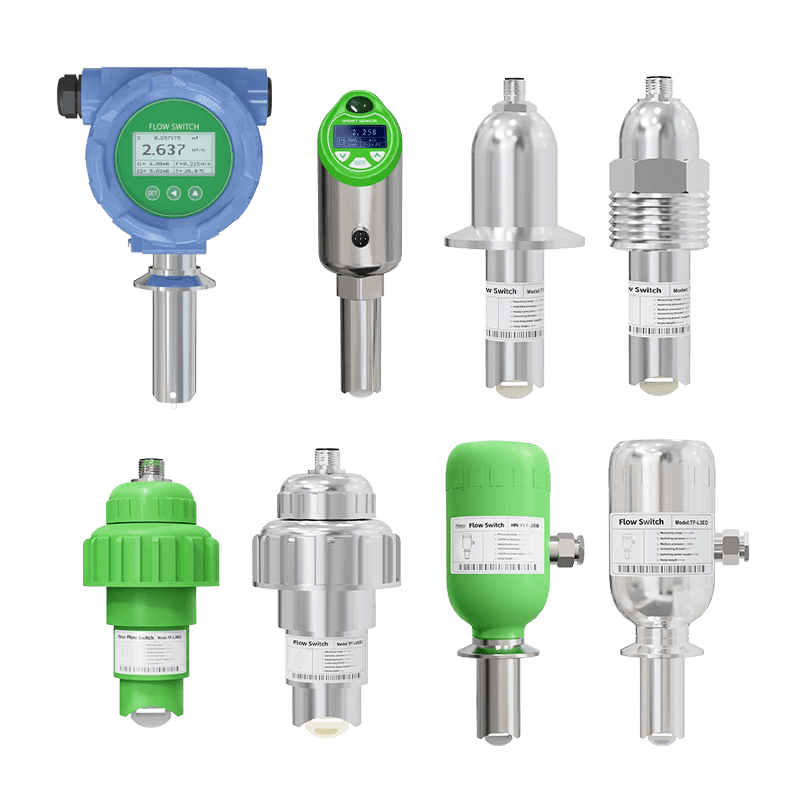
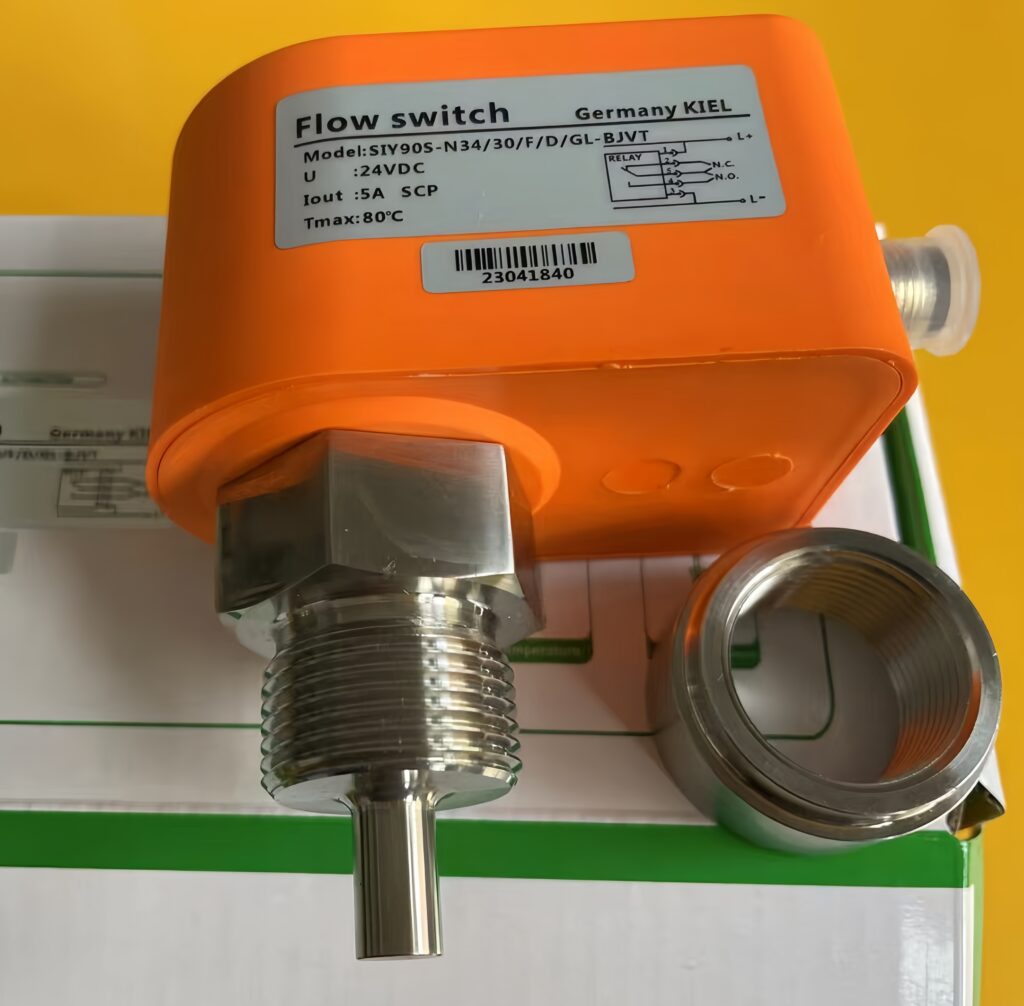
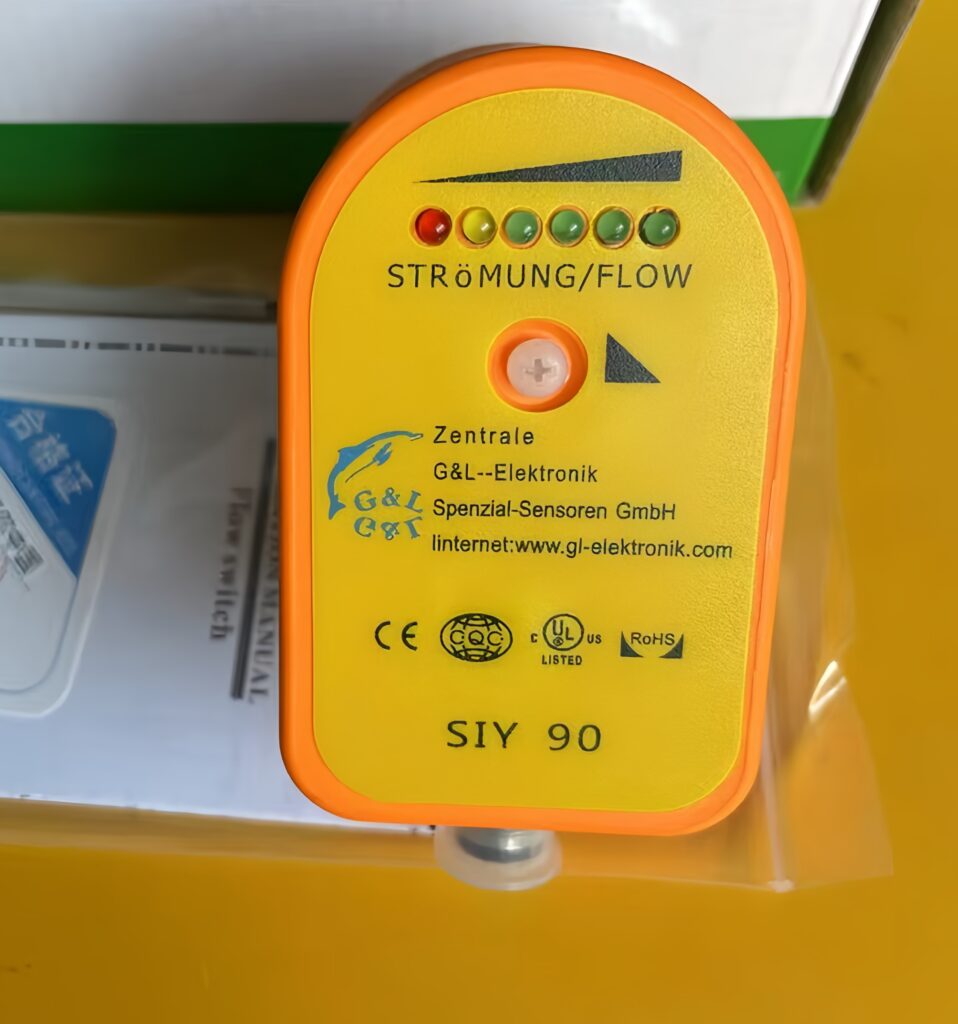
Water flow switches are threshold-triggered safety protection devices. Most industrial models adopt thermal dispersion sensing technology, which judges flow status based on the temperature difference change of the probe. The device only outputs switch signals of “normal flow” or “no-flow/low-flow”. Once the cooling water flow is lower than the preset safety threshold, it immediately triggers an alarm and linkage shutdown to cut off the furnace heating function. Its core positioning is safety protection, without real-time data display and cumulative flow recording functions.
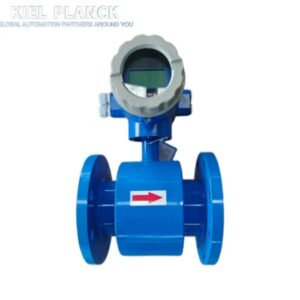
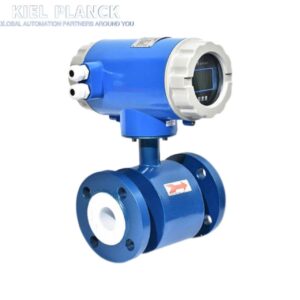
In contrast, flow meters are high-precision measuring devices. Common types used in vacuum furnace systems include electromagnetic flow meters and turbine flow meters. They calculate real-time flow rate through fluid induction or mechanical rotation, and can continuously output accurate digital flow data. Flow meters support real-time data display, historical data recording, flow curve analysis and remote transmission, realizing quantitative monitoring of cooling water circulation status rather than simple qualitative judgment.
3. Technical Performance Comparison in Vacuum Furnace Scenarios
In terms of safety response performance, water flow switches have prominent advantages. With a response time of less than 1 second, they can quickly capture sudden flow interruption faults such as pipeline blockage and pump failure, and complete interlock protection in real time. Their non-mechanical structure is resistant to scale and impurity interference in cooling water, with low failure rate and strong environmental adaptability. However, their defect is low monitoring precision, unable to identify subtle flow fluctuations that may cause potential equipment risks.
Flow meters excel in monitoring accuracy and data comprehensiveness. They can accurately capture tiny flow changes and provide continuous flow data support for equipment operation analysis. This function is very suitable for precision production scenarios that require long-term process parameter optimization. Nevertheless, flow meters have obvious shortcomings in safety protection: they have slow response to sudden no-flow faults, and complex internal structures are easily affected by water quality impurities, leading to measurement deviation. In addition, they cannot directly trigger linkage protection and need to cooperate with PLC programs to realize alarm functions.
4. Installation, Cost and Maintenance Comparison
Water flow switches feature simple installation and low environmental requirements. They occupy small pipeline space, have low requirements for straight pipe sections, and are convenient for on-site construction and later replacement. The equipment and installation costs are low, and daily maintenance is simple, only requiring regular probe cleaning, which is suitable for large-scale popularization in conventional vacuum furnace equipment.
Flow meters have strict installation specifications, requiring long straight pipe sections to ensure measurement accuracy, which puts forward higher requirements for pipeline layout. The equipment procurement cost is 3 to 5 times that of flow switches, and the later maintenance is complicated, requiring regular calibration and internal component detection. Meanwhile, flow meters need to be matched with display instruments and data transmission modules, increasing the overall system investment and operation cost.
5. Application Selection Strategy
For conventional vacuum debinding and sintering furnaces that take safety protection as the core demand, water flow switches are the preferred solution. They can meet the basic no-flow alarm and interlock protection needs, with high stability and cost performance, ensuring the basic safe operation of equipment. For high-precision vacuum furnaces used for aerospace and new material research and development, which need real-time monitoring of flow parameters, process optimization and data traceability, flow meters are more suitable to achieve refined monitoring of cooling systems.
6. Conclusion
Water flow switches and flow meters have their own unique technical advantages and applicable scenarios in vacuum furnace cooling water monitoring systems. Water flow switches are oriented to safety protection, featuring fast response, strong stability and low cost, which are the most reliable basic monitoring devices for conventional vacuum furnace production. Flow meters focus on high-precision quantitative monitoring and data analysis, adapting to high-end refined production scenarios. In engineering applications, enterprises should select monitoring equipment according to production precision requirements, equipment grade and cost budget. For most industrial production scenarios, the combined configuration of flow switches for safety interlock and flow meters for data monitoring can maximize the operational safety and intelligent management level of vacuum furnace cooling water systems.
Scan the QR code to receive more detailed information.