Vacuum furnaces operate under extreme high-temperature and vacuum sealing conditions, where the reliability of cooling water systems directly determines equipment safety and sintering product quality. Traditional single-protection schemes relying solely on water flow switches can hardly cope with complex abnormal working conditions, including slight flow attenuation and local overheating, easily leading to missed judgments and delayed protection. This paper proposes a multi-layer safety protection design for vacuum furnace cooling water systems, constructing a dual interlock control scheme combining water flow monitoring and temperature real-time detection. By setting graded flow threshold alarms and temperature linkage protection logic, the system realizes early warning for potential faults and emergency interlock shutdown for severe abnormalities. The design effectively compensates for the defects of single monitoring mode, improves the system’s anti-risk capability and fault tolerance, and provides a reliable safety guarantee for long-term continuous and stable operation of vacuum sintering and debinding production.
1. Introduction
Vacuum furnace processing is widely adopted in high-precision manufacturing of powder metallurgy, hard alloys and advanced ceramics. During the working cycle, the furnace body, heating components and vacuum devices generate massive heat, which must be dissipated timely through circulating cooling water. Once the cooling system fails, equipment overheating, sealing aging, vacuum degree attenuation and batch product scrapping will occur, causing serious economic losses and safety risks. Most conventional vacuum furnace cooling systems only adopt flow switches for single threshold protection, which can only respond to extreme faults such as no-flow and severe low flow, but fail to monitor hidden dangers like normal flow with insufficient heat dissipation and local pipeline blockage.
To solve the limitation of single-dimensional protection, multi-layer protection design with flow and temperature dual interlock has become an optimized technical solution. This scheme integrates flow status judgment and temperature feedback control, realizing full-state monitoring from early hidden danger warning to sudden fault emergency protection, which greatly improves the intrinsic safety level of vacuum furnace cooling systems.
2. Defects of Traditional Single Flow Protection Scheme
The traditional cooling water protection system takes the water flow switch as the only monitoring component, with obvious technical limitations in practical application. Firstly, it lacks early warning capability. The flow switch only triggers an alarm when the flow drops below the safety limit, without identification of slow flow attenuation and minor blockage, resulting in no buffer time for maintenance disposal. Secondly, it has single judgment dimension. In some special working conditions, the overall pipeline flow is normal, but local cooling water circulation is blocked, leading to unmeasured local overheating, which cannot be detected by flow monitoring alone.
In addition, single flow protection is susceptible to false alarms and missing alarms caused by pipeline pressure fluctuation and water quality interference. The lack of auxiliary verification parameters makes the safety protection logic overly simplistic, unable to adapt to the complex and variable long-term operation environment of industrial vacuum furnaces.
3. Framework of Multi-layer Flow and Temperature Interlock Protection System
The multi-layer protection system adopts a hierarchical and dual-dimensional monitoring framework, consisting of flow switch real-time monitoring module, temperature sensor detection module and PLC interlock control module. Different from the single threshold judgment, this design divides the cooling system operation state into normal state, early warning state and dangerous state, realizing progressive multi-level protection.
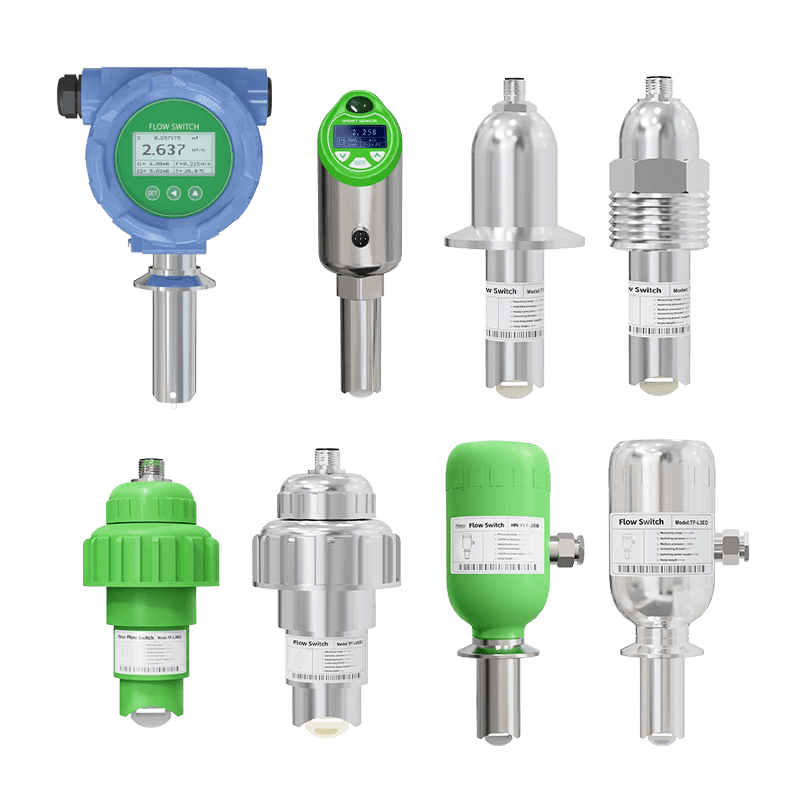
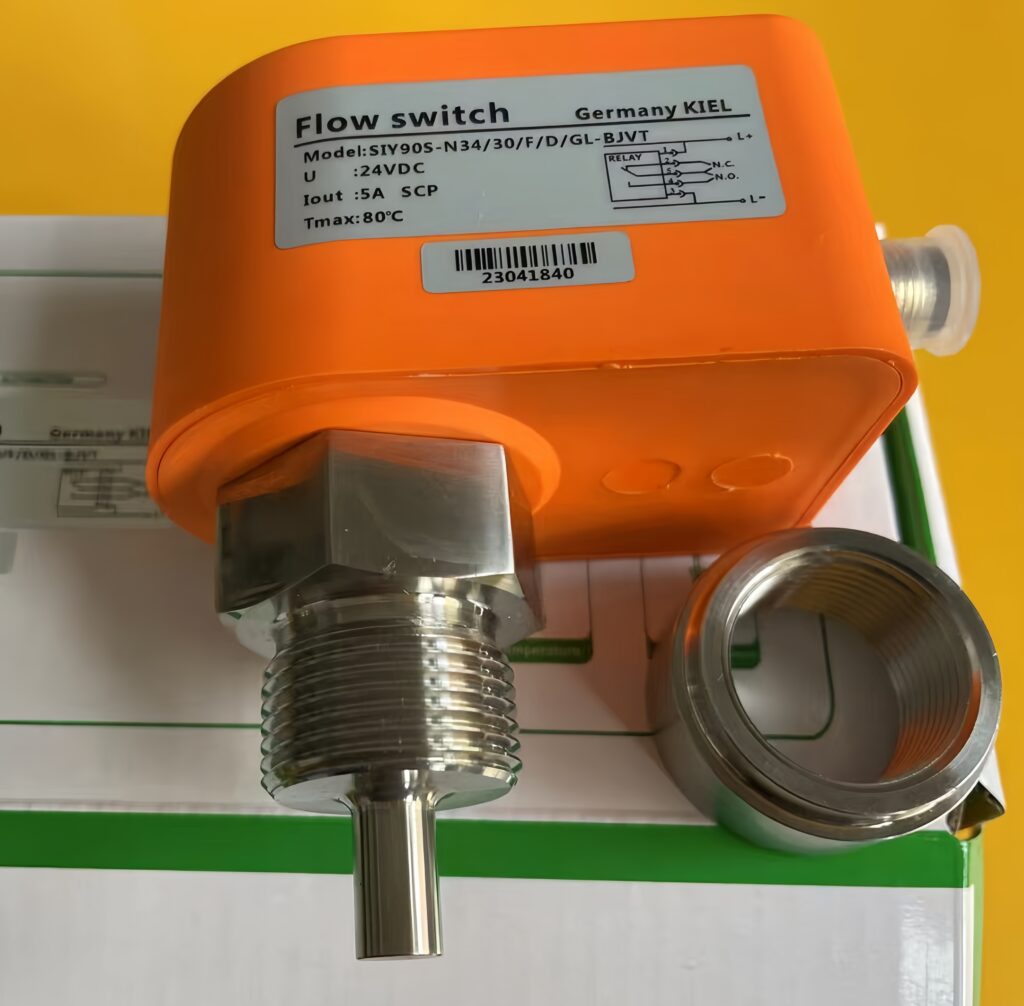
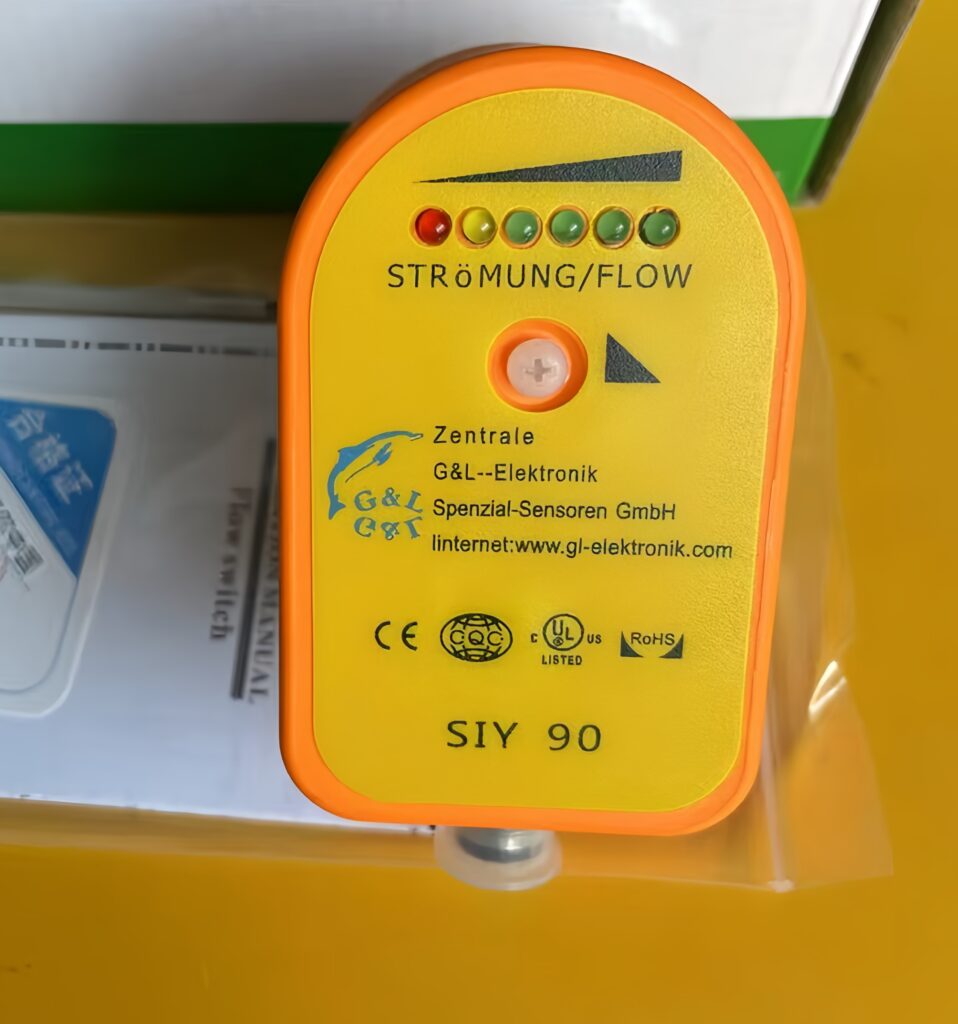
The first protection layer is flow threshold monitoring. The high-sensitivity water flow switch monitors the real-time circulating flow of the main cooling pipeline. When the flow is slightly lower than the rated value, the system triggers a low-level early warning to remind operators to check pipeline blockage and water pump operating status, realizing advance intervention of potential faults. The second protection layer is temperature interlock verification. High-precision temperature sensors are installed at the furnace cooling jacket and water outlet. When the flow is normal but the outlet water temperature exceeds the preset threshold, it indicates poor heat dissipation or local blockage, and the system immediately issues an abnormal temperature alarm.
The third core protection layer is dual-condition emergency interlock. When low flow coincides with excessive water temperature, the system judges it as a severe cooling fault, automatically cuts off the furnace heating power, stops the sintering process and starts the emergency cooling program, so as to avoid equipment overheating damage to the greatest extent.
4. Core Control Logic and System Advantages
The dual interlock control logic realizes mutual verification of flow and temperature signals, effectively eliminating the misjudgment problem of single monitoring. The flow switch judges the circulation state of cooling water, while the temperature parameter feeds back the actual heat dissipation effect, forming a closed-loop safety judgment mechanism. This logic not only ensures timely response to sudden faults such as water pump failure and pipeline rupture, but also captures potential hidden dangers that cannot be identified by single flow monitoring.
Compared with the traditional single protection mode, the multi-layer scheme has prominent advantages. It realizes full-cycle fault coverage from early hidden danger prediction to sudden fault emergency disposal, greatly reduces the failure rate of cooling systems, and lowers the false alarm rate through dual-signal verification. Moreover, the hierarchical protection mode avoids frequent equipment shutdown caused by minor abnormalities, balancing production continuity and equipment safety effectively.
5. Conclusion
Aiming at the insufficient protection capability of traditional single flow monitoring systems for vacuum furnace cooling water, this paper designs a multi-layer protection scheme based on flow switch and temperature interlock control. The scheme constructs a three-level progressive protection system through dual-dimensional monitoring of flow status and heat dissipation temperature, which makes up for the defects of single monitoring logic, delayed early warning and easy misjudgment. The optimized system can accurately identify both sudden cooling flow faults and potential local overheating hidden dangers, significantly improving the stability, accuracy and fault tolerance of cooling water safety protection. This multi-layer interlock control design provides an effective technical optimization solution for the safe and intelligent operation of vacuum furnaces, and ensures the high stability and high safety of precision sintering production processes.
Scan the QR code to receive more detailed information.