

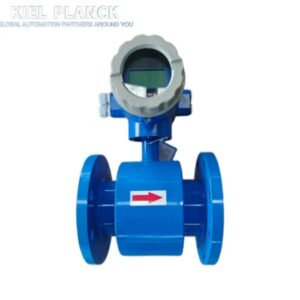
Capacitive Level Gauge for Diesel Fuel – Product Introduction - Kiel Planck
  • Home
        • New Product

          Capacitive Level Gauge for Diesel Fuel – Product Introduction - Kiel Planck

          There is a solution for every application. Let’s work together to find the right solution for you.

          Your benefits

          We use our experience to move your project forward.

          PHONE: 400-8868-261

          E-mail: info@kielplanckprc.com / kielplanck@outlook.com

  • Application
  • Service
  • Brand
  • Blog
  • Contact Us

Capacitive Level Gauge for Diesel Fuel – Product Introduction

Capacitive Level Gauge for Diesel Fuel – Product Introduction

  •  

1. Product Overview

This capacitive level transmitter is specially designed for continuous diesel and biodiesel level measurement. It works on capacitance variation between coaxial inner and outer electrodes without any movable components. The instrument converts real-time liquid height into standard electric signals for tank inventory monitoring and automatic fuel control, widely used on fixed storage tanks and mechanical fuel containers.

2. Working Principle

The dielectric constant differs between air and diesel. When diesel covers part of the probe, the overall capacitance changes proportionally with liquid level height. Internal circuit converts tiny capacitance fluctuation into standard 4–20mA or RS485 digital output, with built-in algorithm to offset drift caused by ambient temperature and minor diesel density deviation.

3. Key Product Advantages

Free from mechanical wear or sticking troubles, delivering long service life and low maintenance cost. It keeps stable reading even with thin diesel foam on liquid surface. Wetted parts adopt 316 stainless steel or PTFE to resist diesel corrosion. Explosion-proof structure is optional for flammable hazardous fuel areas. Flexible probe length can be cut on site to fit different tank depths.

4. Main Technical Parameters

Measuring range covers 0.2m up to 10 meters according to customer demand, basic measurement accuracy reaches ±0.5% full scale. Standard power supply is 12–36VDC two-wire system. Working temperature ranges from -40℃ to +85℃ for regular type, customized high-temperature version works up to 120℃. Protection grade reaches IP67 for outdoor installation.

5. Application Fields

Suitable for diesel storage tanks of petrol stations, power plants and chemical factories. It also fits fuel tanks of engineering machinery, generator sets, marine vessels and fuel tanker trucks to realize real-time fuel consumption statistics and stock management.

6. Installation & Maintenance

Normally installed from tank top in vertical state and kept away from internal pipeline obstacles. Simple two-point empty-full calibration can be finished on site. No frequent routine calibration required; only occasional surface cleaning is needed if heavy impurity adheres on the probe.
Capacitive Level Gauge for Diesel Fuel – Product Introduction - Kiel Planck

Scan the QR code to receive more detailed information.

Capacitive Level Gauge for Diesel Fuel – Product Introduction - Kiel Planck

Share:

More Posts

Real-time pH monitoring in aquaculture - Kiel Planck

Real-time pH monitoring in aquaculture

Water quality is the core determinant of aquaculture yield and aquatic organism health, among which pH value serves as one of the most sensitive and critical indicators. Slight fluctuations in water pH can directly affect the respiration, metabolism, and immunity of fish, shrimp and shellfish, and even trigger large-scale disease outbreaks and mortality in severe cases.

Online pH water quality monitoring solution - Kiel Planck

Online pH water quality monitoring solution

pH value is one of the most fundamental and critical indicators in water quality evaluation, reflecting the acidity and alkalinity of water bodies and directly affecting aquatic ecological safety, industrial production efficiency, and sewage discharge compliance. Traditional manual pH detection methods suffer from low efficiency, severe data lag, and human operation errors, which can no longer meet the real-time and high-precision monitoring requirements of modern water environment management and industrial water treatment.

Wastewater pH Sensor Maintenance Techniques - Kiel Planck

Wastewater pH Sensor Maintenance Techniques

pH sensors are core monitoring devices in wastewater treatment systems, responsible for real-time detection of water acidity and alkalinity to support biochemical treatment, chemical dosing and effluent discharge compliance. Unlike conventional water quality sensors, wastewater pH sensors operate in harsh environments with high suspended solids, organic pollutants, corrosive ions and variable water temperatures, making them prone to contamination, electrode aging and data drift. Regular and standardized maintenance is essential to ensure long-term measurement accuracy and stable operation

Method for calculating water pH value - Kiel Planck

Method for calculating water pH value

Water pH value is a vital physicochemical parameter that indicates the acidity or alkalinity of aqueous solutions. It profoundly influences water ecological stability, industrial water treatment efficiency, and drinking water safety. Accurate pH calculation is the fundamental basis for water quality analysis, environmental monitoring, and chemical experimental research. This article elaborates on the basic theoretical principles of water pH calculation and introduces two mainstream practical methods: theoretical formula calculation for pure water and instrument conversion calculation for complex water bodies.

Send Us A Message

captcha
Reload

Bitte geben Sie die im CAPTCHA angezeigten Zeichen ein, um sicherzustellen, dass Sie ein Mensch sind.

Email
Email: info@kielplanckprc.com
WhatsApp
WhatsApp Me