The chemical production industry is a typical high-risk field, with flammable and explosive gases, volatile flammable liquids, corrosive media, and high temperature and high pressure conditions commonly present throughout the entire process of production, storage, transportation, and reaction.
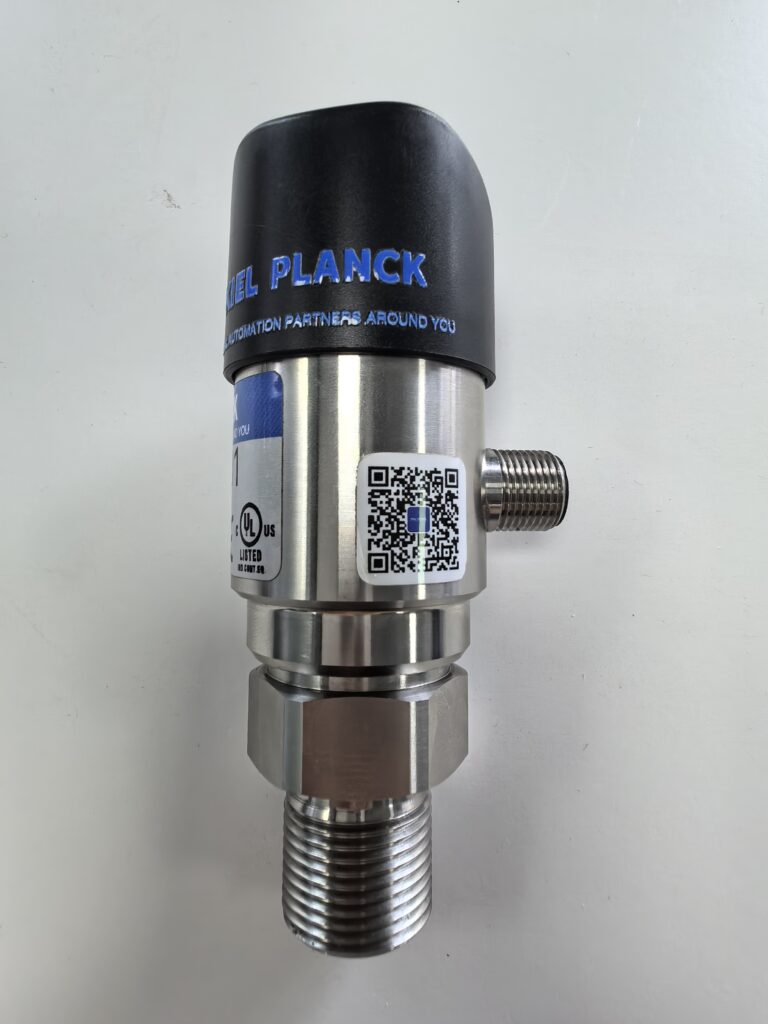
Core equipment such as chemical reactors, distillation units, oil and gas pipelines, and storage tanks operate in complex and hazardous environments for extended periods. Stable pressure parameter control is crucial for safe production. Ordinary pressure switches have low protection levels and lack explosion-proof performance; their contact switching can easily generate electrical sparks, making them unsuitable for high-risk chemical environments. Explosion-proof pressure switches, with their specialized explosion-proof structure, corrosion-resistant materials, and precise pressure control capabilities, have become core equipment for pressure monitoring and safety interlocking protection in high-risk chemical conditions, building a solid barrier for safe chemical production.
The explosion-proof structural design is suitable for the flammable and explosive high-risk environments of chemicals. Chemical workshops, tank areas, and reaction sections are often explosive hazardous areas where flammable vapors and gas mixtures can easily accumulate in the air; even a small ignition source can trigger an explosion or combustion accident. Ordinary pressure switches lack explosion-proof and intrinsically safe designs; sparks generated by circuit switching and aging wiring pose significant safety hazards, and their use in hazardous chemical areas is strictly prohibited. Chemical-specific explosion-proof pressure switches are available in explosion-proof ratings such as Ex d IIB and Ex ia IIC, employing a fully sealed explosion-proof housing and intrinsically safe explosion-proof circuit design. The equipment effectively isolates internal electrical sparks from external flammable media. Even if an internal circuit malfunction generates an arc, it will not ignite external flammable or explosive media, eliminating the risk of ignition at its source and meeting the usage specifications for Zone 0, Zone 1, and Zone 2 hazardous locations in chemical plants.
With its corrosion and aging resistance, this pressure switch is suitable for complex chemical media conditions. Chemical production involves various special media such as acid and alkali solutions, organic solvents, and corrosive oils and gases. The ordinary metal housing and sensing elements of conventional pressure switches are easily corroded and oxidized by these media, leading to malfunctions such as housing damage, sensor failure, and parameter drift, causing pressure monitoring failures. Explosion-proof pressure switches use high-strength, corrosion-resistant materials such as 316 stainless steel and corrosion-resistant aluminum alloy for the housing and pressure sensing elements, combined with a sealed anti-corrosion coating, effectively resisting acid and alkali corrosion, media erosion, and oil and gas attack. Simultaneously, the equipment possesses excellent anti-aging and anti-oxidation properties, enabling it to adapt to the humid, foggy, and highly corrosive working environments of chemical plants for extended periods, maintaining structural integrity and stable detection accuracy.
High-precision and stable operation ensures continuous and safe production in chemical processes. Chemical reactions, distillation, and pressurized transportation processes have stringent requirements for pressure parameters. Overpressure, underpressure, or excessive pressure fluctuations can lead to uncontrolled reactions, material leaks, equipment damage, and major safety accidents. Explosion-proof pressure switches are equipped with high-precision sensing components. The pressure actuation point and hysteresis value are adjustable and controllable, with a fast response speed, enabling real-time and accurate monitoring of pressure changes within equipment and pipelines. In the event of overpressure or negative pressure anomalies, it can quickly trigger interlocking actions such as alarms, pressure relief, shutdown, and material cut-off, promptly mitigating the risk of process runaway. Simultaneously, the equipment has strong resistance to pressure shocks and vibrations, adapting to continuous start-up and shutdown of chemical equipment and fluctuating pipeline pressure, avoiding malfunctions and failures to operate.
Highly adaptable and easy to maintain, it perfectly meets the needs of large-scale chemical production. Chemical production equipment is highly integrated and has complex processes, resulting in extremely high downtime and maintenance costs. Explosion-proof pressure switches have a compact structure, adaptable to various installation scenarios for chemical pipelines, tanks, and reaction equipment, and suitable for high-temperature, high-pressure, and variable-load operating conditions. The device has no easily damaged parts, excellent overload and fatigue resistance, stable operation, and a low failure rate, eliminating the need for frequent calibration and maintenance, significantly reducing the daily operation and maintenance pressure and costs of chemical equipment. Simultaneously, the device is compatible with chemical automation control systems, enabling real-time pressure data feedback and intelligent interlocking, meeting the needs of intelligent and automated chemical production development.
In summary, explosion-proof pressure switches, with their reliable explosion-proof capabilities, excellent corrosion resistance, precise control accuracy, and extremely low maintenance costs, are perfectly suited to the high-risk conditions of flammable, explosive, highly corrosive, high-pressure, and high-temperature chemical environments. As a core device for chemical pressure safety protection, it effectively avoids safety accidents caused by abnormal pressure, ensuring stable chemical processes and safe equipment operation, making it an indispensable safety guarantee in modern high-risk chemical environments.
Scan the QR code to receive more detailed information.