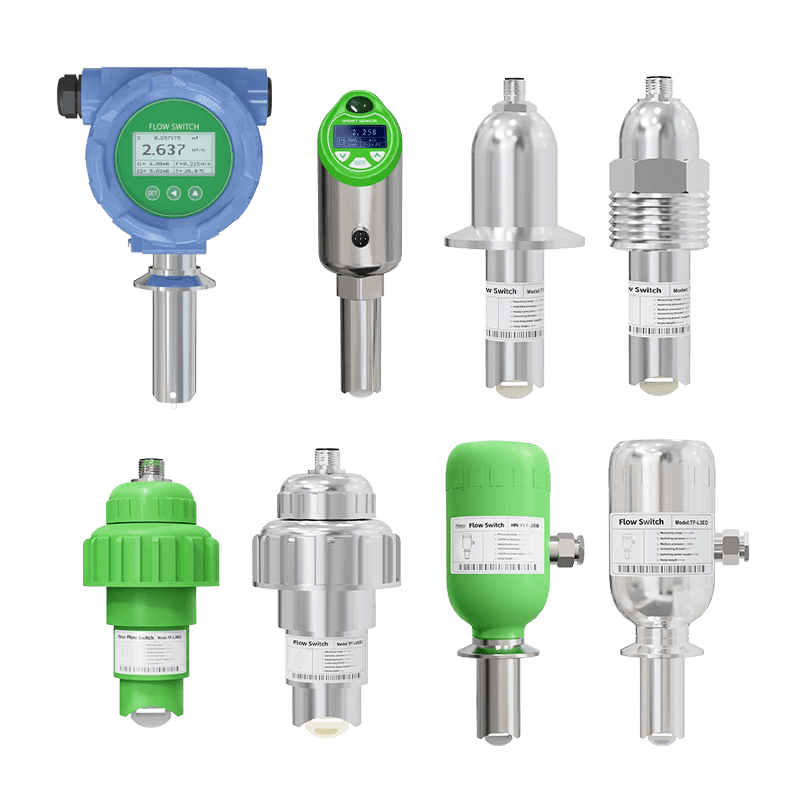
Gas turbine flow sensors are commonly used high-precision velocity-type flow measurement instruments in industry. They rely on the kinetic energy of gas to drive the impeller rotation to achieve flow measurement, featuring high accuracy, good repeatability, and fast response speed. They are widely used in the metering and monitoring of media such as natural gas, compressed air, and industrial inert gases. Their overall structural design directly determines measurement accuracy, pressure loss, operational stability, and service life. Based on installation methods, internal structure, and core design, they can be divided into several mainstream structural forms, each suitable for different operating conditions. This article systematically describes their overall composition, core structural forms, structural design advantages, and adaptability characteristics.
The gas turbine flow sensor adopts a modular integrated structure. Its core consists of six main parts: the outer shell and piping, front and rear guide components, impeller rotor, bearing shaft, signal detection components, and auxiliary compensation structure. The outer shell is an integrated pressure-bearing housing, mostly made of carbon steel or stainless steel, possessing pressure resistance, explosion-proof, and corrosion-resistant properties, ensuring safe operation under high-pressure gas conditions. The front and rear guide components are streamlined flow-rectifying structures that can regulate turbulent airflow and eliminate interference from pipeline eddies and flow deviations, making them key components for reducing pressure loss and improving measurement stability.
The impeller rotor is the core sensing component, employing lightweight, high-strength alloy blades with fluid dynamics optimized for precise gas velocity changes. The bearing system supports the impeller’s high-speed rotation, primarily using tungsten carbide wear-resistant bearings and a reverse-thrust suspension structure, significantly reducing end-face friction and wear. The signal detection module is mostly a magneto-electric induction structure, with no mechanical contact, stably acquiring impeller speed pulse signals, which are then amplified and shaped by a preamplifier for output.
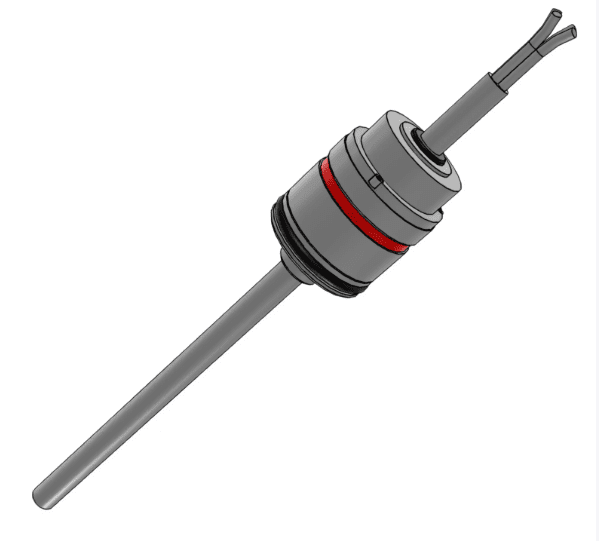
According to common industrial classification standards, gas turbine flow sensors are mainly divided into two structural forms: integral in-line type and insertion type. The in-line type is the most common structure, coaxially mounted with the pipeline, with the sensor housing inside the pipeline casing. It features a compact structure, good sealing, high measurement accuracy, stable pressure loss, and is suitable for common pipe diameters from DN20 to DN300, primarily used in field stations, etc.
Precise metering and trade settlement in process pipelines are the mainstream structures in the gas and chemical industries. The insertion-type metering system features a modular, top-extraction design, allowing the measuring mechanism to be individually removed for inspection, calibration, and replacement without disassembling the pipeline or shutting down the system. This facilitates construction, reduces maintenance costs, and is suitable for large-diameter pipelines and continuous production conditions, making it widely used in municipal gas transmission and monitoring of main pipelines in large factories.
From the perspective of internal mechanism structure, it can be divided into ordinary support type and reverse thrust type structures. The ordinary support type has a simple structure and lower cost, relying on bearings at both ends to fix the rotating shaft. It is suitable for low-pressure, stable, and clean gas conditions, meeting routine monitoring needs. The reverse thrust type is an optimized and upgraded structure that utilizes the axial thrust of the gas to keep the impeller in a suspended, floating state. There is no axial contact or end-face friction on the rotating shaft, completely solving the bearing wear problem of traditional structures and effectively extending the service life of the equipment. It is suitable for high-pressure, high-flow, and long-term continuous operation conditions, making it the preferred structure for high-precision industrial metering.
Furthermore, based on functional configuration, it can be divided into basic mechanical type and intelligent integrated type. The mechanical type only has the functions of flow pulse acquisition and local mechanical counting. It has a simple structure, low failure rate, and is suitable for basic flow monitoring scenarios.
The intelligent integrated gas turbine flow sensor features a built-in temperature and pressure compensation module, data storage, and communication unit, enabling real-time correction of measurement deviations caused by temperature and pressure fluctuations. It supports digital signal transmission and is compatible with complex operating conditions and intelligent control systems. Some high-end models are equipped with a built-in lubrication system for long-term bearing lubrication, suitable for high-frequency, long-term continuous operation.
Different structural forms of the gas turbine flow sensor each have their specific functions and applicable scenarios. The overall pipeline reverse-push structure balances accuracy and stability, focusing on high-precision trade measurement; the plug-in modular structure emphasizes convenient operation and maintenance and non-stop repair, suitable for large-diameter pipe networks; the foundation-supported structure offers high cost-effectiveness and meets general industrial monitoring needs. Appropriate structural selection effectively avoids problems such as excessive pressure loss, accuracy drift, bearing wear, and difficult maintenance, fully leveraging the high precision and repeatability of the gas turbine sensor to ensure accurate, stable, and efficient operation of industrial gas flow monitoring.