The reason why single-crystal silicon pressure transmitters are called “single-crystal silicon” is that their core sensing element is made of single-crystal silicon material. This material has a unique crystal structure and excellent physical properties, making it an ideal choice for high-precision pressure measurement.
I. Essential Characteristics of Monocrystalline Silicon
Crystal Structure Characteristics
Monocrystalline silicon refers to silicon material composed of a single crystal structure, with its atoms arranged in a completely uniform, regular lattice structure. Unlike polycrystalline or amorphous silicon, monocrystalline silicon lacks grain boundaries. This highly ordered structure gives it excellent electrical properties, mechanical strength, and thermal stability.
Physical Property Advantages
II. Why Pressure Transmitters Use Monocrystalline Silicon
Pierre Resistance Effect Principle
Monocrystalline silicon pressure transmitters operate based on the piezoresistive effect of monocrystalline silicon: when monocrystalline silicon is subjected to pressure, its lattice structure undergoes minute deformation, causing a change in the crystal’s resistivity. This change is proportional to the applied pressure. By fabricating a Wheatstone bridge circuit on the monocrystalline silicon, the change in resistance is converted into a change in electrical signal, outputting a standard electrical signal proportional to the pressure.
Manufacturing Process Advantages
Performance Advantages
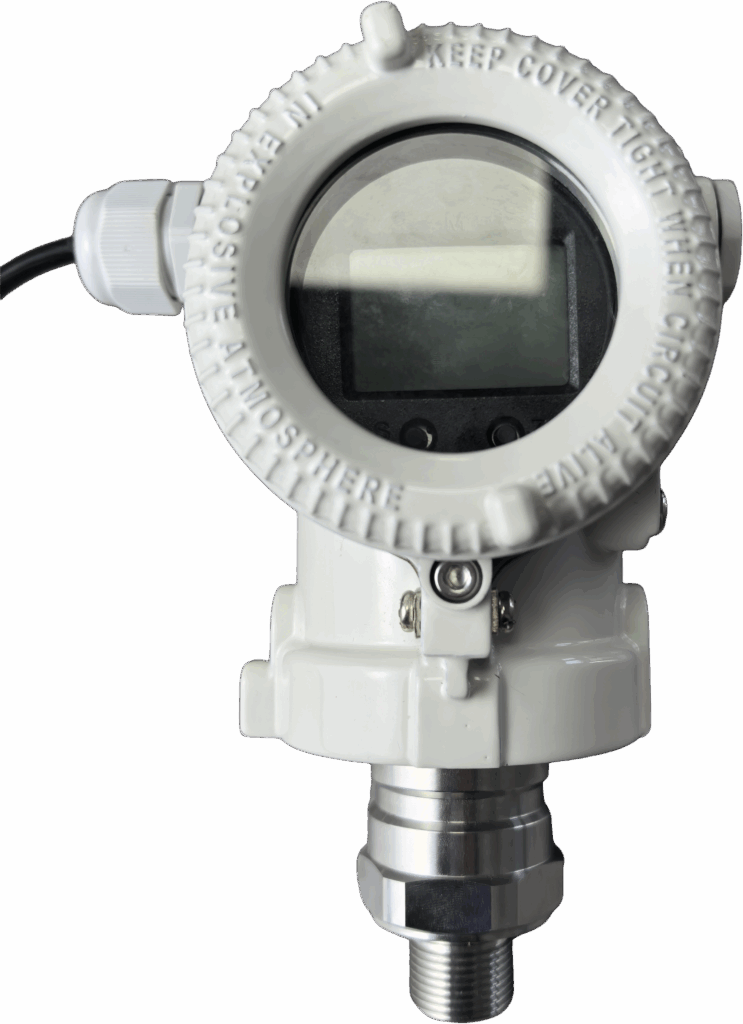
Structural Features of Single-Crystal Silicon Pressure Transmitters
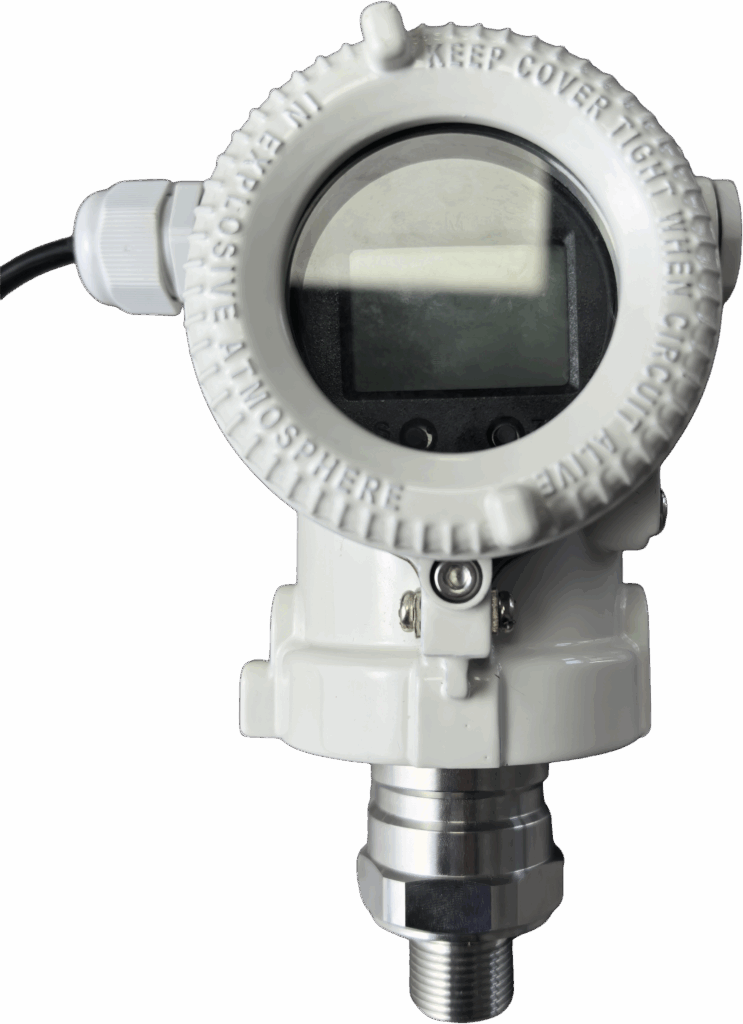
The core structure of a single-crystal silicon pressure transmitter includes:
* **Sensing Element:** Made of single-crystal silicon, it is the core component of the transmitter.
* **Electronic Circuit Board:** Amplifies, filters, and linearizes the weak electrical signal output from the sensing element.
* **Housing:** Protects the internal components and is typically made of corrosion-resistant, high-strength materials.
* **Sensor Module:** Employs a fully welded design and internally contains an integrated overload diaphragm, a pressure sensor, and a temperature sensor. The temperature sensor serves as a reference value for temperature compensation, and the pressure is transmitted to the silicon chip within the sensor via the isolation diaphragm and filling fluid.
In summary, the single-crystal silicon pressure transmitter is called “single-crystal silicon” not only because its core material is single-crystal silicon, but also because the unique crystal structure and excellent physical properties of this material enable it to achieve high-precision, high-stability pressure measurement, making it one of the most accurate sensors used in industrial practice.
Add me as a friend to learn more.