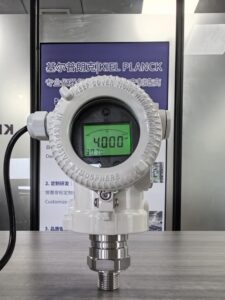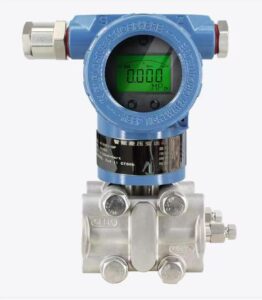
Safety is a major concern in industries such as oil and gas, chemical processing, power generation, and hydrogen production.
Pressure transmitters may be used as part of safety instrumented systems to detect abnormal process conditions and initiate protective actions.
In these applications, engineers may encounter terms such as SIL 2 and SIL 3.
What do they mean? Is a SIL 3 transmitter always safer than a SIL 2 transmitter?
The answer requires understanding the complete safety system.
1. What Is SIL?
SIL stands for Safety Integrity Level.
It is a level used to describe the required integrity of a safety instrumented function.
IEC 61508 provides a general functional safety framework, while IEC 61511 is particularly relevant to process industry safety instrumented systems.
SIL levels range from SIL 1 to SIL 4, with higher levels representing higher required risk reduction.
The appropriate level depends on a risk assessment of the process and its safety requirements.
2. What Is the Difference Between SIL 2 and SIL 3?
For low-demand or demand-mode safety functions, the commonly used probability of failure on demand ranges are:
| Safety Level | Probability of Failure on Demand |
|---|---|
| SIL 1 | 10⁻² to less than 10⁻¹ |
| SIL 2 | 10⁻³ to less than 10⁻² |
| SIL 3 | 10⁻⁴ to less than 10⁻³ |
| SIL 4 | 10⁻⁵ to less than 10⁻⁴ |
These ranges describe the integrity requirements of the complete safety function, not simply the performance of an individual transmitter.
SIL 3 therefore requires a higher level of risk reduction than SIL 2.
However, a higher SIL level may also involve additional engineering complexity, verification, and maintenance requirements.
3. A SIL-Certified Transmitter Does Not Guarantee a Safe System
A safety instrumented function generally includes three major elements:
Sensors that detect abnormal process conditions.
A logic solver that evaluates the signals.
Final elements, such as valves, that carry out the protective action.
For example, a high-pressure protection function may use a pressure transmitter to detect excessive pressure.
The logic solver then evaluates the signal and activates a shutdown valve when the defined conditions are met.
If any part of the system fails, the intended safety function may be affected.
Therefore, the SIL capability of one transmitter cannot be treated as the SIL of the entire system.
4. What Should Buyers Check?
When selecting a pressure transmitter for a safety-related application, buyers should review:
Safety manual.
SIL capability or certification scope.
Failure rate data.
Diagnostic coverage.
Hardware fault tolerance information.
Systematic capability.
Proof-test procedures.
Recommended proof-test intervals.
Applicable restrictions and operating conditions.
The manufacturer should provide documentation that supports the intended safety application.
5. Why Proof Testing Matters
Some dangerous failures may not be detected automatically during normal operation.
Periodic proof testing helps identify these undetected failures.
The proof-test interval should be determined through the safety system design and reliability calculations.
A transmitter that is certified but never inspected or maintained according to the safety requirements may not continue to deliver the expected level of protection.
6. How to Choose Between SIL 2 and SIL 3
Do not select SIL 3 simply because it sounds more advanced.
The required SIL should be determined through process hazard analysis and risk assessment.
Engineers must consider the entire safety instrumented function, including sensor architecture, logic solver, final elements, diagnostic capabilities, and maintenance procedures.
Conclusion
SIL certification is an important part of functional safety, but it is not an absolute guarantee against accidents.
SIL 2 and SIL 3 describe different levels of safety integrity requirements for a complete safety function.
The correct transmitter must be selected according to the safety design, supported by appropriate documentation, installed correctly, and maintained through regular proof testing.
For safety-related pressure measurement projects, consult qualified functional safety engineers before finalizing the instrument specification.
Scan the QR code to receive more detailed information.