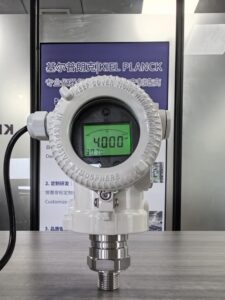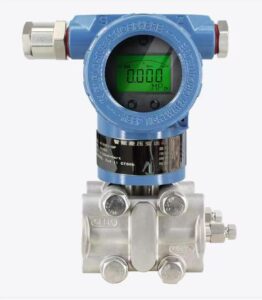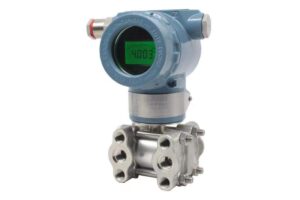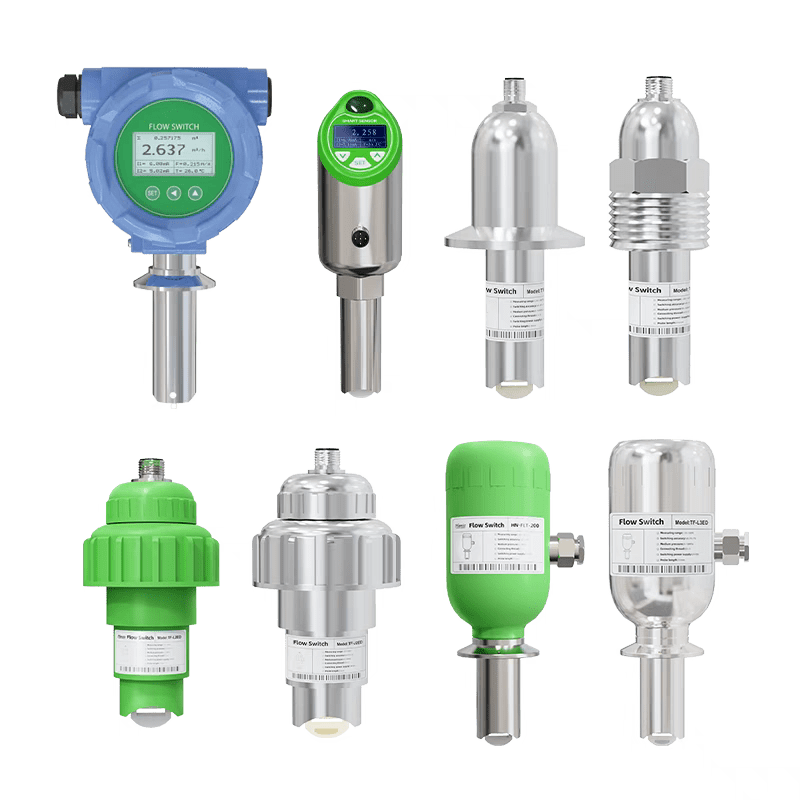
Single-crystal silicon pressure transmitters are increasingly discussed in industrial procurement and domestic replacement projects.
For international buyers, China offers a wide range of industrial instrumentation suppliers, from specialized sensor manufacturers to comprehensive automation companies.
However, selecting a manufacturer based only on online rankings or catalogue specifications can be risky.
The most important factors are actual product capability, manufacturing consistency, technical documentation, and application suitability.
1. What Should Buyers Look for in a Manufacturer?
Before comparing suppliers, define the following requirements:
Measurement range and accuracy.
Long-term stability.
Overload resistance.
Operating temperature.
Process connection.
Output signal and communication.
Wetted materials.
Explosion-proof requirements.
Calibration and inspection documentation.
A supplier should be able to explain how its product meets these requirements.
2. Chinese Manufacturers Worth Investigating
The following companies appear in publicly available industrial supplier listings and product-related directories. They are examples for initial supplier research, not a verified ranking or endorsement.
| Company | Location | Initial Research Direction |
|---|---|---|
| Jiangsu Meiante Automation Instrument Co., Ltd. | Jiangsu | Industrial pressure instrumentation |
| Shidefu Measurement and Control Technology (Shanghai) Co., Ltd. | Shanghai | Pressure measurement products |
| Huai’an Runzhong Instrument Technology Co., Ltd. | Jiangsu | Pressure and flow instrumentation |
| Beijing Kunlun Zhongda Sensor Technology Co., Ltd. | Beijing | Industrial sensor products |
| Hangzhou Miko Sensing Technology Co., Ltd. | Zhejiang | Pressure and process instruments |
| Tianjin Huatai Tianke Electronic Technology Co., Ltd. | Tianjin | Industrial measurement products |
| Wuhan Tiankang Instrument Co., Ltd. | Hubei | Industrial instrumentation |
These names are useful starting points for supplier verification. Buyers should independently confirm current product availability, manufacturing capability, company qualifications, and certification status. Public supplier listings do not establish product quality or market leadership. <Cite refs={[“turn430007search1″,”turn430007search2″,”turn430007search7”]}/>
3. How to Verify a Manufacturer
Check manufacturing capability
Ask whether the company manufactures the complete transmitter or mainly assembles externally sourced components.
Review technical documents
Request product datasheets, drawings, calibration reports, and relevant certificates.
Evaluate production consistency
Ask about individual calibration, batch inspection, and traceability.
Test representative samples
Do not rely exclusively on catalogue specifications. Conduct tests under conditions relevant to the intended application.
4. Why the Lowest Price Is Not Always the Best Choice
A pressure transmitter is often part of a larger industrial system.
If a product has unstable output, inconsistent dimensions, or insufficient technical support, the resulting commissioning and maintenance costs may exceed the original purchase savings.
For long-term projects, supplier reliability is an important part of procurement evaluation.
5. Questions to Ask Before Placing an Order
What sensing technology is used?
What is the actual accuracy specification?
Can you provide calibration records?
What is the long-term stability?
What certifications are available?
Can you provide technical support and spare parts?
Conclusion
China has a diverse industrial pressure transmitter supply chain, but buyers should avoid treating online manufacturer rankings as proof of quality.
The right supplier is the one that can demonstrate technical capability, consistent manufacturing, complete documentation, and dependable after-sales service.
A structured supplier evaluation is the safest way to identify a suitable single-crystal silicon pressure transmitter manufacturer in 2026.
Scan the QR code to receive more detailed information.