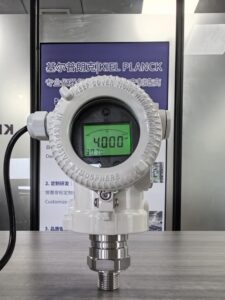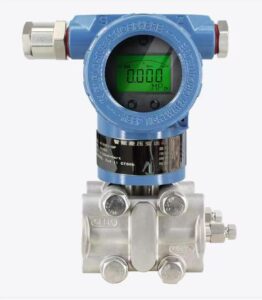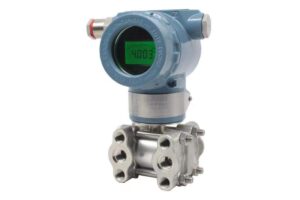
More industrial buyers are considering domestic pressure transmitters as alternatives to imported products.
The reasons are clear: competitive pricing, shorter delivery times, easier communication, and more flexible customization.
But procurement decisions should not be based on price alone.
A pressure transmitter is part of an industrial measurement system. If it fails to meet the actual process requirements, the consequences may include inaccurate control, additional maintenance, and production interruptions.
Before approving domestic replacement, four validation steps should never be skipped.
1. Test One: Technical Specification Comparison
Start by comparing the original imported instrument with the proposed domestic alternative.
Important parameters include:
| Parameter | Verification Requirement |
|---|---|
| Measuring range | Confirm the actual operating range |
| Accuracy | Compare the same accuracy definition |
| Long-term stability | Review drift specifications |
| Overload | Check allowable pressure |
| Temperature | Verify process and ambient limits |
| Output | Confirm 4–20 mA and communication |
| Connection | Check dimensions and standards |
| Materials | Confirm medium compatibility |
Pay special attention to maximum static pressure when replacing differential pressure transmitters.
A similar measuring range does not necessarily mean the two products are interchangeable.
2. Test Two: Laboratory Performance Testing
A laboratory test helps compare the two instruments under controlled conditions.
Recommended checks include:
Zero-point verification.
Span accuracy.
Linearity.
Repeatability.
Hysteresis.
Temperature effects.
Response characteristics.
Overload recovery, where applicable.
Testing should use calibrated reference equipment and documented procedures.
The acceptance limits should be agreed upon before testing begins.
3. Test Three: Field Pilot Installation
Laboratory results cannot fully represent actual operating conditions.
Install a limited number of domestic transmitters at representative measurement points.
Observe their performance during normal production.
Check:
Signal stability.
Installation compatibility.
Response to process changes.
Electrical interference.
Maintenance requirements.
Communication with the control system.
A pilot installation helps identify problems before large-scale procurement.
4. Test Four: Long-Term Reliability Evaluation
A short test cannot fully demonstrate long-term reliability.
Depending on the project, establish an appropriate monitoring period and record:
Measurement drift.
Unexpected failures.
Calibration frequency.
Maintenance workload.
Replacement requirements.
Operating availability.
Use actual records to determine whether the alternative meets the project’s reliability expectations.
5. Establish Clear Acceptance Criteria
Procurement, engineering, and production teams should agree on acceptance requirements before ordering.
The criteria should include technical specifications, inspection procedures, documentation, warranty responsibilities, and failure-handling arrangements.
This prevents disagreements after delivery.
Conclusion
Domestic replacement should be treated as an engineering verification project, not simply a purchasing decision.
Technical comparison, laboratory testing, field pilot installation, and long-term evaluation are four essential steps.
When these steps are completed properly, buyers can reduce replacement risks and make more confident procurement decisions.
The best domestic alternative is not necessarily the cheapest instrument. It is the one that proves its suitability under real operating conditions.
Scan the QR code to receive more detailed information.