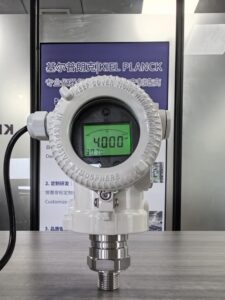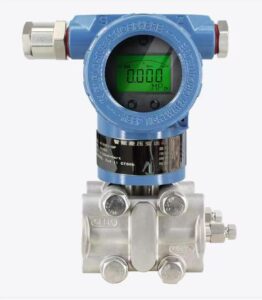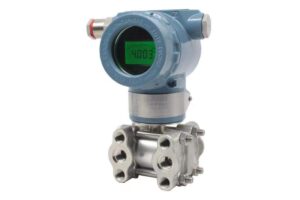
A pressure transmitter may look like a relatively simple industrial instrument, but its internal design and manufacturing quality can significantly influence performance.
Two products may use similar sensing technology and offer the same nominal accuracy while behaving differently in actual applications.
Before purchasing a single-crystal silicon pressure transmitter, ask the manufacturer six important questions.
1. What Sensing Technology and Structure Does the Product Use?
Ask the manufacturer to explain the sensing element and transmitter structure.
Important details include:
Sensor design.
Isolation diaphragm.
Filling fluid.
Pressure connection.
Signal processing method.
Do not rely only on the term single-crystal silicon. Understand how the complete transmitter is designed.
2. What Is the Actual Accuracy?
Ask for the complete accuracy specification.
Clarify whether the stated value includes linearity, hysteresis, and repeatability.
Also ask about the applicable range, reference conditions, and calibration method.
A specification of ±0.1% should not be interpreted as guaranteed performance under every operating condition unless the datasheet explicitly supports that interpretation.
3. How Stable Is the Transmitter Over Time?
Long-term stability is important for instruments operating continuously.
Ask the manufacturer for documented drift specifications and the test conditions used to establish them.
Other useful parameters include zero-point stability, temperature effects, and repeatability.
4. What Is the Overload Performance?
Overload resistance is particularly important in systems exposed to pressure spikes or abnormal operating conditions.
Ask about:
Rated pressure range.
Maximum allowable working pressure.
Overpressure limits.
Static pressure limits for differential pressure models.
Recovery after overload.
Do not confuse the measurement range with the maximum allowable pressure.
5. Is the Product Suitable for My Process Medium?
The transmitter must be compatible with the measured medium.
Check the wetted materials, isolation diaphragm, seals, and process connections.
For corrosive, viscous, sanitary, or high-temperature applications, standard configurations may not be suitable.
Provide the manufacturer with the actual medium and operating conditions before confirming the model.
6. What Quality Documents and After-Sales Support Can You Provide?
Ask for relevant documentation, including:
Product datasheet.
Calibration certificate.
Wiring diagram.
Installation manual.
Material specifications.
Applicable product certificates.
Warranty terms.
For batch purchasing, ask how each unit is inspected and whether production records are traceable.
Conclusion
Buying a single-crystal silicon pressure transmitter should involve more than comparing catalogue prices.
These six questions help buyers understand the product’s technical capabilities, suitability, manufacturing quality, and after-sales support.
A professional manufacturer should be able to answer technical questions clearly and provide supporting documentation.
Before placing your next order, take time to verify the instrument. A well-informed purchasing decision can prevent unnecessary problems during installation and operation.
Scan the QR code to receive more detailed information.