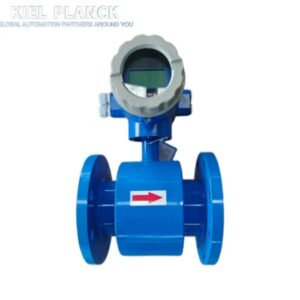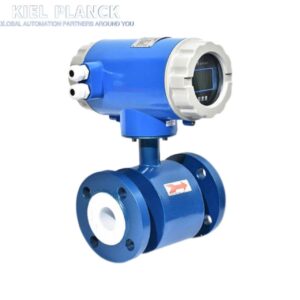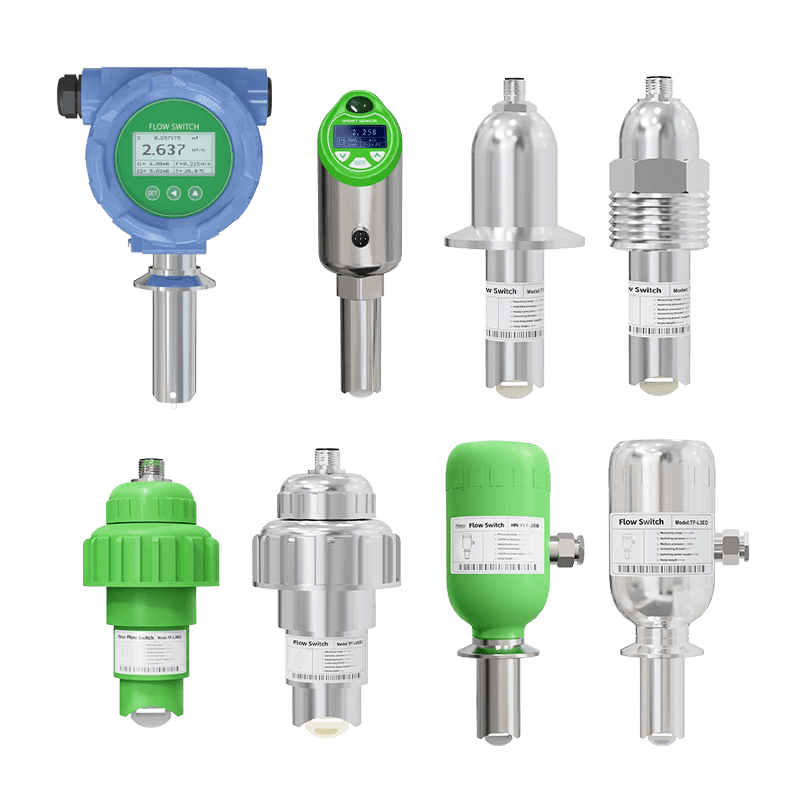
Industrial impeller flowmeters are pivotal velocity-type measuring instruments widely used in petrochemical, water treatment, energy transportation and other industrial fields. In complex industrial operating environments, equipment often faces various interferences, including pipeline mechanical vibration, fluid turbulence, electromagnetic signal interference and ambient temperature fluctuation. These adverse factors easily cause impeller rotation deviation, signal distortion and measurement data drift, seriously affecting the accuracy and stability of flow detection. Therefore, reasonable anti-interference structural design and advanced vibration resistance technology are the core guarantees to improve the environmental adaptability and service reliability of industrial impeller flowmeters.
Industrial on-site interferences affecting impeller flowmeters are mainly divided into mechanical vibration interference and signal electromagnetic interference. Most industrial pipelines are equipped with pumps, compressors and other power equipment, which generate continuous high-frequency mechanical vibration during operation. The vibration will be transmitted along the pipeline to the flowmeter sensor, causing irregular jitter of the impeller assembly, increasing bearing friction and disrupting the linear corresponding relationship between flow velocity and rotation speed. Meanwhile, complex industrial electrical equipment produces strong electromagnetic radiation, which interferes with the weak pulse signals collected by the flowmeter’s induction components, resulting in signal loss and measurement random errors.
The mechanical anti-vibration design is the primary link to enhance the stability of impeller flowmeters, focusing on optimizing internal structure and shock absorption performance. First, the integral integrated shell structure is adopted in industrial flowmeters. Compared with split structures, the integrated stainless steel shell has higher structural rigidity, which can effectively resist external vibration impact and avoid structural deformation caused by long-term vibration. Second, the core impeller rotating assembly is optimized with a damping buffer structure. High-precision wear-resistant flexible bearings and elastic damping gaskets are installed at both ends of the impeller shaft, which can absorb and offset micro-vibration amplitude, restrict irregular radial and axial jitter of the impeller, and ensure stable rotation under vibration conditions.
In terms of fluid anti-interference design, targeted structural improvements are made to eliminate flow field interference caused by turbulent vibration. A rectifier device is installed at the inlet of the flowmeter. The built-in multi-channel rectifying fins can disorder turbulent fluid and swirling flow generated by pipeline vibration, convert unstable fluid state into uniform and stable axial flow, and eliminate fluid fluctuation interference on impeller rotation. In addition, the streamlined optimized blade structure reduces fluid impact resistance and unbalanced fluid force, weakens the vibration resonance effect between fluid and mechanical structure, and further improves the anti-disturbance ability of the flow field.
Electromagnetic anti-interference design is crucial to ensure accurate signal transmission of flowmeters. Industrial impeller flowmeters adopt a fully enclosed shielding structure. The internal signal induction module and circuit board are wrapped with metal shielding layers, which can isolate external electromagnetic radiation and prevent signal distortion. Moreover, the signal processing system is equipped with professional filtering and anti-jamming circuits. Through hardware filtering and software algorithm compensation, the system can automatically identify and eliminate clutter interference signals generated by vibration and electromagnetic fluctuation, retain effective flow pulse signals, and greatly improve signal anti-interference performance.
Advanced vibration resistance calibration and intelligent compensation technologies further enhance the environmental adaptability of flowmeters. Modern industrial flowmeters are equipped with built-in vibration sensing modules, which can monitor on-site vibration frequency and amplitude in real time. The microprocessor automatically establishes vibration error compensation models according to real-time vibration data, dynamically corrects measurement deviation caused by vibration interference, and realizes adaptive anti-interference adjustment. In addition, through factory vibration aging calibration and simulated industrial environment testing, the instrument’s structural resonance points are optimized, avoiding resonance failure in long-term vibration working conditions.
The application of anti-interference and vibration resistance technologies significantly expands the application scope of impeller flowmeters. Traditional impeller flowmeters are only suitable for stable laboratory and conventional municipal environments, while optimized industrial models can stably operate in harsh working conditions with strong vibration, complex electromagnetic environment and unstable fluid flow. They maintain high measurement accuracy and long-term operational stability, reducing equipment failure rate and maintenance cost, and providing reliable flow data support for industrial automatic control and precise metering.
In summary, mechanical vibration resistance structure optimization, fluid flow field anti-interference design and electromagnetic signal shielding technology constitute the core anti-interference system of industrial impeller flowmeters. With the auxiliary of intelligent vibration compensation algorithms, these technologies effectively solve the measurement error problem caused by complex industrial environmental interferences. Continuous innovation and optimization of anti-interference and vibration resistance technologies will further improve the comprehensive performance of impeller flowmeters, making them more adaptable to diversified and harsh industrial measurement scenarios.
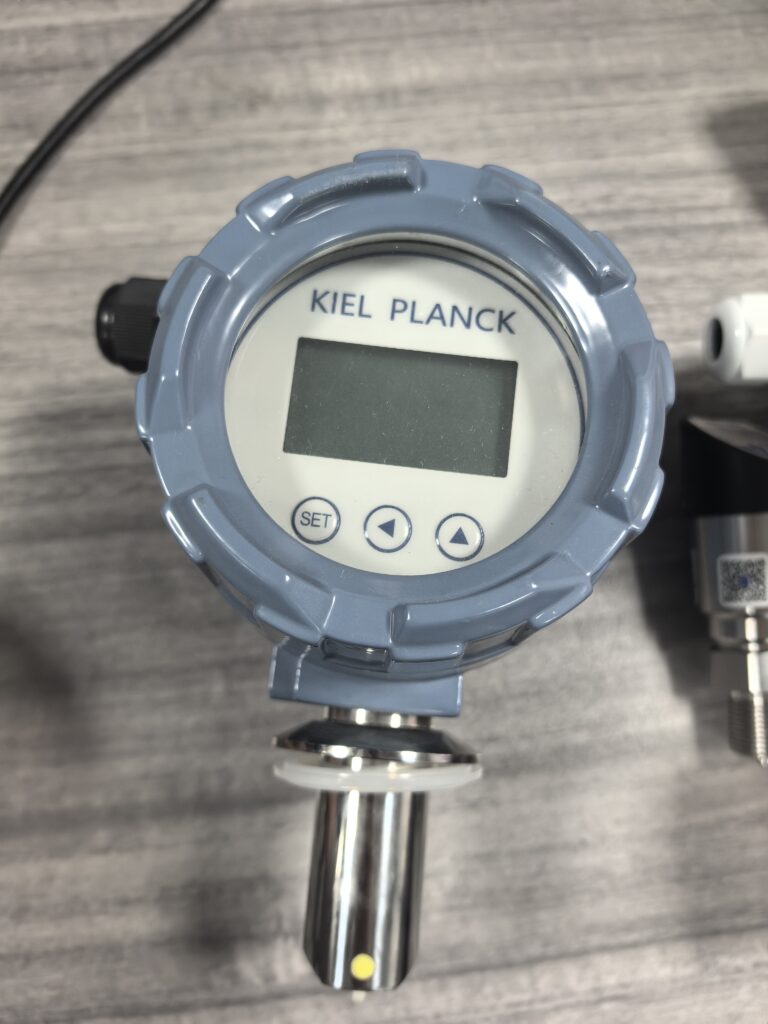
Scan the QR code to receive more detailed information.