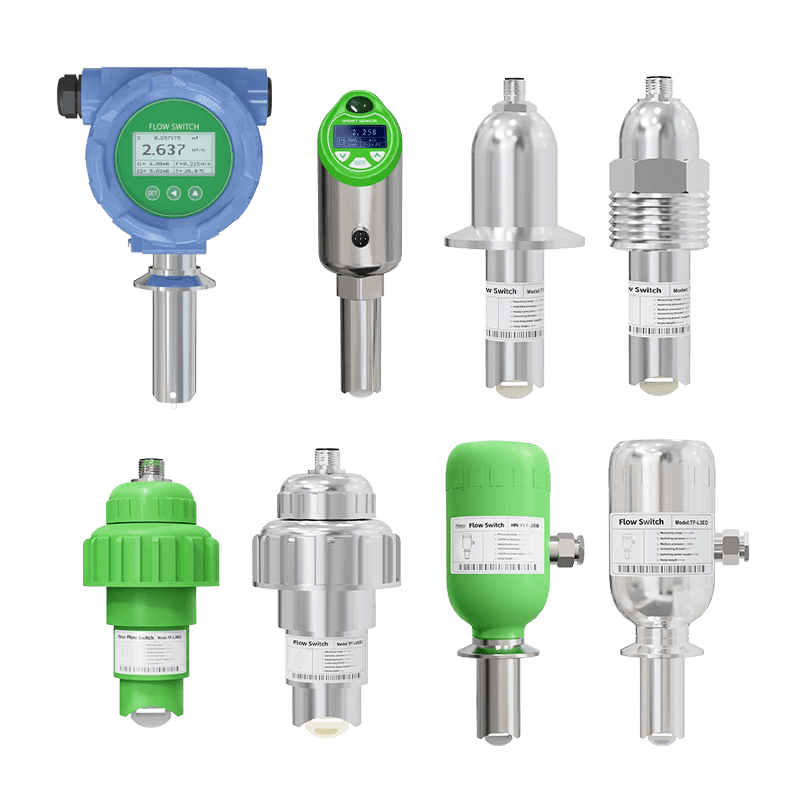
In modern industrial production, many production scenarios involve complex interfering factors such as floating foam, accumulated dust and high-temperature steam, which bring great challenges to accurate and stable level detection. Most traditional level sensors are easily affected by these interference factors, resulting in false alarms, signal failure and inaccurate measurement. As a mature and reliable industrial level measuring instrument, the tuning fork level switch has excellent environmental adaptability. It is widely proven to be highly suitable for foam, dust, and steam working environments, with stable detection performance that outperforms float switches, capacitive sensors and ultrasonic sensors.
Tuning fork level switches achieve reliable detection in foam-filled environments, effectively avoiding false triggering. A large number of industrial processes such as chemical stirring, sewage treatment and food fermentation will produce a large amount of lightweight floating foam on the liquid surface. Traditional capacitive and ultrasonic sensors are highly sensitive to medium dielectric changes and surface obstacles, which easily mistake foam for liquid level and output wrong signals. However, the tuning fork level switch relies on mechanical vibration damping principle to work. Light and low-density foam cannot generate enough resistance to change the fixed vibration frequency of the fork body. Only when the fork contacts the real liquid medium with high density can it trigger a frequency drop and effective switching signal. This unique working mechanism enables it to filter foam interference automatically and realize accurate liquid level judgment.
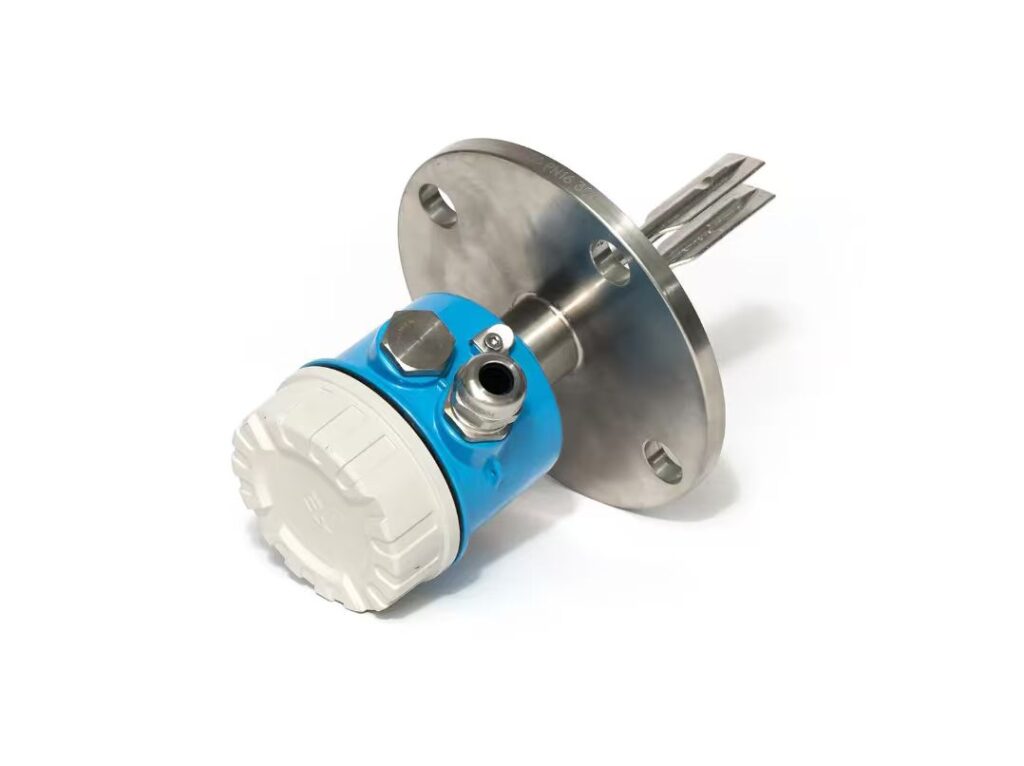
The equipment shows outstanding stability in dusty industrial environments. Scenarios such as grain storage, powder processing, cement production and chemical powder feeding are always accompanied by floating dust and surface dust accumulation. Dust interference is the main cause of failure for photoelectric sensors and ultrasonic sensors, as dust covering the probe will block signal transmission and cause detection failure. In contrast, the tuning fork level switch adopts an integrated and fully enclosed stainless steel structure with no vulnerable electronic sensing windows. Fine dust adhering to the fork surface or accumulating around the probe will not affect its mechanical vibration state. Even in long-term high-dust working conditions, it will not have signal drift or detection failure, achieving long-term stable solid material level monitoring.
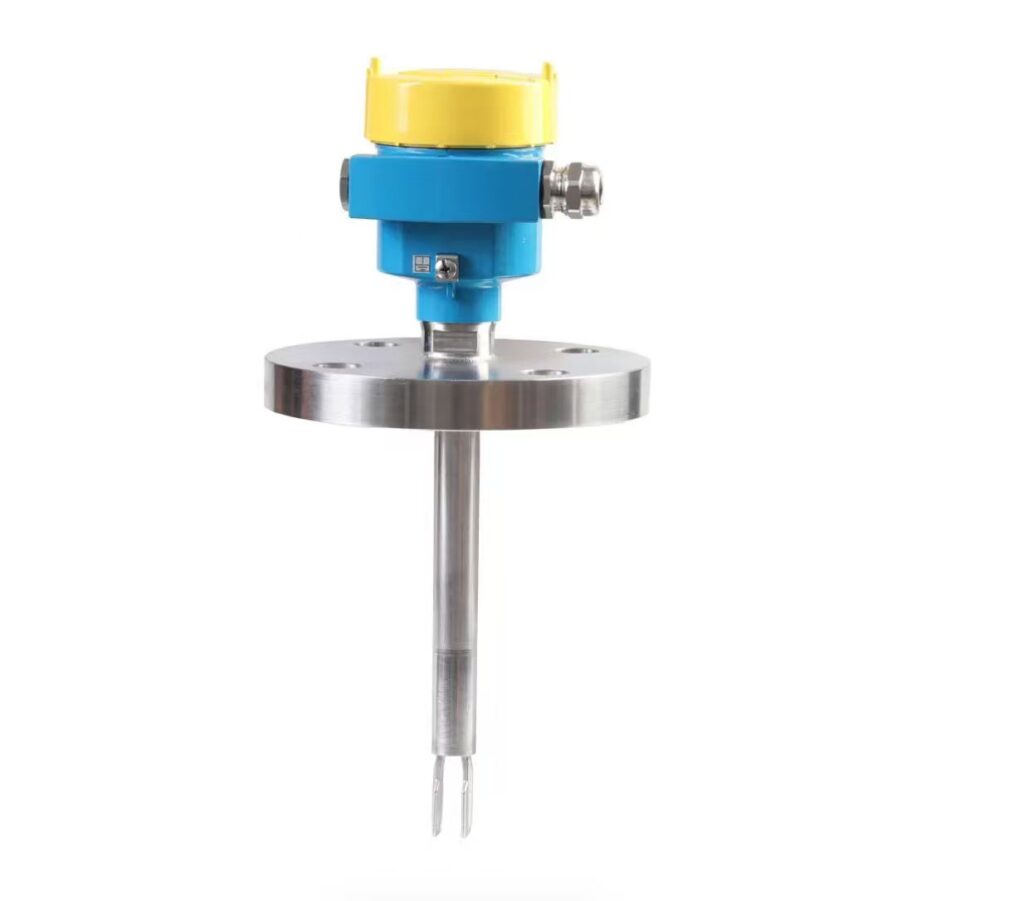
It is also an ideal measuring device for high-temperature steam environments with strong anti-interference capability. Steam environments feature high temperature, high pressure, water vapor condensation and floating water mist, which are harsh working conditions that test the performance of level sensors. Conventional sensors are prone to misjudgment due to condensed water film and steam dielectric fluctuation, and their electronic components are easy to age and fail under high temperature. Tuning fork level switches designed for industrial steam conditions adopt high-temperature resistant piezoelectric materials and heat insulation structures. The precision electronic parts are isolated from high-temperature steam through heat dissipation and insulation neck tubes. Meanwhile, steam and water mist cannot change the vibration damping of the fork body, so the detection signal will not be disturbed by steam fluctuation, condensation and pressure changes. It can operate stably for a long time in steam boilers, reaction kettles and steam heat exchange equipment.
It is worth noting that tuning fork level switches have only extremely few application limitations. They can adapt to conventional dry dust, lightweight foam and normal saturated steam environments. Only in extreme conditions such as thick sticky foam, heavy wet dust scaling and ultra-high temperature steam beyond the equipment parameter range will slight detection interference occur. In most conventional industrial working conditions, its anti-interference performance is fully competent.
In short, tuning fork level switches feature reliable anti-interference performance for complex industrial conditions. Based on mechanical vibration damping principle and fully enclosed structure, they work stably in foam, dust and high-temperature steam environments where traditional sensors often fail. With high temperature resistance and maintenance-free merits, they suit most harsh working scenarios, with only minor limitations in extreme conditions, making them ideal industrial level measurement tools.
Scan the QR code to receive more detailed information.