Metal Tube Rotor Flowmeter Product Introduction - Kiel Planck
  • Home
        • New Product

          Metal Tube Rotor Flowmeter Product Introduction - Kiel Planck

          There is a solution for every application. Let’s work together to find the right solution for you.

          Your benefits

          We use our experience to move your project forward.

          PHONE: 400-8868-261

          E-mail: info@kielplanckprc.com / kielplanck@outlook.com

  • Application
  • Service
  • Brand
  • Blog
  • Contact Us

Metal Tube Rotor Flowmeter Product Introduction

Metal Tube Rotor Flowmeter Product Introduction

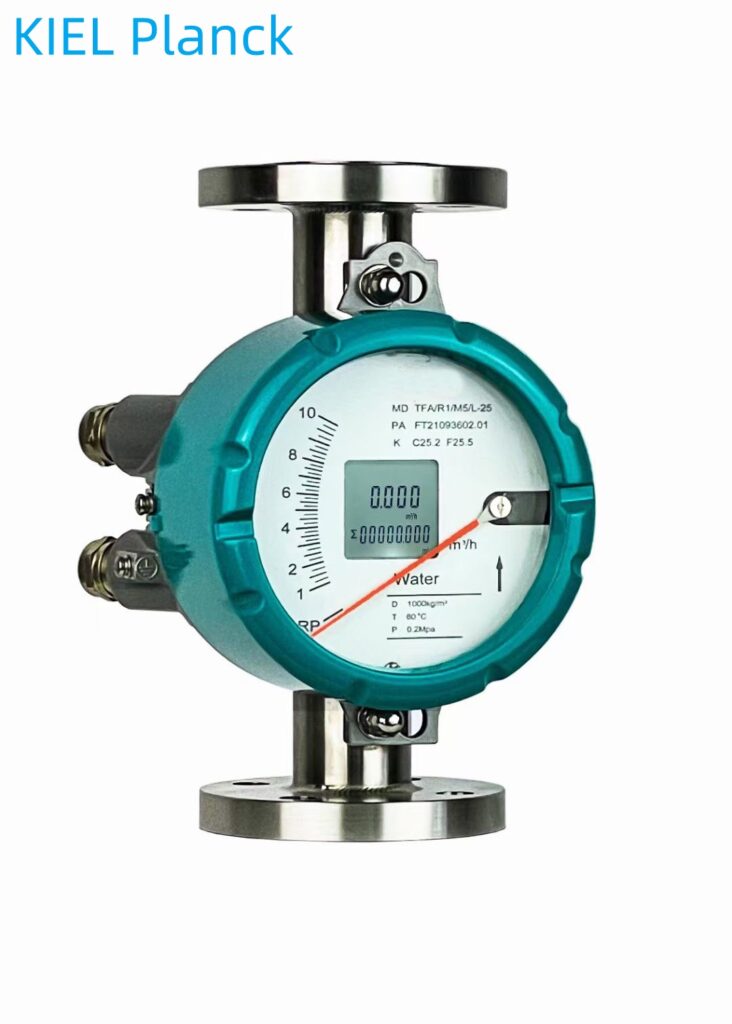
Metal tube rotor flowmeters are flow measurement instruments based on the variable area principle, capable of monitoring small to medium flow rates of liquids, gases, and steam. They measure flow rate by the change in the position of a float within a tapered tube, and transmit the signal via magnetic coupling. Features include: compact structure, wide range ratio (10:1), and easy installation.
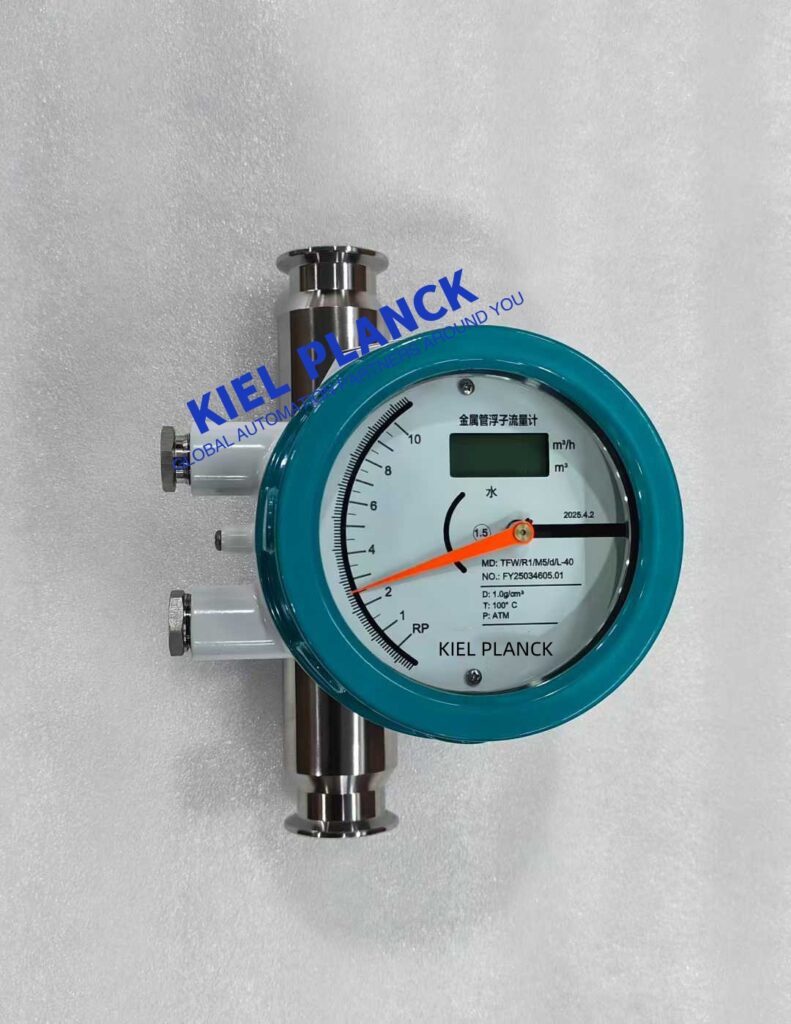
Metal Tube Rotor Flowmeter Product Introduction - Kiel Planck

Core Features and Parameters

1. Measurement Principle

The float rises within the conical tube under hydrodynamic force. The equilibrium position corresponds to the flow rate. Magnetic coupling enables contactless signal transmission.

2. Structure and Materials

Conical Tube Material: Stainless steel (SUS304/316L), titanium, or PTFE lining (corrosion resistant).

Float Characteristics: Built-in magnet, wear-resistant, suitable for high-temperature (-80~400℃) and high-pressure (≤6.4MPa) environments.

3. Measuring Range and Accuracy

Water: 2.5-200,000 L/h; Air: 0.03-4000 m³/h (20℃).

Accuracy: ±1.5% (standard type), ±1.0% (special type).

4. Output Functions

Local indication (pointer/LCD), 4-20mA current signal, pulse/upper/lower limit alarm output, supports HART protocol.

Application Areas

Chemical/Petrochemical: Corrosion-resistant design suitable for acid, alkali, and steam measurement (e.g., caustic soda process).

Energy & Environmental Protection: Gas flow monitoring requires a gas damper to stabilize readings.

Pharmaceutical/Food: Sanitary grade materials meet CIP cleaning requirements.

Special Scenarios: Explosion-proof type (ExiaIICT3~6) for flammable environments; horizontal installation type adapts to pipeline layouts.

Installation and Maintenance Points

1. Installation Requirements

For vertical installation, the inclination angle ≤2°, the straight pipe section inlet ≥5DN, and the outlet ≥250mm.

Media containing ferromagnetic impurities require a pre-filter; media containing solid particles require a Y-type filter.

2. Maintenance Recommendations

Regularly clean the cone tube and float to prevent impurity buildup; for PTFE-lined systems, tighten bolts symmetrically to prevent deformation.

If the pointer is stuck, open the valve slowly to avoid float impact; regularly check the magnetic coupling system to prevent malfunction.

Summary

Metal tube rotor flowmeters, with their all-metal structure (resistant to high pressure and high temperature) and modular design (explosion-proof/corrosion-proof optional), are ideal for industrial process control. Users should select the appropriate model based on media characteristics (corrosiveness/viscosity) and operating conditions (temperature/pressure), and strictly follow installation specifications to ensure measurement accuracy. Kiel Planck (Kiel China)

Scan the QR code to receive more detailed information.

Metal Tube Rotor Flowmeter Product Introduction - Kiel Planck

Share:

More Posts

Real-time pH monitoring in aquaculture - Kiel Planck

Real-time pH monitoring in aquaculture

Water quality is the core determinant of aquaculture yield and aquatic organism health, among which pH value serves as one of the most sensitive and critical indicators. Slight fluctuations in water pH can directly affect the respiration, metabolism, and immunity of fish, shrimp and shellfish, and even trigger large-scale disease outbreaks and mortality in severe cases.

Online pH water quality monitoring solution - Kiel Planck

Online pH water quality monitoring solution

pH value is one of the most fundamental and critical indicators in water quality evaluation, reflecting the acidity and alkalinity of water bodies and directly affecting aquatic ecological safety, industrial production efficiency, and sewage discharge compliance. Traditional manual pH detection methods suffer from low efficiency, severe data lag, and human operation errors, which can no longer meet the real-time and high-precision monitoring requirements of modern water environment management and industrial water treatment.

Wastewater pH Sensor Maintenance Techniques - Kiel Planck

Wastewater pH Sensor Maintenance Techniques

pH sensors are core monitoring devices in wastewater treatment systems, responsible for real-time detection of water acidity and alkalinity to support biochemical treatment, chemical dosing and effluent discharge compliance. Unlike conventional water quality sensors, wastewater pH sensors operate in harsh environments with high suspended solids, organic pollutants, corrosive ions and variable water temperatures, making them prone to contamination, electrode aging and data drift. Regular and standardized maintenance is essential to ensure long-term measurement accuracy and stable operation

Method for calculating water pH value - Kiel Planck

Method for calculating water pH value

Water pH value is a vital physicochemical parameter that indicates the acidity or alkalinity of aqueous solutions. It profoundly influences water ecological stability, industrial water treatment efficiency, and drinking water safety. Accurate pH calculation is the fundamental basis for water quality analysis, environmental monitoring, and chemical experimental research. This article elaborates on the basic theoretical principles of water pH calculation and introduces two mainstream practical methods: theoretical formula calculation for pure water and instrument conversion calculation for complex water bodies.

Send Us A Message

captcha
Reload

Bitte geben Sie die im CAPTCHA angezeigten Zeichen ein, um sicherzustellen, dass Sie ein Mensch sind.

Email
Email: info@kielplanckprc.com
WhatsApp
WhatsApp Me