
Structure and Operating Principles of Guided Wave Radar and Non-Contact Radar Level Gauges - Kiel Planck
  • Home
        • New Product

          Structure and Operating Principles of Guided Wave Radar and Non-Contact Radar Level Gauges - Kiel Planck

          There is a solution for every application. Let’s work together to find the right solution for you.

          Your benefits

          We use our experience to move your project forward.

          PHONE: 400-8868-261

          E-mail: info@kielplanckprc.com / kielplanck@outlook.com

  • Application
  • Service
  • Brand
  • Blog
  • Contact Us
Structure and Operating Principles of Guided Wave Radar and Non-Contact Radar Level Gauges - Kiel Planck
Blog

Structure and Operating Principles of Guided Wave Radar and Non-Contact Radar Level Gauges

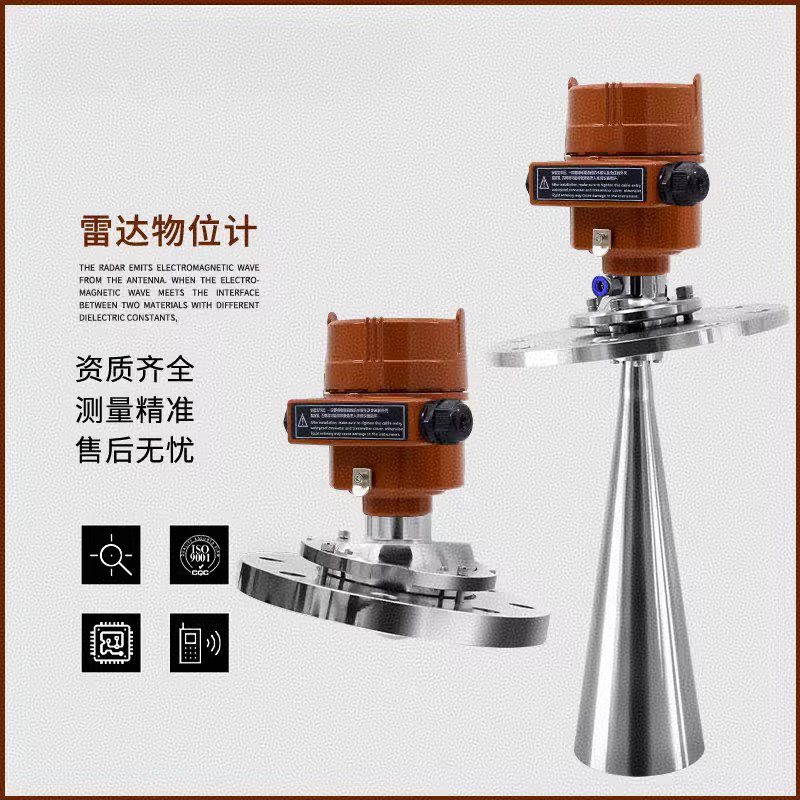
Guided wave radar and non-contact radar are two mainstream radar level measurement technologies widely used in industrial process monitoring. Although both work based on microwave electromagnetic wave reflection theory, they differ fundamentally in structural design, working mechanisms, and medium applicability. Guided wave radar adopts contact probe transmission, while non-contact radar realizes non-invasive measurement through air-propagating microwaves.
Principle Comparison and Application Scenarios of Pulse Radar and FMCW Radar Level Meters - Kiel Planck
Blog

Principle Comparison and Application Scenarios of Pulse Radar and FMCW Radar Level Meters

As two mainstream types of radar level measuring equipment, pulse radar and Frequency Modulated Continuous Wave (FMCW) radar level meters are widely used in industrial liquid and solid level monitoring. Both devices rely on the reflection principle of high-frequency microwaves, but they adopt completely different signal transmission and data processing mechanisms, leading to significant differences in measurement accuracy, anti-interference performance and applicable working conditions.

Basic Measurement Principle of Radar Level Meters - Kiel Planck
Blog

Basic Measurement Principle of Radar Level Meters

Radar level meters are widely adopted industrial measuring instruments for liquid and solid level monitoring, featuring high precision, strong stability, and excellent adaptability to harsh working conditions. Different from traditional mechanical and ultrasonic level measuring devices, radar level meters work based on the propagation and reflection law of high-frequency electromagnetic waves.

Intelligent Upgrade and Digital Transformation of Traditional Impeller Flowmeters - Kiel Planck
Blog

Intelligent Upgrade and Digital Transformation of Traditional Impeller Flowmeters

Traditional impeller flowmeters have been widely used in industrial fluid measurement for decades due to their simple structure, reliable mechanical performance and low manufacturing cost. As typical mechanical velocity-type measuring instruments, they can basically meet the basic flow metering demands of conventional industrial scenarios. However, with the rapid development of industrial digitization, smart factories and automated process control systems, traditional mechanical flowmeters expose prominent limitations.

Explosion-proof Design and Safety Application of Impeller Flowmeters in Chemical Industry - Kiel Planck
Blog

Explosion-proof Design and Safety Application of Impeller Flowmeters in Chemical Industry

The chemical industry is characterized by complex production environments, where flammable, explosive, volatile and corrosive media are commonly transported and processed. Fluid flow measurement is an indispensable part of chemical process control, and the operational safety of measuring instruments directly determines the stability of factory production.

Anti-interference design of impeller flowmeters - Kiel Planck
Blog

Anti-interference design of impeller flowmeters

Industrial impeller flowmeters are pivotal velocity-type measuring instruments widely used in petrochemical, water treatment, energy transportation and other industrial fields. In complex industrial operating environments, equipment often faces various interferences, including pipeline mechanical vibration, fluid turbulence, electromagnetic signal interference and ambient temperature fluctuation.

Application Research of Impeller Flowmeters in Liquid Medium Measurement - Kiel Planck
Blog

Application Research of Impeller Flowmeters in Liquid Medium Measurement

Liquid medium measurement is a core part of industrial production, municipal engineering, and commercial metering. Accurate and real-time flow detection of liquids such as clean water, industrial solvents, and light oil directly affects production efficiency, material accounting, and energy consumption control.

Email
Email: info@kielplanckprc.com
WhatsApp
WhatsApp Me